My Account
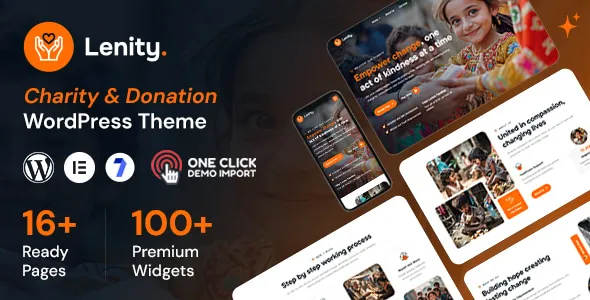
Lenity – Charity & Donation WordPress Theme
Lenity – Charity & Donation WordPress Theme is a website design solution for charitable organizations, nonprofit foundations, social welfare groups, fundraising campaigns, humanitarian initiatives, and community development projects that want to establish a professional online presence with WordPress. A charity website plays an important role in communicating an organization’s mission, explaining its activities, sharing community stories, and encouraging people to participate in meaningful causes. Lenity can be considered as a starting point for creating a website that brings these elements together through organized content, clear navigation, and a purpose-driven presentation.
Nonprofit organizations often need to communicate with several audiences, including donors, volunteers, beneficiaries, corporate partners, and members of the wider community. Each audience may look for different information, such as the organization’s objectives, current fundraising campaigns, donation options, volunteer opportunities, or reports about completed projects. A well-structured website can make these details easier to find while helping visitors understand how the organization works and how they can contribute.
Lenity is designed around the charity and donation website niche, making it relevant to organizations that want a website aligned with their social mission. Depending on the theme version, available layouts, and compatible integrations, a Lenity-based website may be adapted to present fundraising initiatives, charitable programs, organizational information, impact stories, and donation-related calls to action. The actual donation processing functionality should be verified separately through the theme documentation and any required plugins or payment integrations.
WordPress provides a flexible content management system for publishing pages, maintaining blog posts, managing images, and updating organizational information. With suitable customization and accurate content, Lenity can help charities create a central online destination for communicating their mission, building awareness, and supporting their fundraising activities.
What Is Lenity – Charity & Donation WordPress Theme?
Lenity is a WordPress theme intended for charity-focused websites and organizations that promote donations, community assistance, humanitarian work, and social causes. Its specialized positioning makes it a potential option for nonprofits that need to explain their mission, showcase projects, and make participation opportunities visible to visitors.
A charity website needs to do more than introduce an organization. It should explain the problems the organization addresses, describe its programs, communicate its objectives, and provide clear information about how contributions are used. Visitors should be able to explore campaigns, understand the intended beneficiaries, and find appropriate ways to support the work.
Lenity can be evaluated for a website structure that includes a homepage, organization profile, campaign pages, donation information, volunteer opportunities, project updates, and contact details. Additional sections may be useful for publishing annual reports, explaining eligibility for assistance, sharing educational resources, or communicating upcoming community events.
The theme provides a design starting point rather than a complete fundraising operation by itself. Features such as online donation processing, recurring contributions, donor management, payment confirmations, and fundraising records may require compatible plugins or external services. Website owners should confirm the capabilities of the current theme version before planning their implementation.
With a clear content strategy and suitable integrations, Lenity can form part of a broader digital platform that helps a nonprofit communicate effectively with supporters and maintain an organized online presence.
Why Choose a Charity and Donation WordPress Theme?
Charitable organizations often rely on public awareness, community participation, and donor support to advance their missions. Their websites need to communicate important information in a way that is accessible, trustworthy, and easy to understand.
A charity-focused WordPress theme can help organize this information around the needs of donors, volunteers, and beneficiaries. Instead of adapting a website design intended for an unrelated industry, an organization can begin with a layout suited to presenting causes, campaigns, community initiatives, and opportunities to contribute.
Lenity may be useful for organizations that want to highlight their primary mission, introduce ongoing projects, and guide visitors toward relevant actions. A homepage can explain the cause, campaign pages can provide details about individual initiatives, and dedicated volunteer or contact pages can describe how people can become involved.
A specialized design can also help maintain a consistent presentation across multiple programs. When every campaign follows a recognizable structure, visitors can compare initiatives, understand their objectives, and locate the information they need.
The theme should still be evaluated against the organization’s practical requirements. A small community group may need a simple informational website, while a larger nonprofit may require campaign management, donation records, multilingual content, accessibility support, and integrations with other systems. The right setup depends on the theme’s documented capabilities and the organization’s operational needs.
Build a Professional Nonprofit Organization Website
A nonprofit website provides a central location for explaining an organization’s mission, activities, leadership, and impact. It can help potential supporters understand the work being carried out and decide whether they want to donate, volunteer, collaborate, or share information about the cause.
Lenity can be considered for creating a nonprofit website with pages such as Home, About Us, Our Programs, Campaigns, Impact, Volunteer, News, and Contact. The final structure should reflect the organization’s actual activities rather than including sections simply because they are available in a template.
The homepage can introduce the main mission and summarize the most important initiatives. An About page can explain the organization’s background, objectives, and approach. Dedicated program pages can describe individual activities and the communities they serve.
A transparent organization profile should include accurate information about its legal status, registration, leadership, and operating area where relevant. Organizations should only display certifications, affiliations, or official recognition that they can substantiate.
Project updates and impact reports can help supporters understand what the organization has accomplished. Clear explanations of activities, results, limitations, and future priorities provide more useful information than broad statements without supporting details.
A well-organized nonprofit website helps visitors understand both the purpose of the organization and the practical steps they can take to support its work.
Create Engaging Fundraising Campaign Pages
Fundraising campaigns are an important part of many charity websites. A campaign page should explain the need being addressed, identify the intended beneficiaries, describe the proposed activities, and provide clear information about how supporters can contribute.
Lenity can be evaluated as a starting point for presenting fundraising initiatives through dedicated pages. Each page can focus on one cause, helping visitors understand the campaign without having to search through unrelated organizational information.
A useful campaign description begins with a clear explanation of the problem. Supporting content can describe the community affected, the proposed response, the expected activities, and the organization responsible for carrying them out.
Where appropriate, campaign pages can include a fundraising target, amount raised, campaign deadline, or progress update. These details should be based on accurate records and maintained regularly. If progress indicators are displayed, the figures should match the information available from the actual fundraising system.
Calls to action should explain what visitors can do next. Depending on the campaign, this may involve donating through a verified payment system, registering as a volunteer, sharing the campaign, or contacting the organization for further information.
Campaign content should avoid exaggerated claims or unsupported promises. Clear objectives, realistic explanations, and regular updates help supporters make informed decisions about contributing to a cause.
Support Online Donations and Fundraising Integrations
Online donation functionality can make it easier for supporters to contribute without needing to contact an organization separately. However, the ability to process payments depends on the actual donation system used by the website.
Lenity is a charity and donation WordPress theme, but website owners should verify whether their preferred donation features are included or require a compatible plugin or external payment provider. A theme’s charitable design does not automatically establish that payment processing, recurring donations, or donor management is built in.
A suitable donation workflow may allow visitors to select a contribution amount, enter the required details, choose an available payment method, and receive confirmation after a successful transaction. Depending on the system, organizations may also be able to configure one-time donations, recurring contributions, campaign-specific donations, or donor communications.
Before accepting real payments, test the complete donation process. Confirm that payment confirmations are accurate, failed transactions are handled appropriately, and donation records are maintained securely. Organizations should also understand the provider’s transaction fees, settlement procedures, refund policies, and supported payment methods.
Payment security is particularly important. Use reputable payment providers and follow their integration requirements rather than collecting or storing sensitive payment information directly without appropriate safeguards.
For organizations operating in India or accepting international contributions, the applicable payment, tax, charitable registration, and foreign-contribution rules should be reviewed with qualified professionals. Website content should not promise tax benefits or eligibility unless the organization and the relevant donation meet the applicable requirements.
Showcase Charitable Projects and Community Impact
Supporters often want to understand what an organization does and how its activities contribute to its mission. Project pages provide an opportunity to explain this work in detail and present evidence of progress.
Lenity can be considered for organizing information about community development, education, healthcare access, environmental protection, food assistance, housing support, animal welfare, or other causes, depending on the organization’s actual focus.
Each project page can describe the objective, the people or communities served, the activities carried out, and the current status of the initiative. Where reliable information is available, organizations can include measurable results such as the number of sessions delivered, meals distributed, trees planted, or households reached.
Numbers should always be accompanied by appropriate context. For example, distinguish between people contacted, people enrolled in a program, and people who completed it. Explain the period covered by the figures and update the information when new data becomes available.
Photographs, maps, and project summaries can help visitors understand the work being undertaken. Images involving beneficiaries should be used responsibly, with appropriate permission and consideration for privacy and dignity.
A clear impact section helps connect fundraising activities with the organization’s wider mission. It also provides a useful place to publish progress reports and explain challenges that may affect project outcomes.
Design Volunteer Registration and Community Participation Pages
Donations are only one way people can support a charitable organization. Volunteers may contribute time, professional skills, local knowledge, transportation, event support, or assistance with community programs.
Lenity can be evaluated for a website structure that presents volunteer opportunities and explains how interested people can participate. A dedicated volunteer page can describe the roles available, the time commitment involved, the relevant requirements, and the process for expressing interest.
Organizations can organize opportunities according to program, location, schedule, or required skills. For example, a community organization might need volunteers for food distribution, educational support, event coordination, fundraising, or administrative tasks.
A registration or inquiry form can collect the minimum information necessary to begin the process. Depending on the activity, this may include contact details, availability, relevant experience, and areas of interest. Sensitive personal information should only be collected when necessary and handled according to applicable privacy requirements.
The website should explain what happens after someone submits an inquiry. Providing an expected response process helps volunteers understand how the organization will follow up.
Community participation pages can also explain non-volunteer options, such as sharing campaign information, attending events, organizing local initiatives, or collaborating with the organization. This gives supporters different ways to become involved according to their circumstances.
Communicate Your Mission Through Storytelling
Storytelling can help visitors understand why a charitable organization exists and how its work relates to real community needs. Useful stories explain a challenge, describe the response, and provide context about the work being undertaken.
A Lenity-based website can include stories from programs, volunteer experiences, community projects, and organizational milestones. These stories can help make complex issues easier to understand while giving supporters a clearer picture of the organization’s activities.
Effective nonprofit storytelling should be accurate, respectful, and centered on the purpose of the work. Avoid presenting beneficiaries as helpless or using distressing imagery merely to encourage donations. Individuals and communities should be represented with dignity, and their experiences should not be exaggerated.
When sharing personal stories, photographs, or quotations, obtain the necessary permissions and consider the privacy and safety of the people involved. Children and vulnerable individuals may require additional safeguards.
Story pages can include a clear explanation of the program involved, the support provided, and the current status of the initiative. Where possible, distinguish personal experiences from broader evidence about a program’s outcomes.
A consistent storytelling approach can help an organization communicate its values and demonstrate its activities while maintaining responsible standards for public communication.
Homepage Layout and Content Organization
The homepage should introduce the charity’s purpose and help visitors locate the information most relevant to them. A clear layout can reduce confusion and encourage supporters to explore campaigns, programs, and participation opportunities.
A Lenity website can be organized around a prominent mission statement, a short introduction, featured campaigns, program summaries, impact information, volunteer opportunities, recent news, and a contact section. The exact layout depends on the available theme templates and the needs of the organization.
The opening section should communicate the cause in straightforward language. Visitors should be able to identify the organization’s focus and understand what action they can take next.
Featured campaign sections can highlight current initiatives, while program summaries introduce the broader work of the organization. An impact section can share recent achievements supported by reliable information.
Testimonials or supporter comments may provide additional context when they are genuine and published with appropriate permission. News and updates can help visitors understand what the organization has been doing recently.
Not every nonprofit needs all these sections on the homepage. A small local organization may benefit from a concise layout focused on its mission, current project, and contact information. A larger foundation may need more extensive navigation to present several programs.
Every homepage section should serve a clear purpose and help visitors understand the organization, its activities, or its available participation options.
Branding and Visual Customization
A charity website’s visual identity should reflect the organization’s mission and values while keeping information easy to read. Consistent colors, typography, imagery, and spacing can help create a recognizable presentation across the website.
Lenity can be evaluated as a starting point for establishing a nonprofit’s visual identity. Depending on the theme version and available customization options, website owners may be able to adjust supported design elements such as colors, fonts, images, page sections, and other layout details.
An environmental organization may prefer nature-inspired imagery, while an educational nonprofit may emphasize learning activities and community development. A health-focused organization may use a more restrained visual style that prioritizes clarity and accessibility.
The visual approach should remain consistent across campaign pages, program descriptions, donation information, and organizational resources. Repeated design patterns can make the website easier to understand and maintain.
Use relevant photographs and illustrations that represent the organization’s actual work. Generic images may be useful in some contexts, but authentic and appropriately authorized project images can provide more meaningful information when available.
Before implementing major design changes, confirm which options are supported by the current theme. Test custom layouts on desktop and mobile devices, and keep backups before applying substantial changes to a live website.
SEO-Friendly Structure for Charity Websites
Search engine optimization can help people discover a charitable organization through searches related to its mission, campaigns, programs, and service areas. A WordPress theme provides a starting point, but search visibility also depends on content quality, technical setup, competition, and the organization’s broader online presence.
A Lenity website can be organized around descriptive pages for its main programs and initiatives. Each page should have a clear purpose and answer the questions that visitors are likely to ask.
Page titles and headings should accurately describe the content. A page about an education program should explain its actual activities, intended participants, eligibility criteria where relevant, and how people can learn more.
Descriptive URLs and internal links can help connect related pages. A campaign page might link to the relevant program, the organization’s background, a progress report, and the appropriate donation information.
Images should be optimized for loading performance and include meaningful alternative text when they convey useful information. Search engine metadata can be managed through compatible SEO tools when needed.
Avoid creating large numbers of thin pages that repeat the same information with minor keyword changes. Original content, transparent program descriptions, and useful resources are generally more valuable than keyword repetition.
No theme can guarantee search rankings, traffic levels, or donation volumes. SEO should be treated as an ongoing process that combines technical maintenance, useful content, clear site architecture, and regular performance review.
Local SEO for Community Organizations
Many charitable organizations serve specific cities, districts, or regions. Local search optimization can help community members discover the organization, learn about its activities, and find practical information about participating.
A Lenity-based website can provide accurate information about the organization’s location, service area, operating hours, contact details, and community programs. These details should be updated whenever arrangements change.
Dedicated location or program pages can explain which communities are served and what activities are available in each area. The content should reflect real operations rather than list locations solely to attract search traffic.
Eligible organizations may also use appropriate business or nonprofit profiles to publish verified information, subject to the relevant platform’s rules. Keep the organization’s name, address, telephone number, and website details consistent wherever they appear.
Local updates can include community events, volunteer activities, program announcements, and project reports. Such content can help residents understand the organization’s work and discover opportunities to participate.
Reviews and public comments should be handled professionally. Never disclose private information about donors, volunteers, or beneficiaries when responding to public feedback.
Local SEO can contribute to awareness, but the outcome depends on several factors beyond the website theme. Accurate information and genuinely useful community content provide a practical foundation.
Content Marketing and Nonprofit Blogging
A charity blog can provide a place to publish program updates, educational resources, event announcements, volunteer stories, and explanations of the issues the organization addresses.
Lenity can be considered for websites that want to combine fundraising pages with an ongoing content strategy. WordPress offers tools for publishing articles and organizing them into categories, while the theme determines how these posts appear within its supported layouts.
An education-focused nonprofit might publish learning resources and program updates. An environmental organization could share conservation guidance, while a community welfare group may publish information about local initiatives and volunteer activities.
Useful articles should provide meaningful information rather than simply repeat campaign messages. They may explain the background of a social issue, describe how a program operates, answer common questions, or share documented results from a project.
Internal links can connect articles with relevant campaigns and program pages. This helps readers move from learning about a cause to exploring the organization’s work or participation opportunities.
Maintain a realistic publishing schedule that matches the organization’s resources. Accurate, relevant, and regularly reviewed content is more sustainable than publishing large volumes of low-value material.
Accessibility and Inclusive Website Design
A charitable organization should aim to make its website accessible to people with different abilities, devices, and levels of digital experience. Important information about programs and donations should not be unnecessarily difficult to find or understand.
When customizing Lenity, use logical heading structures, readable font sizes, adequate color contrast, descriptive links, and clear labels for interactive elements. Images that communicate meaningful information should have suitable alternative text.
Donation and volunteer forms should provide clear instructions and understandable validation messages. If a field is required, explain this in a way that users can recognize. Forms should also be tested using keyboards and assistive technologies where possible.
Avoid relying on color alone to communicate important information. Buttons should be easy to identify, and navigation labels should use familiar language.
Plain language is particularly useful for nonprofits that serve communities with varied educational backgrounds or language preferences. Important eligibility requirements, donation terms, and program instructions should be explained clearly.
Accessibility depends on the theme, content, plugins, and customization choices. Regular testing can help identify problems and make the website more usable for a wider audience.
Website Speed and Performance Optimization
Website performance affects how easily visitors can access information about a charity’s programs and campaigns. Slow pages can create frustration, particularly for users browsing on mobile devices or limited internet connections.
The performance of a Lenity website depends on its theme implementation, hosting environment, image sizes, scripts, plugins, fonts, and external services. A theme’s design category does not establish a particular loading speed.
Start by optimizing images and using suitable dimensions for each display area. Large campaign banners and project photographs should be compressed without sacrificing the visual quality required for their purpose.
Review unnecessary animations, external widgets, and embedded content. Every additional integration should provide a clear benefit that justifies its effect on performance and maintenance.
Caching and other optimization tools may help when selected and configured appropriately. However, installing several plugins that perform the same function can create conflicts or increase the complexity of the website.
Test important pages, including the homepage, campaign pages, program descriptions, and donation flow. Where payment integrations are used, performance testing should not compromise the reliability or security of transactions.
Monitor the website periodically, especially after adding new content or installing plugins. Maintaining efficient pages supports a smoother experience for donors, volunteers, and community members.
Security, Privacy, and Donation Data Protection
Charitable organizations may handle donor contact details, volunteer information, contribution records, and other personal data. A website should be maintained with suitable safeguards for the information it collects and processes.
Use reputable hosting, enable HTTPS, maintain strong administrator credentials, and give users only the permissions they need. WordPress core, the theme, and plugins should be updated carefully, with backups available before significant changes.
Donation processing should be handled through a reputable payment provider or a properly configured compatible integration. Organizations should understand how payment data is handled and avoid storing sensitive payment details unnecessarily.
Privacy notices should accurately explain what information is collected, why it is needed, how it is used, and how individuals can contact the organization about their data. Requirements vary by jurisdiction and the types of information processed.
Donor lists and contribution histories should not be publicly displayed without an appropriate basis and permission. Volunteer applications and beneficiary records should also be protected from unauthorized access.
Regular backups, security reviews, plugin updates, and checks of user permissions can help reduce avoidable risks. Security is an ongoing responsibility rather than a feature that can be assumed from the theme alone.
Who Can Use Lenity – Charity & Donation WordPress Theme?
Lenity may be suitable for different types of charitable and social-impact organizations, depending on their design needs and the functionality available in the current version.
Nonprofit organizations: Organizations can introduce their mission, explain their programs, publish updates, and provide information about supporting their work.
Charitable foundations: Foundations may use a structured website to present their objectives, grant programs, community initiatives, and organizational information.
Fundraising campaigns: Campaign organizers can create pages that explain a particular cause, describe proposed activities, and guide supporters toward appropriate contribution methods.
Community welfare groups: Local organizations can share neighborhood initiatives, volunteer opportunities, event details, and information about available assistance.
Environmental organizations: Groups working on conservation, sustainability, or environmental awareness can publish educational content and project updates.
Educational charities: Organizations supporting learning opportunities can present educational programs, community projects, and relevant participation information.
Health and humanitarian initiatives: Eligible organizations can communicate program details, public information, fundraising objectives, and ways to support their activities.
Animal welfare organizations: Animal rescue and welfare groups can present their mission, responsible adoption information where applicable, care initiatives, and volunteer opportunities.
Before choosing the theme, organizations should assess the layouts, accessibility, supported plugins, donation requirements, and customization options against their actual operational needs.
Tips for Building a Successful Charity Website with Lenity
A successful nonprofit website begins with a clear understanding of its audience and objectives. Before customizing the theme, determine whether the primary goal is to increase awareness, attract donations, recruit volunteers, explain programs, or support several related activities.
Prepare accurate content for the most important pages. This may include the organization’s mission, background, program descriptions, campaign details, contact information, and relevant legal or registration information.
Organize the website around visitor needs. Donors should be able to understand campaigns and donation arrangements, volunteers should be able to find opportunities, and beneficiaries should be able to locate relevant program information.
Use real and appropriately authorized images wherever possible. Explain project activities and results with accurate information, and avoid unsupported claims about impact or financial outcomes.
Make important actions visible without making every section feel like a fundraising appeal. A balanced website provides useful information first and gives visitors clear options for participating.
Before launch, test the website on different devices, review accessibility, verify all links, and confirm that forms and donation integrations work correctly. Ensure that payment confirmations and donation records are handled appropriately.
Finally, establish a maintenance routine. Update program information, review campaign progress, maintain backups, apply software updates, and check that contact details remain accurate. Consistent maintenance helps keep the website reliable as the organization grows.
Final Thoughts on Lenity – Charity & Donation WordPress Theme
Lenity – Charity & Donation WordPress Theme is a potential choice for nonprofit organizations, charitable foundations, fundraising initiatives, and community-focused groups seeking a WordPress website tailored to social causes. Its charity-oriented positioning makes it relevant to projects that need to communicate a mission, present programs, share impact information, and provide clear ways for supporters to get involved.
A well-planned Lenity website can bring together organizational information, campaign descriptions, volunteer opportunities, project updates, and contact details in one accessible online destination. With suitable customization, the website can reflect the organization’s identity while keeping important information easy to navigate.
The final capabilities depend on the theme version, available layouts, compatible plugins, and the website’s configuration. Online donation processing, recurring contributions, payment gateways, donor management, and other fundraising functions should be verified before implementation rather than assumed to be included automatically.
Long-term effectiveness also depends on original content, transparent communication, accessibility, privacy practices, technical performance, and regular maintenance. A theme alone cannot guarantee donations, search rankings, or fundraising success, but it can provide a useful design foundation for a carefully managed nonprofit website.
For organizations looking to establish or improve their digital presence, Lenity is worth evaluating alongside the current demonstration and documentation. By combining a suitable layout with accurate campaign information, responsible storytelling, secure integrations, and clear participation options, a charity can build a website that supports awareness, community engagement, and its wider social mission.