My Account
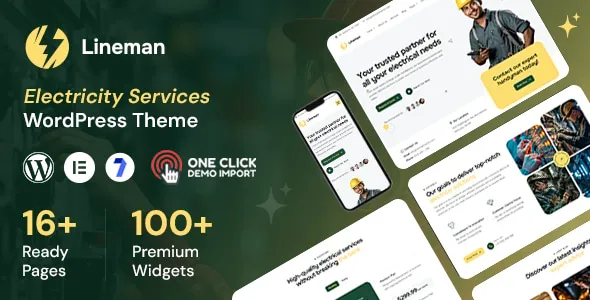
Lineman – Electrician Services WordPress Theme
Lineman – Electrician Services WordPress Theme is a website design solution created for businesses and professionals who want to establish a strong online presence in the electrical services industry. Designed for the electrician and electrical maintenance niche, Lineman can be considered as a foundation for building a professional WordPress website that introduces electrical services, presents business information, showcases completed projects, and helps potential customers make inquiries. Whether you operate an independent electrician business, an electrical contracting company, a residential repair service, or a commercial electrical maintenance firm, this theme offers a starting point for creating a website tailored to your business identity and service requirements.
A professional website is an important communication channel for service-based businesses. Customers often search online when they need electrical installation, wiring repairs, lighting upgrades, electrical inspections, maintenance, or assistance with other electrical issues. They want to understand the services offered, learn about the company’s experience, review its previous work, and find convenient contact information. Lineman can help provide a structured presentation for these essential business details, depending on the layouts and customization features available in the installed version.
Built around the WordPress ecosystem, Lineman can be evaluated by businesses that need a manageable platform for publishing service pages, company information, project galleries, and educational articles. With suitable customization, clear service descriptions, professional imagery, and accessible contact options, an electrician website can communicate expertise and make it easier for potential customers to understand how to request assistance. Before installation, users should review the current theme demo and documentation to confirm its available layouts, supported plugins, and compatibility requirements.
What Is Lineman Electrician Services WordPress Theme?
Lineman is a niche-oriented WordPress theme intended for websites related to electricians, electrical contractors, and electrical service providers. Instead of starting with a generic business layout, users can evaluate a design foundation that aligns with the needs of companies offering electrical installation, repair, maintenance, and related professional services.
Electrical businesses serve different customer groups, including homeowners, property managers, commercial organizations, builders, offices, and industrial facilities. Each audience may require different information before contacting a service provider. Residential customers might be interested in lighting installation, switchboard repairs, or home wiring, while commercial clients may need electrical maintenance, power distribution work, or installation support for business premises.
A well-organized website should make these services easy to understand. Lineman can be considered for presenting individual service categories, business information, contact details, and project examples within a consistent visual structure. The precise page layouts and customization options depend on the theme version and its documented capabilities.
WordPress provides tools for managing pages, publishing articles, uploading media, and maintaining navigation menus. Compatible plugins can extend the website with additional functions when required. Before choosing Lineman, review its current documentation and determine whether its included templates and supported integrations align with your business objectives.
Create a Professional Website for Electrical Services
An electrical services website should communicate what a business does, who it serves, and how customers can get in touch. A clear design helps visitors find important information without having to search through unrelated sections.
Lineman can serve as a starting point for an electrician website featuring a homepage, service pages, company information, project examples, customer testimonials, frequently asked questions, and contact details. The final structure should reflect the company’s size, service area, and customer requirements.
The homepage can introduce the business with a concise headline and a short explanation of its main services. Supporting sections can direct visitors toward residential electrical work, commercial installations, maintenance services, or other relevant offerings.
An About page can explain the company’s background, professional approach, and experience. Dedicated service pages can provide more detailed descriptions of the work offered, while a project gallery can demonstrate relevant experience through genuine examples.
The contact page should provide clear and accurate communication details. Depending on the business model and available integrations, it may include a telephone number, email address, service inquiry form, operating hours, and service area information.
The objective is to make the website useful to customers while maintaining a professional and consistent business identity.
Suitable for Residential Electricians
Residential electricians help homeowners and tenants address electrical installation, maintenance, and repair requirements. A dedicated website can explain these services and help customers understand when to contact a qualified professional.
Lineman can be evaluated for residential electrician websites that present services such as lighting installation, switch and socket replacement, electrical fault diagnosis, wiring upgrades, ceiling fan installation, and other household electrical work. Service descriptions should accurately reflect the work the business is qualified and equipped to perform.
Each service page can explain the general scope of work, the types of properties served, and how customers can request an assessment. For example, a lighting installation page may describe common installation options, while a wiring service page can explain when an electrical system may need professional inspection or upgrading.
Images of completed residential projects can provide useful visual context. However, businesses should use authentic photographs and obtain appropriate permission before publishing images of customers’ homes or private property.
A well-structured residential electrician website should also communicate the company’s service area, contact options, and relevant professional credentials. Clear information helps homeowners determine whether the business is suitable for their requirements before making an inquiry.
Website Design for Commercial Electrical Contractors
Commercial electrical contractors often serve offices, retail outlets, warehouses, restaurants, apartment buildings, and other business premises. Their websites need to explain technical services in a way that is accessible to facility managers, property owners, business operators, and procurement teams.
Lineman can be considered for commercial electrical websites that organize services into clear categories. These may include electrical installation, lighting systems, routine maintenance, distribution board work, electrical troubleshooting, equipment connections, and planned maintenance programs, depending on the contractor’s actual capabilities.
Commercial customers may also want to understand the company’s experience with different property types, its service coverage, and its approach to project coordination. Dedicated project pages can explain the nature of completed work, the general requirements involved, and the services delivered.
Businesses should avoid making unsupported claims about certifications, project experience, response times, or compliance standards. Any professional qualifications and technical capabilities mentioned on the website should be accurate and verifiable.
By presenting commercial services clearly, an electrician website can help business customers identify relevant offerings and contact the company to discuss project requirements.
Organize Electrical Services into Clear Categories
A service-based website becomes easier to navigate when its offerings are organized into meaningful categories. Customers should be able to identify the service they need without reading every page.
With Lineman, businesses can plan a service structure based on their actual work. Potential categories include:
- Residential electrical installation
- Electrical repairs and troubleshooting
- Lighting installation and upgrades
- Wiring and rewiring services
- Switches, sockets, and electrical fittings
- Electrical maintenance
- Commercial electrical contracting
- Electrical inspection and testing, where offered
- Energy-efficient lighting solutions
- Electrical equipment installation
These categories are examples rather than a guarantee of predefined theme sections. The final arrangement depends on the company’s service portfolio and the layouts supported by the installed theme.
Each service should have a dedicated page when sufficient information is available. A detailed page can explain what the service includes, the types of customers it supports, and how to request further information.
Avoid listing services the business does not provide. Accurate information helps set realistic customer expectations and prevents confusion when visitors make contact.
Homepage Layout and Business Presentation
The homepage is often the first page visitors see, making it an important part of the website’s overall presentation. It should quickly explain the company’s services and guide users toward useful information.
A Lineman-based website can be planned around a prominent introductory section, service summaries, company information, selected projects, customer feedback, and contact opportunities, depending on the theme’s available layouts.
The main headline should communicate the business’s purpose clearly. Supporting text can introduce its primary services and the type of customers it serves. A prominent call to action can direct visitors toward a service page or inquiry form.
Service cards or category links can provide an overview of the company’s main offerings. A project section can show examples of completed electrical work, while an About section can explain the business’s background and professional approach.
Customer testimonials may help visitors understand previous customer experiences when the feedback is genuine and used with appropriate permission. The website can also include frequently asked questions that address common inquiries about service areas, booking procedures, or the information customers should provide when requesting assistance.
A homepage does not need every possible section. Prioritize content that helps customers understand the business and take the next relevant step.
Service Pages That Explain the Work Clearly
Service pages help visitors understand the electrical work a business offers. They also provide space to explain the scope of services without overcrowding the homepage.
For an electrician website using Lineman, each page can focus on one service category and provide practical details. A wiring page might describe the types of wiring work undertaken, while a lighting page could explain installation and replacement services.
Useful service pages can include:
- A clear service title and introduction
- A description of the work offered
- Relevant property or customer types
- Examples of common service requirements
- Genuine photographs, where available
- Frequently asked questions
- Contact details or an inquiry option
The information should be written for customers rather than filled with technical terminology. When specialist terms are necessary, explain them in plain language.
For example, a page about electrical maintenance can describe the general purpose of routine inspections and the types of issues a qualified electrician may assess. It should not suggest that customers attempt dangerous electrical work themselves.
Service pages should also make the next step clear. Depending on the business, this may be calling the company, submitting an inquiry form, or requesting an appointment.
Project Portfolio and Electrical Work Gallery
A project portfolio allows electrical contractors to present examples of their work and provide visitors with a better understanding of their experience. This can be useful for companies serving residential, commercial, and industrial customers.
Lineman can be evaluated for a website that includes a project gallery or case study section, subject to the layouts and features supported by the theme. Businesses can use this area to showcase genuine installations, lighting upgrades, electrical maintenance projects, or other completed work.
Each project description should provide useful context. It may identify the general property type, the service performed, the project’s objectives, and the work completed. Sensitive customer details should be excluded unless the business has appropriate permission to publish them.
Photographs should be clear, relevant, and accurately represent the project. Businesses should avoid publishing images that reveal private information, confidential site details, or unsafe working practices.
A portfolio is most effective when it highlights relevant examples instead of displaying unrelated photographs without explanation. Commercial clients may want to see experience with comparable properties, while homeowners may be more interested in residential installations and repairs.
Well-presented project examples can support the business’s professional image and give potential customers additional context when evaluating its services.
Responsive Design for Mobile and Desktop Visitors
Customers may search for electricians using smartphones, tablets, laptops, or desktop computers. Responsive design helps a website adjust to different screen sizes and makes its content easier to access.
Lineman is positioned as a WordPress theme for service businesses, so users should verify how its current version displays important pages on different devices. This includes the homepage, service listings, project galleries, contact forms, and navigation menus.
On mobile devices, headings should be readable, page layouts should fit the available screen width, and buttons should be easy to select. Contact details should be visible without requiring visitors to navigate through multiple unnecessary sections.
Mobile usability is particularly relevant when a customer needs to find a service provider quickly. A clear telephone number, straightforward service information, and a convenient inquiry process can help visitors contact the business.
Responsive behavior should be tested after customization. Additional plugins, custom CSS, embedded maps, and third-party widgets can affect page layouts. Testing multiple screen sizes helps identify problems before the website is published.
A mobile-friendly presentation should be supported by clear content and a dependable website structure rather than visual design alone.
Customization and Electrical Business Branding
A professional electrician website should reflect the identity of the business. Consistent colors, typography, imagery, and page layouts can help create a recognizable brand.
Depending on the version and available customization tools, Lineman may support changes to visual elements such as colors, fonts, spacing, layouts, and images. Users should confirm the precise options through the current theme documentation.
An electrical contractor may prefer a clean and structured visual style that emphasizes service information and contact details. A company specializing in commercial projects may choose a more formal presentation, while a local residential electrician might prioritize approachable messaging and convenient contact options.
Branding should remain consistent across the homepage, service pages, project galleries, blog articles, and contact section. The same heading styles, button treatments, and visual language should be used throughout the website.
Use genuine company photographs and accurate business information wherever possible. Relevant images of staff, equipment, and completed projects can help explain the company’s work more effectively than unrelated stock imagery.
Before making major customizations, identify which design elements are controlled by the theme, WordPress, or third-party page-building tools. Backups and staging tests are useful when changes could affect a live website.
SEO-Friendly Structure for Electrician Websites
Search engine optimization can help potential customers discover an electrical services business through relevant searches. A well-organized website provides a foundation for useful content, descriptive service pages, and clear connections between related topics.
For a Lineman-based website, each major service should have a clear page title, an informative heading structure, and original content describing the work offered. For example, a business that provides residential wiring and commercial electrical maintenance may benefit from separate pages explaining those services.
Location information can be useful when the business serves specific towns, cities, or regions. Service-area pages should contain accurate details about where the company operates and what services are available in each area. Avoid creating numerous nearly identical pages that provide little additional value.
Descriptive URLs and internal links can help visitors move between related pages. A blog article about lighting upgrades may link to the company’s lighting installation service page, while a project case study may direct visitors toward a relevant service category.
Images should be optimized for loading performance and include meaningful alternative text when they communicate important information. Compatible SEO plugins may assist with metadata, XML sitemaps, canonical settings, and other supported optimization tasks.
Local business information should remain consistent across the website and relevant business listings. Accurate contact details, service areas, and opening hours help customers understand how to reach the company.
SEO results depend on content quality, competition, technical implementation, local relevance, and other factors. A WordPress theme alone cannot guarantee rankings or a specific volume of inquiries.
Content Marketing for Electrical Service Businesses
A WordPress blog can help electrical contractors answer common customer questions and publish educational information related to their services. Useful articles can also give visitors another way to discover the business through search engines.
Lineman can be evaluated for a website that combines service pages with educational content, depending on its supported blog layouts and configuration.
Potential topics include choosing appropriate lighting for different rooms, recognizing when to contact a qualified electrician, planning electrical upgrades during a renovation, understanding the benefits of routine maintenance, and improving lighting efficiency.
Content should provide general information without encouraging unqualified readers to perform hazardous electrical work. Electrical installations, repairs, testing, and other potentially dangerous tasks should be handled by appropriately qualified professionals.
Blog articles can link to relevant service pages when those links genuinely help the reader. For example, an article discussing lighting upgrades can direct visitors to the company’s lighting service, while a maintenance guide may link to the relevant commercial or residential offering.
A sustainable publishing plan is more valuable than producing large amounts of repetitive content. Focus on accurate information, practical explanations, and the questions customers actually ask.
Contact Forms and Customer Inquiries
An electrician website should make it easy for visitors to contact the business. Customers may want to request a quotation, ask about a service, arrange an inspection, or discuss an electrical installation project.
Depending on the available theme layouts and compatible plugins, Lineman can be configured with contact sections and inquiry forms. The form should collect the information necessary for the business to respond without creating unnecessary barriers.
Useful fields may include the customer’s name, contact details, property type, requested service, general location, and a short description of the requirement. The appropriate fields depend on the business’s workflow.
Forms should have clear labels, understandable validation messages, and a confirmation after successful submission. Website owners should test email delivery and spam protection to reduce the risk of missed inquiries.
For businesses that rely on telephone inquiries, the phone number should be easy to find. If online booking or appointment scheduling is required, check whether the theme supports the desired integration or whether a compatible plugin is needed.
All contact information must be accurate and regularly reviewed. A broken form or outdated telephone number can prevent potential customers from reaching the company.
Website Performance and Loading Speed
Website speed contributes to the user experience. Visitors may become frustrated when pages take too long to load, especially when browsing service information on mobile devices.
The actual performance of a Lineman website depends on the theme implementation, hosting environment, image sizes, installed plugins, scripts, and external integrations. A professionally designed layout does not automatically guarantee fast performance.
Start by optimizing images and using appropriate dimensions for each section. Project galleries should display clear photographs without loading unnecessarily large files. Avoid adding decorative effects or third-party widgets that do not provide meaningful value.
Reliable hosting, suitable caching, and other performance tools may help improve loading times when correctly configured. However, optimization changes should be tested to ensure that contact forms, navigation menus, and other essential functions continue to work.
Check the homepage, individual service pages, project galleries, blog articles, and contact forms. These pages may contain different assets and behave differently under performance tests.
Regular monitoring can help identify slow pages and technical issues as the website grows. A well-maintained website should balance visual presentation with efficient loading and easy access to important business information.
Accessibility and User-Friendly Navigation
A service website should be easy to navigate and understand. Clear headings, readable text, sufficient contrast, descriptive links, and properly labeled forms can help visitors access the information they need.
When configuring Lineman, use a logical heading hierarchy and clear navigation labels. Main menu items might include Home, About, Services, Projects, Blog, and Contact, with additional service categories where necessary.
Buttons should communicate their purpose clearly. Instead of relying on vague wording, use labels such as “View Services,” “Request Information,” or “Contact the Electrician” when appropriate to the action.
Contact forms should identify required fields and explain errors in understandable language. Important information should not rely solely on color, and meaningful images should have suitable alternative text.
Accessibility depends on the theme, the content, and the way each component is implemented. Automated testing can help identify some issues, while keyboard navigation and manual usability checks can reveal additional problems.
A clear, accessible structure supports a more inclusive experience and makes the website easier to use across different devices and browsing conditions.
Plugins and Additional WordPress Functionality
WordPress plugins can extend a website with features that are not included in the theme itself. Electrical businesses may need tools for contact forms, search optimization, security, backups, performance, analytics, or appointment management.
Lineman should be used with plugins that are compatible with the installed WordPress version and the theme’s documented requirements. Before adding an extension, review its compatibility information, update history, documentation, and support arrangements.
A contact form plugin may help collect customer inquiries, while an SEO plugin can assist with metadata and sitemap management. Analytics tools may provide insights into website traffic and visitor behavior, subject to applicable privacy requirements.
A booking plugin may be useful for businesses that offer scheduled consultations or service appointments. However, the exact workflow should be tested before relying on it for customer bookings.
Avoid installing multiple plugins that perform the same task without a clear reason. Overlapping tools can create compatibility problems and increase maintenance work.
After installing or updating a plugin, test the relevant pages and functions. This is especially important for forms, navigation, mobile layouts, and any integrations that customers use to contact the business.
Security and Ongoing Website Maintenance
A WordPress website requires ongoing maintenance to remain reliable and secure. Regular checks help reduce avoidable problems and ensure that business information remains accurate.
Website owners should use reputable hosting, enable HTTPS, protect administrator accounts with strong authentication practices, and assign user permissions according to each person’s responsibilities. WordPress, the theme, and compatible plugins should be updated carefully.
Create backups before major changes and confirm that the website can be restored if a technical issue occurs. A staging environment can help test significant updates before applying them to the live website.
Maintenance should also include reviewing contact forms, checking navigation links, updating service descriptions, and confirming that telephone numbers and operating hours are correct. Project galleries and customer testimonials should be reviewed periodically to ensure that published information remains relevant and authorized.
Remove unused plugins and themes when appropriate, and obtain software from trustworthy sources. Security and backup tools can provide additional support when selected and configured according to the website’s needs.
A planned maintenance routine helps keep the website dependable for visitors and supports the business’s ongoing online presence.
Who Should Use Lineman Electrician Services WordPress Theme?
Lineman can be evaluated by different types of electrical businesses that need a professional website to explain their services and attract relevant customer inquiries.
Independent electricians: Individual professionals can present their services, experience, contact details, and examples of completed work.
Residential electrical service companies: Businesses serving homeowners can organize information about household wiring, lighting installation, repairs, and electrical maintenance.
Commercial electrical contractors: Contractors serving offices, retail properties, warehouses, and other commercial premises can explain their services and present relevant projects.
Electrical installation companies: Businesses specializing in new installations can create pages describing their service scope and project capabilities.
Electrical maintenance providers: Companies offering routine maintenance and troubleshooting can explain their services and provide convenient inquiry options.
Lighting installation businesses: Specialists in indoor, outdoor, and commercial lighting can showcase relevant work and describe their installation services.
Electrical repair businesses: Service providers can explain the types of repairs they undertake and help customers find appropriate contact information.
Growing electrical companies: Businesses expanding their online presence can use a WordPress-based website to publish service information, company updates, and educational content.
The suitability of Lineman depends on the actual requirements of the business. Review the current theme demo, documentation, responsive behavior, available templates, and supported plugins before deciding whether it meets your needs.
Tips for Building a Successful Website with Lineman
A successful electrician website begins with a clear understanding of the customers it needs to serve. Identify the main services, service areas, and customer groups before deciding how to organize the pages.
Prepare accurate service descriptions that explain what the business offers and how customers can make an inquiry. Include genuine information about experience, qualifications, and completed projects where appropriate.
Keep the homepage focused on the most important services. Use clear navigation, readable headings, relevant photographs, and visible contact options. Avoid overcrowding pages with unnecessary animations, unrelated images, or repetitive marketing messages.
Test the website on mobile devices and desktop computers. Review contact forms, telephone links, navigation menus, project galleries, and page loading speed before launch.
Develop useful content that answers common questions about electrical services. Educational articles should remain accurate and encourage readers to contact qualified professionals for electrical work that requires specialist knowledge.
Finally, establish a maintenance routine covering backups, updates, security checks, content reviews, and performance monitoring. Regular maintenance helps the website remain useful as the business develops.
Final Thoughts on Lineman Electrician Services WordPress Theme
Lineman – Electrician Services WordPress Theme is a potential option for electricians, electrical contractors, and service companies looking to establish a professional online presence with WordPress. Its niche-focused positioning makes it relevant to businesses that need to present electrical services, communicate their expertise, showcase projects, and provide accessible contact information.
A well-planned Lineman website can combine organized service pages, a consistent brand identity, responsive layouts, informative project examples, and convenient inquiry options. Businesses can also use WordPress publishing tools to share educational articles and provide additional information about their services.
The final capabilities depend on the current theme version, documented features, customization tools, and compatible plugins. Reviewing the official demo and requirements before installation helps ensure that the theme fits the intended website structure and business workflow.
Long-term results also depend on accurate content, genuine project examples, website performance, search optimization, accessibility, security, and ongoing maintenance. No theme can guarantee search rankings or customer inquiries, but a suitable design foundation can help a business communicate clearly and create a more organized digital experience.
For electrical professionals seeking a dedicated WordPress website, Lineman is worth evaluating as part of a broader online strategy. With thoughtful customization, reliable contact functionality, accurate service information, and regular maintenance, the website can support business visibility and make it easier for prospective customers to learn about the company’s electrical services.