My Account
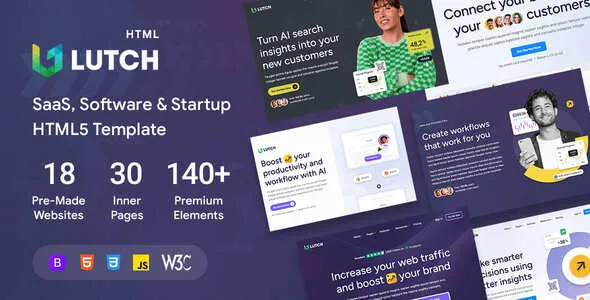
Lutch – SaaS, Software & Startup HTML5 Template
Lutch – SaaS, Software & Startup HTML5 Template is a modern and versatile website template designed for SaaS businesses, software companies, technology startups, digital agencies, and entrepreneurs looking to establish a professional online presence. With a contemporary design approach and flexible HTML5 foundation, Lutch provides a starting point for creating websites that introduce digital products, promote software solutions, showcase business services, and communicate innovative ideas. Whether you are launching a SaaS platform, presenting a software application, developing a startup website, or promoting a technology service, Lutch offers a customizable foundation for building an engaging digital experience.
In today’s competitive digital landscape, businesses need websites that communicate their value proposition clearly and help potential customers understand their products and services. A well-organized landing page can introduce a business, highlight important features, explain its advantages, and guide visitors toward relevant actions. Lutch is designed around software, SaaS, and startup-oriented website requirements, making it suitable for projects that need a professional and technology-focused presentation.
HTML5 provides a structured foundation for developing modern web pages, while additional frontend technologies can be used to customize the visual presentation and interactive elements according to project requirements. Developers can adapt the template’s content, layouts, styling, and components to align with different business objectives and branding preferences.
The actual functionality and available layouts depend on the included package, source code, and documentation. Developers should review the template’s specifications, dependencies, and supported features before implementing it in a production environment.
What Is Lutch SaaS, Software & Startup HTML5 Template?
Lutch is an HTML5 website template developed for businesses operating in the software, technology, SaaS, and startup industries. It provides a frontend foundation for presenting digital products, introducing services, communicating business information, and creating promotional landing pages.
A SaaS company may use Lutch to introduce its cloud-based software and explain how customers can benefit from its services. A startup can customize the website to present its business concept, product features, and growth objectives. A software development company may use it to showcase technical expertise, completed projects, and professional services.
The multipurpose approach makes Lutch suitable for different types of technology-oriented websites. Developers can customize the page structure, replace placeholder content, adjust visual elements, and create a website that reflects the identity of the business.
HTML5 templates are particularly useful for developers who want direct access to frontend source code. They can work with HTML, CSS, JavaScript, and compatible technologies to customize the website according to project requirements.
Lutch should be evaluated based on the available layouts, included resources, documentation, and technical requirements before deciding how it fits into a specific development project.
HTML5 Foundation for Modern Website Development
HTML5 is a fundamental technology for structuring web content and developing modern websites. It supports semantic elements that help organize page content, including headings, navigation, sections, articles, images, links, and forms.
Lutch uses an HTML5 foundation, making it suitable for developers who prefer working directly with frontend markup. The template can be customized to organize content into structured sections and create a consistent website experience.
Developers can modify page elements, update content, adjust layouts, and extend the frontend using CSS and JavaScript. Additional technologies may be incorporated depending on the project’s requirements and compatibility with the template.
This flexibility can be useful for businesses that want a customized website without relying entirely on a particular content management system.
For more advanced requirements, HTML5 can also serve as the frontend foundation for integration with backend frameworks, APIs, databases, and external services. However, dynamic application functionality must be implemented separately unless explicitly included in the package.
Modern SaaS Website and Landing Page Design
A SaaS website needs to communicate the purpose of a software product clearly. Visitors should understand what the platform does, who it serves, and how its capabilities address relevant business needs.
Lutch can be customized to create SaaS landing pages with structured content sections that introduce software products and explain their value.
A typical SaaS landing page may include:
- A hero section with a clear headline and supporting description.
- A product overview explaining the software’s purpose.
- Feature sections highlighting important capabilities.
- Benefits and use cases for different customer groups.
- Product screenshots or illustrative visuals.
- Pricing information or subscription plan details.
- Customer testimonials or supporting trust elements.
- Frequently asked questions.
- Contact information and calls to action.
These sections can be adjusted according to the specific product and the layouts available in the template.
A well-organized SaaS landing page helps visitors explore the product without unnecessary complexity. The content should prioritize practical information and guide prospective customers toward relevant next steps.
Website Solutions for Software Companies
Software companies need websites that introduce their products, communicate their technical capabilities, and explain how their solutions support customers.
Lutch can serve as a frontend foundation for software businesses offering desktop applications, web-based platforms, business management tools, productivity software, analytics products, and digital solutions.
A software company can organize its website around product information, feature descriptions, supported use cases, company background, and contact opportunities.
For example, a project management software company may explain how its platform helps organize tasks and collaboration. A business analytics provider might introduce its reporting capabilities and data-related services. A software development agency could present its expertise, service offerings, and selected projects.
The final website should reflect the company’s actual products and services. Clear descriptions and relevant visuals help visitors understand the offering without relying on exaggerated technical claims.
Responsive Design for Desktop, Tablet, and Mobile
Responsive design is essential for websites that need to provide a consistent experience across different devices. Visitors may discover a software product through a mobile search, explore the website on a tablet, or return using a desktop computer.
Lutch can be used as a foundation for developing responsive website layouts, depending on the included implementation and any additional customization required.
Responsive design helps content adapt to different screen sizes while maintaining readable text, appropriate spacing, and convenient navigation.
For SaaS and startup websites, mobile usability is important because potential customers may explore product features, compare service offerings, or contact the business from their smartphones.
Developers should test all important pages across multiple screen sizes. Navigation menus, feature sections, pricing layouts, forms, and visual elements should be reviewed to ensure they remain usable on smaller displays.
Additional custom components or integrations may require further responsive adjustments during development.
Landing Pages for Technology Startups
Technology startups often need a website that introduces their business concept, explains their product, and communicates their value proposition to potential customers, investors, or partners.
Lutch can be adapted for startup websites that focus on software innovation, digital services, technology products, and emerging business solutions.
A startup landing page can introduce the company, describe the problem it addresses, explain its proposed solution, and highlight its primary benefits. Supporting sections can provide additional information about the product, business model, target audience, and company objectives.
For a software startup, the website may emphasize product features and practical applications. A technology consulting startup may focus on professional expertise and service offerings. A digital platform startup may present its solution and explain how users can engage with it.
A clear and focused landing page helps visitors understand the business without being overwhelmed by excessive information.
Customization and Brand Identity
A consistent brand identity helps software businesses communicate their positioning and establish a recognizable online presence.
Lutch provides a customizable frontend foundation that can be adapted to the visual identity of different companies and products, depending on the styling options and structure included in the template.
Customization may involve:
- Brand colors and visual themes.
- Typography and heading styles.
- Page layouts and content sections.
- Navigation menus and footer elements.
- Product images and illustrations.
- Icons and supporting graphics.
- Buttons and calls to action.
- Spacing and alignment.
- Business information and contact details.
A SaaS platform may prefer a clean and minimal design, while an innovative technology startup may use a more expressive visual presentation. A software development company may emphasize professionalism and clarity through structured content and relevant project visuals.
Consistency across the website helps maintain a cohesive user experience. Original branding and accurate content also make the website more distinctive than an unmodified template.
Product Features and Benefits Presentation
Feature sections help software businesses communicate the capabilities of their products and explain why those capabilities matter to potential customers.
Lutch can be customized to present software features through organized content blocks, descriptive text, visual elements, and supporting illustrations, depending on the available components.
A SaaS platform may highlight workflow management, reporting, collaboration, automation, or other capabilities that are genuinely supported by its software.
Each feature should explain what it does and how it relates to the needs of the intended audience. Rather than listing technical terms without context, businesses can describe the practical purpose of individual capabilities.
Benefits should also remain accurate and relevant. Clear explanations help visitors understand the product and determine whether it is appropriate for their requirements.
A consistent feature presentation makes the information easier to scan and encourages visitors to explore the product in greater detail.
Suitable for Cloud-Based Software and Digital Products
Cloud-based software and digital products often require dedicated websites that explain their functionality, intended audience, and value proposition.
Lutch can be adapted for promoting cloud applications, subscription-based services, productivity tools, online platforms, and other digital products.
A cloud software website may introduce its platform, describe important features, present supported use cases, and provide information about available plans.
A digital product landing page can focus on a specific solution rather than presenting an entire company website. This approach can be useful for marketing campaigns, product launches, and targeted promotions.
If the website requires account registration, user authentication, subscriptions, payment processing, or interactive dashboards, developers should verify whether these capabilities are included in the package. Such functionality generally requires backend development or external integrations unless explicitly provided.
User-Friendly Navigation and Website Structure
Navigation helps visitors explore a website and locate information relevant to their needs. SaaS and software websites often contain multiple sections, so a logical navigation structure is important.
Lutch can be customized with navigation menus and page structures according to the requirements of the project.
A simple software landing page may include links to features, pricing, company information, and contact details. A larger SaaS website may require additional pages for solutions, resources, documentation, or product information.
Navigation labels should be clear and descriptive. Visitors should be able to understand where a link leads without confusion.
Content should also be organized into logical sections. Each heading should introduce a specific topic, while supporting paragraphs provide relevant details.
A structured website helps visitors move from understanding the product to exploring its features and identifying an appropriate next step.
Conversion-Focused Design for SaaS Businesses
Many SaaS and software websites are designed to encourage visitors to take a particular action. This may include requesting a product demonstration, contacting the company, exploring pricing, registering interest, or learning more about a solution.
Lutch can be customized to support conversion-focused landing pages through strategically organized calls to action and relevant content sections.
The introductory section can provide a primary action, while feature descriptions and product information can guide visitors toward additional opportunities to engage.
Calls to action should match the product and business model. A SaaS company may invite visitors to explore a demonstration, while a software development agency may encourage them to request a consultation.
If the website includes forms, developers should verify form validation, submission behavior, confirmation messages, and data processing. HTML forms alone do not provide complete backend functionality.
A clear conversion experience helps visitors understand the next step without overwhelming them with unnecessary prompts.
SEO-Friendly Website Structure
Search engine optimization can help SaaS companies and software businesses improve their online visibility and attract relevant visitors.
Lutch provides a frontend foundation that can be customized with SEO-friendly content and page structures. However, search rankings depend on content quality, technical implementation, competition, and ongoing optimization.
Important SEO practices include:
- Writing descriptive and relevant page titles.
- Creating original meta descriptions.
- Using a logical heading hierarchy.
- Organizing content around specific topics.
- Creating readable and descriptive URLs.
- Adding relevant internal links.
- Optimizing images and alternative text.
- Maintaining mobile-friendly layouts.
- Improving website loading performance.
- Publishing accurate and informative content.
A software business can create separate pages for important products, features, services, and use cases. This allows each page to address specific user needs rather than placing all information on a single landing page.
Keyword usage should remain natural and informative. Repetitive keyword insertion can reduce readability and does not guarantee improved search rankings.
Website Performance and Loading Optimization
Website performance is an important part of the user experience. Visitors expect software and SaaS websites to load efficiently and provide smooth navigation.
The performance of a Lutch-based website depends on the implementation, image assets, stylesheets, scripts, hosting environment, and additional integrations.
Developers can optimize images, review unnecessary scripts, and maintain efficient frontend code to support faster loading. Proper asset management can also help improve performance across different devices and connection speeds.
Performance testing should be carried out throughout the development process rather than only after deployment.
Important pages such as the homepage, product features, pricing information, and contact sections should be tested for loading behavior and usability.
If additional animations, third-party scripts, or embedded services are introduced, their impact on performance should be evaluated.
Integration With JavaScript and Backend Technologies
HTML5 provides a frontend foundation that can be extended with JavaScript and compatible technologies to support additional functionality.
Lutch can be customized to include frontend interactions and visual behavior according to the template’s included scripts and project requirements.
If a website needs dynamic content, user accounts, application data, payment processing, or database connectivity, additional backend development may be necessary.
Developers can integrate the frontend with APIs, backend frameworks, and external services according to the intended application architecture.
Such integrations should include appropriate validation, error handling, testing, and security considerations.
It is important to distinguish between the frontend structure included in an HTML template and the application functionality that must be developed separately. Reviewing the package documentation helps clarify the actual scope of the template.
Accessibility and User Experience
Accessibility helps make a website more convenient for visitors with different abilities, devices, and browsing preferences.
When customizing Lutch, developers should consider readable typography, sufficient color contrast, logical heading structures, descriptive links, and appropriate alternative text for informative images.
Interactive elements should be distinguishable and usable with a keyboard where applicable. Forms should include clear labels and understandable validation messages.
A software website should also present information in a logical order. Visitors should be able to identify the product, explore relevant features, and locate contact information without unnecessary navigation.
Accessibility depends on the final implementation and the content added to the template. Developers should test customized pages to identify potential usability issues before deployment.
Who Can Use Lutch SaaS, Software & Startup HTML5 Template?
Lutch can be considered for a wide range of website projects that require a professional and customizable HTML5 frontend foundation.
SaaS businesses: Introduce subscription-based software, cloud applications, and digital platforms.
Software companies: Present software products, technical services, and business solutions.
Technology startups: Communicate business concepts, product offerings, and innovative services.
IT service providers: Showcase technology consulting, software development, and professional expertise.
Digital agencies: Introduce digital solutions, services, and selected projects.
Entrepreneurs: Develop promotional websites for new businesses and digital ventures.
Product marketers: Create landing pages for software launches, campaigns, and product promotions.
Cloud technology providers: Present cloud-based applications, infrastructure services, and digital solutions.
The suitability of Lutch depends on the project’s requirements, the included layouts, and the amount of customization needed to achieve the desired result.
Documentation, Compatibility, and Development Setup
Before beginning development with Lutch, developers should review the included documentation and confirm the technical requirements.
Important considerations include HTML structure, styling framework, JavaScript dependencies, included assets, installation instructions, browser compatibility, and any additional development requirements.
Understanding the file structure helps developers identify available layouts, scripts, stylesheets, images, and supporting resources.
If the project requires additional functionality, developers should determine whether it is included in the package or requires separate implementation.
Testing the template in a development environment before deployment helps identify compatibility issues, broken links, layout problems, and unexpected behavior.
A structured development process helps ensure that the finished website aligns with the project’s goals and provides a consistent user experience.
Final Thoughts on Lutch SaaS, Software & Startup HTML5 Template
Lutch – SaaS, Software & Startup HTML5 Template is a versatile frontend development option for SaaS businesses, software companies, technology startups, digital agencies, and entrepreneurs looking to build a professional online presence.
Its software-oriented design approach and HTML5 foundation provide a customizable starting point for presenting digital products, communicating business information, highlighting features, and creating promotional landing pages.
Developers can adapt the template’s structure, visual styling, content sections, and frontend interactions according to their project requirements. Additional dynamic functionality may require backend development, API integration, or external services depending on the included package features.
A successful website depends on more than its visual design. Clear content, responsive layouts, accessibility, SEO practices, performance optimization, and ongoing maintenance all contribute to a professional and useful digital experience.
For developers seeking an HTML5 foundation for a SaaS, software, or startup website, Lutch can be evaluated as part of a broader website development strategy. With thoughtful customization, original content, and appropriate technical implementation, it can support a modern digital presence that communicates product value and helps businesses connect with their target audiences.