My Account
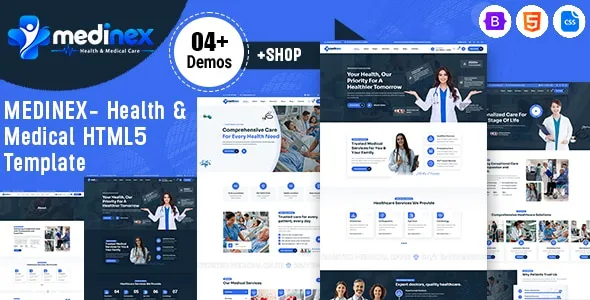
Medinex – Health & Medical HTML5 Template
Medinex – Health & Medical HTML5 Template is a professional website development solution designed for hospitals, medical clinics, healthcare centers, doctors, diagnostic laboratories, and other organizations operating in the healthcare industry. Built as an HTML5 template, Medinex provides a frontend foundation for creating an informative and visually organized healthcare website. It can help businesses and developers present medical services, introduce healthcare professionals, share important facility information, and provide convenient ways for visitors to explore available services and contact the organization.
A healthcare website needs to communicate information clearly while creating a professional and welcoming online experience. Patients and visitors may use a medical website to learn about available treatments, find department information, review doctor profiles, understand consultation procedures, or locate contact details. A well-organized website can make these tasks easier by presenting important information through clear navigation, readable content, and relevant visual elements.
Medinex is intended for healthcare-related website projects that require a structured presentation of medical services and organizational information. Developers can customize its layouts, colors, typography, images, and content to match the identity of a hospital, clinic, or healthcare provider. Depending on the supplied files and project requirements, the template can be extended with additional features and connected to suitable booking systems, contact forms, or healthcare management platforms. The actual functionality depends on the included source code and integrations.
What Is Medinex Health & Medical HTML5 Template?
Medinex is an HTML5 website template designed for medical and healthcare-related projects. It provides a starting point for developers who want to create a professional healthcare website without building every visual element and page structure from the beginning.
Healthcare organizations often need to communicate different types of information. A hospital may introduce its departments, medical specialists, diagnostic facilities, and patient services. A private clinic may focus on its doctors, consultation options, treatment information, and appointment procedures. A diagnostic center may highlight available tests, laboratory services, and operating hours.
A suitable medical website should make this information easy to locate. Visitors should be able to understand what services are available, identify relevant departments, and find appropriate contact details without unnecessary navigation steps.
Medinex can be evaluated for different healthcare website requirements, including hospital websites, medical practices, dental clinics, diagnostic laboratories, specialist centers, and healthcare service providers. Its suitability depends on the layouts and components included in the current template package.
As an HTML5 template, Medinex provides frontend website structure and styling. It does not automatically include a complete hospital management system, patient database, electronic health record platform, or medical appointment backend. These capabilities require separate development or integration with appropriate services.
Designed for Hospitals and Healthcare Organizations
Hospitals and healthcare organizations need websites that explain their services and help visitors understand where to find relevant information. A professional online presence can support patient communication and make essential facility details more accessible.
Medinex can serve as a starting point for presenting hospital information through dedicated sections for departments, medical services, doctors, facilities, and contact details, depending on the available layouts.
A general hospital may use its website to introduce multiple medical departments and explain the services available at its facilities. A specialty hospital may focus on particular areas of care, while a smaller healthcare center may prioritize consultations, diagnostic services, and patient inquiries.
Healthcare organizations should ensure that all published information is accurate and current. Department details, doctor profiles, consultation information, telephone numbers, and operating hours should be reviewed regularly.
The website should also make it clear how visitors can contact the organization for further information. Clear communication can reduce confusion and help patients identify the appropriate next step.
Professional Healthcare Homepage Design
The homepage is often the first introduction visitors receive to a healthcare organization. It should communicate the institution’s purpose and make important information easy to access.
Medinex can be customized for a healthcare homepage that introduces the organization through a clear headline, supporting content, and relevant medical imagery. Depending on the supplied page structures, additional sections may highlight healthcare services, medical departments, featured doctors, facility information, and contact opportunities.
A hospital homepage may introduce its major departments and patient services. A private clinic might focus on consultation information and specialist profiles. A diagnostic center may highlight available testing services and laboratory facilities.
The homepage should prioritize the information that visitors are most likely to need. Important contact details and service information should be easy to find, while supporting sections can provide more context about the organization.
Avoid overwhelming visitors with too many unrelated messages. A focused layout with readable content and straightforward navigation can create a more useful healthcare website experience.
Medical Departments and Healthcare Services
Medical departments help visitors understand the different areas of care offered by a hospital or healthcare center. Organizing these services into dedicated sections can make the website easier to explore.
Medinex can be adapted to present department information and healthcare services according to the layouts included in the template. Developers can create separate sections or pages for different medical specialties and service categories.
Depending on the healthcare organization, these may include:
- General Medicine
- Cardiology
- Orthopedics
- Dermatology
- Pediatrics
- Neurology
- Gynecology
- Dentistry
- Ophthalmology
- Diagnostic Imaging
- Laboratory Services
- Physiotherapy
Each department page should provide relevant information about the services offered, the intended patient audience, and the appropriate contact or consultation process.
Healthcare content should be reviewed by qualified professionals where necessary. Medical descriptions should remain accurate, understandable, and consistent with the actual services provided by the organization.
Doctor Profiles and Medical Specialist Information
Doctor profiles are an important part of many healthcare websites. Patients may want to learn about a medical professional’s specialty, qualifications, experience, and consultation availability before making an inquiry.
Medinex can be customized to present doctor information through individual profile sections or dedicated pages, depending on the available components.
A professional doctor profile may include:
- Doctor’s name and professional title.
- Medical specialty.
- Verified qualifications.
- Professional experience.
- Areas of clinical practice.
- Consultation information.
- Relevant profile photograph.
- Contact or appointment instructions.
Healthcare organizations should publish only accurate and verified professional information. Qualifications, certifications, and experience should not be exaggerated or presented without appropriate confirmation.
A well-organized specialist directory can help visitors identify the professionals associated with the organization and understand which department may be relevant to their needs.
Appointment Information and Booking Integration
Appointment information is an important part of a healthcare website. Patients may need to understand how consultations are arranged, which doctors are available, and what information they should provide when making an inquiry.
Medinex can be used as a frontend foundation for presenting appointment-related information. Depending on the supplied components, developers may customize appointment forms, contact sections, and consultation calls to action.
A typical appointment request interface may collect basic information such as a patient’s name, contact details, preferred department, requested doctor, and preferred consultation date. The exact fields should be determined by the healthcare organization’s requirements.
However, an HTML template does not automatically provide a complete appointment scheduling system. Features such as real-time doctor availability, appointment confirmation, calendar synchronization, reminders, and cancellation management require backend development or integration with a suitable booking platform.
Before launch, all appointment-related forms should be tested carefully. Organizations should also explain how submitted information will be handled and how patients will receive confirmation.
Patient-Friendly Website Navigation
Healthcare websites serve visitors with different levels of technical knowledge and varying information needs. Navigation should therefore be simple, consistent, and easy to understand.
Medinex can be customized with a navigation structure that prioritizes important healthcare pages. Depending on the website’s scope, menu items may include Home, About, Departments, Doctors, Services, Appointments, Blog, and Contact.
Clear labels help visitors understand where each section leads. A patient looking for a specialist should be able to find doctor information without exploring unrelated pages. Similarly, visitors seeking contact details should not need to search through lengthy content.
A larger hospital may require separate navigation groups for departments, facilities, patient information, and medical resources. A smaller clinic may need only a concise menu with its main services and contact information.
The most effective navigation structure depends on the organization and its audience. Avoid adding unnecessary menu items that make the website more difficult to use.
Diagnostic Centers and Laboratory Websites
Diagnostic laboratories and medical testing centers need websites that clearly explain available services and provide practical information for visitors.
Medinex can be considered for diagnostic center websites that present laboratory services, imaging facilities, testing categories, and general inquiry information. Developers can customize the content to reflect the actual services provided by the organization.
A diagnostic center may organize its services into categories such as blood testing, pathology, radiology, ultrasound, and other diagnostic procedures where applicable.
Each service page should explain the relevant facility or testing service using accurate, professionally reviewed information. If preparation instructions are provided, they should be approved by the appropriate healthcare professionals.
A diagnostic website may also include information about operating hours, sample collection procedures, facility locations, and contact methods. These details should be maintained regularly so visitors can rely on the published information.
Responsive Design for Desktop, Tablet, and Mobile
Patients may access a healthcare website through desktop computers, tablets, or smartphones. A responsive layout helps ensure that important information remains accessible across different screen sizes.
Medinex can be customized for different viewport sizes according to the responsive behavior supported by its included styles and layouts. Developers should test the complete website rather than relying only on the homepage.
On mobile devices, navigation should remain straightforward, text should be readable, and contact buttons should be easy to select. Doctor profiles, department information, service descriptions, and forms should fit comfortably within the available screen space.
Responsive testing should include all important page types. A doctor directory may behave differently from a service page, while forms and tables may require additional adjustments.
Custom CSS, embedded maps, third-party widgets, and external scripts can affect the final layout. Testing after major design changes helps identify issues before the website is published.
Healthcare Branding and Visual Customization
A medical website should reflect the identity of the healthcare organization while maintaining a clear and professional presentation. Visual consistency can help visitors recognize the brand and navigate different sections more comfortably.
Medinex can be customized through changes to colors, typography, spacing, logos, images, and other styling elements supported by the supplied source code.
A hospital may prefer a clean visual identity with clear information hierarchy. A pediatric clinic might use a warmer and more approachable presentation, while a specialist center may choose a restrained design that emphasizes professional information.
Medical imagery should be relevant and appropriate. Images should support the content rather than distract from important patient information. Doctor photographs, facility images, and service-related visuals should be genuine or properly licensed.
Consistency across headings, buttons, cards, and navigation elements helps maintain a recognizable website identity.
About Page and Healthcare Organization Information
An About page introduces the healthcare organization and explains its background, purpose, facilities, and approach to patient services.
Medinex can be adapted to include information about the hospital, clinic, or medical center through a dedicated page or suitable homepage sections.
Useful content may include the organization’s history, its medical specialties, facility information, professional team, and service philosophy. Healthcare organizations can also explain their general approach to patient communication and care coordination.
The information should remain factual and relevant. Statements about accreditations, certifications, clinical outcomes, and professional achievements should only be published when they can be verified.
A well-written About page helps visitors understand the organization and provides context for the services presented elsewhere on the website.
Patient Information and Frequently Asked Questions
Visitors often have practical questions before contacting a hospital or clinic. A patient information section can help answer common questions and make important details easier to find.
Medinex can be extended with informational sections or FAQ pages according to the website’s requirements and the available layouts.
Possible topics include:
- How to contact the healthcare facility.
- How to request an appointment.
- Department operating hours.
- General consultation procedures.
- Available diagnostic services.
- Location and accessibility information.
- Payment and insurance information, where applicable.
- General visitor guidelines.
Answers should be accurate and approved by the healthcare organization. Medical questions that require individual assessment should direct visitors to an appropriate qualified professional rather than presenting generic website content as a personal diagnosis or treatment recommendation.
Clear patient information can make the website more useful while reducing uncertainty about basic administrative procedures.
Contact Forms and Patient Inquiries
A healthcare website should provide convenient ways for visitors to contact the organization. Patients may need to ask about services, request general information, or inquire about appointments.
Medinex can be customized with contact sections and form interfaces based on the components included in the template. A typical inquiry form may collect a name, email address, telephone number, and a short message.
The form should request only the information necessary for the intended purpose. Sensitive medical information should not be collected through an ordinary contact form unless the organization has implemented appropriate security and privacy protections.
Developers should connect forms to a suitable backend or form service and test submission handling, validation, spam protection, and notification delivery.
The website should also explain how inquiries are handled and provide alternative contact details when appropriate. Clear contact pathways help visitors communicate with the healthcare organization more easily.
SEO-Friendly Structure for Medical Websites
Search engine optimization can help patients and visitors discover relevant healthcare information online. A well-organized HTML website provides a useful foundation, but search visibility depends on content quality, technical implementation, local competition, and ongoing optimization.
Each important page should have a clear topic and descriptive title. A hospital may create dedicated pages for its departments, while a clinic can develop service pages that explain its specialties and consultation information.
Developers should review the following SEO elements:
- Descriptive page titles and meta descriptions.
- Logical heading hierarchy.
- Clear and readable URLs.
- Original department and service descriptions.
- Relevant internal links.
- Descriptive alternative text for images.
- Optimized image sizes and formats.
- Mobile usability.
- Appropriate structured data where supported.
- Accurate business name, address, and contact details.
Healthcare content requires particular attention to accuracy and credibility. Medical information should be prepared or reviewed by qualified professionals, and claims about treatments, outcomes, and qualifications should be supported by reliable information.
For local healthcare organizations, accurate location details and consistent contact information can help visitors identify the correct facility. SEO should support useful patient information rather than rely on repetitive keywords or unsupported medical claims.
Medical Blog and Health Education Content
A healthcare blog can provide educational information, introduce medical services, and answer general questions from visitors. It can also help organizations communicate health-related updates and explain their areas of expertise.
Medinex can be adapted for a blog or article section depending on the included layouts and development requirements.
Hospitals may publish general information about their departments, healthcare professionals may contribute educational articles within their areas of expertise, and diagnostic centers may explain available testing services.
Health-related content should be reviewed for accuracy and written in language that readers can understand. Articles should distinguish general educational information from individual medical advice. They should not promise specific outcomes or encourage visitors to delay necessary professional care.
A well-maintained blog can support the website’s information strategy and provide useful resources for patients and visitors.
Website Performance and Image Optimization
Website speed is important for healthcare websites because visitors may need to access contact details or service information quickly. Large images, unnecessary scripts, and inefficient external integrations can affect page loading performance.
The actual performance of a Medinex-based website depends on the hosting environment, image assets, stylesheets, JavaScript, and any third-party services used.
Developers should optimize doctor photographs, facility images, and other visual assets for suitable dimensions and file sizes. Images should retain enough quality to represent the organization professionally without creating unnecessary loading delays.
Other optimization practices may include reviewing unused scripts, reducing unnecessary external requests, and using suitable caching and compression techniques where supported by the hosting environment.
Performance testing should cover the homepage, doctor profiles, department pages, service descriptions, and contact forms. Regular reviews help identify issues as new content and integrations are added.
Accessibility and User-Friendly Healthcare Experience
A healthcare website should be usable by visitors with different needs and browsing preferences. Clear information, readable typography, suitable color contrast, and predictable navigation can improve the experience for a wider audience.
When customizing Medinex, developers should use semantic HTML elements, logical heading structures, descriptive links, and meaningful alternative text for important images.
Forms should include clear labels and understandable instructions. Interactive controls should be easy to identify and operate, including through keyboard navigation where appropriate.
Important information should not rely on color alone. For example, form errors should include explanatory text rather than only changing a field’s color.
Accessibility should be reviewed across the complete website. Automated testing tools can help identify some issues, but manual keyboard testing and practical usability reviews are also important.
HTML5 Customization and Developer-Friendly Implementation
Medinex is an HTML5 development template intended to be customized according to the requirements of a healthcare website project. Developers can review the supplied files and adapt the frontend structure, styles, content, and interactive elements.
A typical customization process may include reviewing the project structure, identifying the included HTML pages, updating images and content, modifying styles, and configuring navigation.
Developers should check the package documentation for the actual technologies and dependencies included. The specific CSS framework, JavaScript libraries, plugins, browser support, and setup instructions should be confirmed from the supplied files rather than assumed.
If the website requires appointment scheduling, patient accounts, staff administration, online payments, or other dynamic features, the frontend may need to be connected to a suitable backend or third-party platform.
Keeping custom code organized and maintaining a backup of the original template can make future updates easier. Developers should also test all important pages after changing shared components or styles.
Integration with Healthcare and Business Services
A medical website may need to connect with additional services to support its operational requirements. These integrations depend on the organization’s existing systems and the functionality required from the website.
Potential integrations may include:
- Appointment booking platforms.
- Contact form services.
- Maps and location services.
- Email notification systems.
- Analytics tools.
- Content management systems.
- Patient inquiry platforms.
- Secure healthcare software, where appropriate.
The suitability of each integration should be evaluated carefully. Healthcare applications may process sensitive information, so developers must consider data protection, access permissions, security, and applicable regulatory requirements.
A simple informational website may only need contact forms and location information, while a larger hospital website may require more extensive integrations. The final implementation should match the organization’s actual operational needs.
Who Can Use Medinex Health & Medical HTML5 Template?
Medinex may be suitable for different healthcare organizations and development projects that need a professional medical website foundation.
Hospitals: Introduce medical departments, healthcare professionals, facilities, and patient information.
Medical Clinics: Present consultation services, specialist information, operating hours, and contact details.
Doctors and Specialists: Create professional websites that introduce qualifications, specialties, and consultation information.
Diagnostic Laboratories: Highlight testing services, laboratory facilities, and general visitor information.
Dental Clinics: Present dental services, practitioner profiles, and appointment inquiry options.
Specialty Healthcare Centers: Organize information around particular medical departments and specialist services.
Physiotherapy Centers: Introduce rehabilitation services, professional information, and facility details.
Healthcare Startups: Establish an informational website for a healthcare-related service or business.
Web Development Agencies: Use an HTML frontend foundation for building customized healthcare websites for clients.
The right application depends on the website’s requirements, the available template components, and any additional functionality needed.
Tips for Building a Professional Healthcare Website with Medinex
A successful healthcare website should prioritize accuracy, clarity, and visitor convenience. The template provides a starting point, but the final result depends on how the organization plans and implements its content.
Begin by identifying the website’s primary purpose. Determine whether it will introduce a hospital, promote a clinic, present medical specialists, explain diagnostic services, or provide general healthcare information.
Prepare accurate content for all important pages. This may include department descriptions, doctor profiles, facility information, consultation details, contact information, and patient guidance. Have medical information reviewed by qualified professionals where necessary.
Establish a consistent visual identity using suitable colors, typography, logos, and relevant images. Replace all placeholder text and photographs with genuine information that represents the organization.
Keep navigation simple and make important details easy to locate. Visitors should be able to find department information, contact details, and appointment instructions without unnecessary steps.
Before launch, test the website on desktop and mobile devices. Review navigation, forms, links, page loading, image presentation, accessibility, and SEO settings. Verify that all published medical and organizational information is accurate.
Finally, create a maintenance plan that includes content reviews, software updates, backups, performance monitoring, and security checks. Regular maintenance helps keep the website dependable as the organization develops.
Final Thoughts on Medinex – Health & Medical HTML5 Template
Medinex – Health & Medical HTML5 Template is a potential frontend starting point for developers, hospitals, clinics, diagnostic centers, and other healthcare organizations planning to establish a professional online presence. Its intended medical and healthcare application makes it relevant to projects that need to present departments, medical services, doctor information, facility details, and patient communication resources.
A well-customized healthcare website can combine clear navigation, informative service pages, professional doctor profiles, responsive layouts, and convenient contact opportunities. These elements can help visitors understand the organization and locate the information they need.
The final capabilities depend on the supplied HTML5 files, styling, JavaScript components, and available documentation. Features such as appointment scheduling, patient accounts, medical records, online payments, and hospital administration require additional development or suitable integrations. Reviewing the current demo and documentation before implementation is therefore important.
Long-term website quality also depends on accurate medical content, responsive testing, accessibility, performance optimization, SEO practices, privacy, and regular maintenance. A template alone cannot guarantee patient inquiries or search rankings, but it can provide a useful foundation for a carefully developed healthcare website.
For healthcare organizations seeking a customizable HTML5 starting point, Medinex can be evaluated as part of a broader digital presence strategy. With professional customization, reliable information, and appropriate integrations, it can help create an organized website that supports healthcare communication and makes essential information more accessible to visitors.