My Account
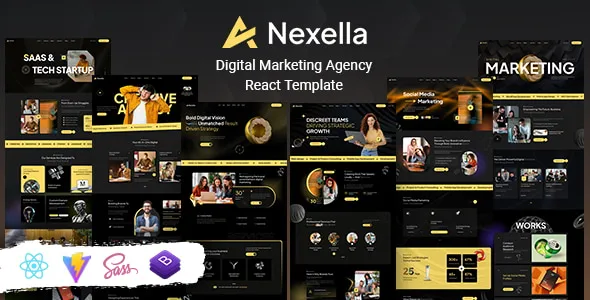
Nexella – Digital Marketing Agency React Template
Nexella – Digital Marketing Agency React Template is a modern and professional website template designed for digital marketing agencies, SEO consultants, creative studios, advertising companies, social media managers, and online business growth specialists. Built with React, Nexella provides a flexible foundation for creating an engaging agency website that communicates your services, showcases your projects, strengthens your brand identity, and helps attract potential clients. Whether you are launching a new digital marketing business, refreshing an existing company website, or developing a website for a client, this template offers a starting point for building a polished online presence.
In today’s competitive digital landscape, a professional website is an important part of establishing credibility and generating business opportunities. Customers often explore an agency’s website before deciding whether to request a consultation or invest in marketing services. Nexella helps developers create a structured digital experience where visitors can learn about the company, explore its services, review portfolio projects, and discover how the agency can support their business goals. With suitable customization, the template can be adapted to different marketing specialties, visual identities, and business requirements.
Nexella is suitable for businesses working in search engine optimization, social media marketing, paid advertising, content marketing, branding, website development, and digital strategy. Its React-based development foundation gives developers the flexibility to customize interface components, adjust page layouts, update content, and extend the website according to project needs. The exact pages, components, and included functionality depend on the supplied product package, so buyers should review the current documentation before implementation.
What Is Nexella – Digital Marketing Agency React Template?
Nexella is a React website template created for digital marketing and creative agency websites. React is a JavaScript library used to build interactive user interfaces through reusable components. This component-based approach can help developers create consistent website sections, simplify maintenance, and organize the implementation of a business website.
For a digital marketing agency, the website needs to explain services clearly, demonstrate expertise, communicate brand values, and provide convenient ways for visitors to make contact. Nexella can serve as a foundation for organizing these elements into a cohesive online experience.
Developers can adapt the template’s content and appearance to represent different business models. An SEO consultancy might emphasize search optimization and content strategy, while a social media agency could focus on campaign creativity and audience engagement. A full-service digital marketing company may use the website to introduce multiple services and demonstrate how they work together.
Rather than starting with an entirely blank project, developers can customize the supplied template according to their needs. This can help reduce initial interface development work, although the actual time saved depends on the included package and the complexity of the required modifications.
Modern Design for Digital Marketing Agencies
A digital marketing agency website should communicate professionalism while making its services easy to understand. Visitors should quickly recognize what the business does, who it serves, and how to take the next step.
Nexella provides a starting point for creating a contemporary agency presentation. Developers can customize the visual hierarchy, typography, colors, imagery, and content structure to reflect the business’s identity. A consistent visual approach helps create a recognizable brand experience across the homepage, service pages, project presentations, and contact sections.
Marketing agencies have different audiences and positioning strategies. A performance marketing company may prefer a data-oriented visual identity, while a creative studio may focus on expressive imagery and distinctive design. A business consulting agency may prioritize clarity, trust, and professional communication.
By adapting the design to its target audience, an agency can create a website that feels relevant to its services instead of relying on generic marketing language. The final design should also prioritize readability, straightforward navigation, and clear calls to action.
React-Based Website Development
React provides a component-based approach to building user interfaces. Instead of treating every page as a completely separate structure, developers can organize common elements into reusable components and maintain consistency across the website.
For example, navigation elements, service cards, project previews, testimonials, and call-to-action sections can be structured as reusable interface components where appropriate. When a shared component needs an update, developers may be able to apply that change consistently wherever the component is used.
This approach can be useful for agency websites that need regular updates. New services can be introduced, portfolio projects can be added, and existing content can be revised as the business develops.
React also supports the creation of interactive interfaces when the necessary components and logic are implemented. However, not every interactive feature is automatically included in a template. Buyers should review the supplied code and documentation to understand which components and functions are already available.
Professional Homepage for Agency Branding
The homepage plays a central role in introducing a digital marketing agency. It should explain the agency’s purpose, communicate its main value proposition, and direct visitors toward useful information.
Nexella can be customized into a homepage that introduces the business through a clear headline, concise supporting copy, and a prominent call to action. This opening section can explain the agency’s specialization and encourage visitors to explore its services or request a consultation.
Additional sections may introduce service categories, featured projects, client feedback, business achievements, and information about the agency’s team. The specific structure should reflect the needs of the intended audience and the pages included in the template.
For example, an SEO agency may highlight organic search strategy and website optimization, while an advertising agency may focus on campaign planning and measurable marketing objectives. A creative studio might emphasize its portfolio and design capabilities.
The most effective homepage content is specific and useful. Replace demonstration text with accurate information about your business, explain what makes your services relevant, and use calls to action that correspond to actions your team can deliver.
Digital Marketing Services Presentation
Clear service presentation helps prospective customers understand what an agency offers. Nexella can be adapted to introduce individual marketing services through organized content sections and dedicated pages where supported by the implementation.
Potential service categories include search engine optimization, social media management, paid advertising, content marketing, email marketing, brand strategy, conversion optimization, and digital consulting.
Each service description should explain what the service involves, which business challenges it addresses, and how clients can learn more. Agencies can also describe their processes, typical deliverables, and the ways they evaluate campaign performance.
Creating separate pages for important services can provide more room for detailed explanations and relevant examples. It also allows the agency to organize its navigation around the solutions its customers are most likely to need.
The service list should accurately represent the business. Instead of claiming expertise in every area of digital marketing, focus on the services the agency can genuinely provide and explain them with clear, customer-oriented language.
Search Engine Optimization Services
Search engine optimization is an important service for many digital marketing agencies. Nexella can be customized to present SEO consulting, technical optimization, keyword research, on-page improvements, content planning, and local search strategies.
An SEO-focused website should explain how its services help businesses improve website accessibility, content relevance, search visibility, and the overall user experience. Visitors may also benefit from learning about the agency’s audit process, reporting approach, and methods for prioritizing technical and content improvements.
Dedicated service pages can target different customer needs. For example, a local SEO page may explain business profile optimization and location-specific content, while a technical SEO page can describe crawling, indexing, website structure, and performance-related considerations.
The website itself should follow good SEO practices. Use descriptive page titles, unique meta descriptions, meaningful headings, relevant internal links, and descriptive alternative text for informative images. Make sure important pages can be discovered and indexed when appropriate.
React does not guarantee search engine rankings or automatically make every page SEO-ready. Developers should verify the rendering approach, metadata configuration, crawlability, and indexing behavior of the completed implementation.
Social Media Marketing and Advertising
Social media marketing businesses need a website that communicates creativity, audience understanding, and effective campaign planning. Nexella can be customized to present social media management, content creation, campaign strategy, and platform-specific marketing services.
An agency may explain how it plans content calendars, develops creative assets, manages community engagement, and evaluates campaign results. Visual examples can help visitors understand the agency’s style and the types of work it produces.
Paid advertising agencies can use the website to introduce campaign setup, audience research, advertising creative, budget management, and performance analysis. Where accurate and authorized data is available, case studies can explain campaign objectives and documented outcomes.
A clear explanation of the agency’s workflow can also help potential clients understand what working together involves. Information about discovery, planning, implementation, reporting, and ongoing optimization may make the service easier to evaluate.
All performance claims should be genuine and appropriately supported. Avoid publishing invented campaign figures, unsupported guarantees, or client information without permission.
Portfolio and Creative Project Showcase
A portfolio allows an agency to demonstrate its capabilities through real examples of completed work. Nexella can serve as a starting point for presenting campaign designs, website projects, branding work, marketing strategies, and other relevant professional projects.
Each portfolio entry can include a project title, an overview of the client’s needs, the work completed, and the outcome where reliable information is available. This gives prospective customers a clearer understanding of the agency’s approach.
For a digital advertising project, a case study might describe the target audience, campaign structure, creative direction, and performance measurements. An SEO project might focus on technical improvements, content development, or documented changes in organic search performance.
Creative agencies may prefer image-led project presentations, while performance-focused agencies may emphasize the objectives and measurable results of each engagement.
Portfolio organization should reflect the types of services offered. Developers can adapt categories and page structures according to the supplied code and the agency’s requirements. Confirm whether advanced filtering or dynamic project management is included before relying on those features.
About Us and Team Introduction
The about page gives visitors an opportunity to understand the people and principles behind a marketing agency. It can explain the company’s background, mission, working philosophy, and areas of expertise.
Nexella can be customized to present an agency introduction, explain its approach to client relationships, and introduce team members where relevant. Professional profiles may include roles, experience, and specialist skills that help customers understand who will be working on their projects.
Agencies can also explain their typical workflow, from the initial consultation through research, strategy development, campaign execution, and reporting. This helps potential customers form realistic expectations before beginning an engagement.
Authenticity is important when creating company content. Use genuine team information, accurate credentials, and specific descriptions of the agency’s experience instead of unsupported statements about industry leadership.
Client Testimonials and Business Credibility
Trust is an important consideration when customers choose a marketing partner. Visitors may want to know whether an agency communicates clearly, understands business challenges, and provides reliable professional services.
Where suitable sections are available, Nexella can be adapted to display client testimonials, approved company logos, verified achievements, and selected project highlights. These elements can reinforce credibility when used accurately and responsibly.
Testimonials should represent genuine feedback and should be published with appropriate permission. Client logos should only be used in ways permitted by the relevant organization or agreement.
An agency can strengthen trust further by explaining its communication practices, project process, reporting methods, and approach to evaluating results. Practical details can help customers understand what to expect from a professional engagement.
Conversion-Focused Calls to Action
A digital marketing website should make it easy for visitors to take the next step. Once potential customers understand the agency’s services, they should be able to request information, discuss a project, or arrange a consultation.
Nexella can be customized with clear calls to action such as requesting a marketing audit, discussing a campaign, asking for a proposal, or contacting the team. Button labels should describe the action accurately and should be consistent with the agency’s actual process.
Contact forms should request only the information needed to start a conversation. Depending on the supplied implementation, functional form submissions may require a backend service, email integration, third-party form provider, or custom development.
A visible contact form does not necessarily mean that email delivery and submission processing are configured. Test the complete form workflow before launching the website and make sure visitors receive appropriate confirmation when a message is submitted.
Responsive Website Experience
Visitors may access a marketing agency website through desktop computers, tablets, and mobile phones. A responsive layout helps the content adapt to different screen sizes and makes the website easier to use across devices.
When customizing Nexella, developers should check navigation behavior, typography, service cards, project images, buttons, and forms at different viewport sizes. Important content should remain readable, and interactive elements should be easy to operate on touchscreens.
Responsive behavior depends on the actual styles and components supplied with the product. Test the completed website rather than assuming every page will work perfectly without adjustment.
Mobile usability is especially relevant for agencies receiving visitors from social media campaigns, mobile search results, and paid advertisements. A clear mobile layout can help visitors explore the services and find contact information without unnecessary effort.
Website Performance and Code Maintainability
Performance is an important part of website usability. Pages that load efficiently and respond smoothly can create a better experience for visitors, particularly those using slower internet connections or less powerful devices.
React provides a flexible foundation for developing interfaces, but performance depends on how the website is implemented. Developers should review image sizes, third-party scripts, component behavior, unnecessary dependencies, and the amount of JavaScript delivered to the browser.
A maintainable codebase can also make future improvements easier. Reusable components, consistent naming conventions, and organized content structures can simplify updates as the agency introduces new services or expands its portfolio.
After customization, test the website with appropriate performance and accessibility tools. Review page loading, layout stability, interaction responsiveness, and the effect of analytics tools or other external scripts.
No particular loading speed or performance score should be assumed without testing the finished implementation in its intended hosting environment.
Content Marketing and Blog Opportunities
Content marketing allows agencies to demonstrate expertise, answer customer questions, and provide useful educational resources. Nexella can serve as a foundation for a content section if the supplied package includes appropriate blog pages or is extended to support publishing.
Potential topics include SEO best practices, paid advertising strategies, social media planning, conversion optimization, email marketing, and digital brand development. Useful articles can help readers understand common challenges and discover relevant agency services.
A well-organized content structure may include descriptive article titles, categories, author information, internal links, and clear navigation. Articles should provide original insights and practical explanations rather than repeat keywords without meaningful information.
If the product does not include a complete blog or content management system, developers may need to create additional page templates or integrate an appropriate content platform. Verify the included functionality if content publishing is a major requirement.
Custom Branding and Visual Identity
A professional agency website should reflect the business’s own identity instead of looking like an unchanged demonstration project. Nexella can be customized with brand colors, typography, images, icons, and written content to create a more distinctive presentation.
A creative agency might prefer expressive layouts and bold visual elements, while a business consultancy may choose a restrained palette and structured typography. A marketing technology company may prioritize clear information and product-oriented visuals.
Consistency should extend across the entire website. Use coordinated styling for headings, buttons, navigation, service sections, project cards, and footer elements. A consistent visual language can make the website easier to recognize and navigate.
Replace placeholder content before publishing, and ensure that all images, fonts, icons, and other assets are licensed for the intended use. Accurate company information and authentic project examples help create a more credible website.
Suitable Businesses and Use Cases
Nexella can be adapted for a variety of digital marketing and creative business projects.
Digital marketing agencies: Introduce marketing services, highlight completed projects, and encourage visitors to request consultations.
SEO consultants: Present technical SEO, keyword research, content optimization, local search services, and organic visibility strategies.
Social media marketing companies: Showcase social media management, creative content, audience engagement, and campaign planning.
Performance marketing agencies: Explain paid advertising, conversion optimization, campaign management, and performance analysis.
Creative studios: Present branding projects, website designs, advertising creatives, and visual communication services.
Freelance marketing professionals: Create a professional online portfolio with service information, project examples, and contact details.
Startup marketing businesses: Establish an online presence for a newly launched agency and expand the website as services develop.
Web development companies: Adapt the template for a business website or a client project, subject to the applicable product license.
The amount of customization required depends on the desired website structure, available functionality, and technical requirements.
Developer-Friendly Customization Workflow
Before modifying Nexella, review the included documentation and identify the required development environment, package manager, dependencies, and available project scripts.
Install the project according to the supplied instructions and inspect the existing page structure. Identify shared components and understand how navigation, content sections, styling, and interactive elements are organized.
Next, customize the website’s branding and content. Replace demonstration text, update imagery, adjust colors and typography, and organize service pages around the needs of the target audience. Modify or remove sections that are not relevant to the project when the supplied code permits.
After customization, test internal links, navigation, buttons, forms, image loading, and responsive behavior. Review metadata and indexing settings, check for console errors, and confirm that any required external services are configured correctly.
Finally, follow the documented build and deployment process. The exact commands and configuration requirements depend on the supplied project version, so developers should use the product documentation as the primary reference.
SEO-Friendly Website Structure
A clear website structure helps visitors and search engines understand how information is organized. Nexella can be customized with descriptive page titles, meaningful headings, relevant internal links, and focused service content.
Each important page should serve a distinct purpose. An SEO service page should explain search optimization, while a social media page should focus on audience engagement and campaign management. This approach helps create useful pages instead of multiple versions of nearly identical content.
Use unique meta descriptions, descriptive image alternative text, and readable URLs where supported. Ensure that important pages are linked from relevant navigation or content sections so visitors can discover them easily.
Technical checks may include sitemap configuration, robots directives, canonical URLs, redirect handling, structured data where appropriate, and confirmation that intended pages can be crawled and indexed.
SEO success depends on many factors, including content quality, competition, technical implementation, relevance, links, and ongoing optimization. Using a React template alone does not guarantee search rankings or traffic growth.
User Experience and Website Navigation
Effective navigation helps visitors find the information they need without confusion. A digital marketing agency website commonly needs clear routes to services, portfolio projects, company information, articles, and contact details.
When customizing Nexella, prioritize the most important pages and use straightforward navigation labels. Avoid overcrowding the main menu with every service or secondary link. Group related services logically and make important contact actions easy to find.
Readable typography, sufficient color contrast, accessible form labels, and predictable interactive behavior also contribute to a better user experience. Developers should check keyboard navigation and other accessibility considerations as part of quality assurance.
A clear and accessible website helps more visitors explore the agency’s offering across different devices and browsing conditions.
Integration and Future Expansion
Digital marketing agencies may need to connect their websites with analytics tools, customer relationship management systems, email marketing services, scheduling platforms, or third-party form providers.
Nexella may be extended to support these integrations depending on the codebase, available services, and implementation requirements. Developers should confirm compatibility and follow the setup instructions for each integration.
Add only the tools that serve a clear purpose. Excessive scripts can affect loading performance, complicate maintenance, and introduce unnecessary data collection. Where required, provide suitable privacy information and consent controls.
Third-party integrations, automated reporting, appointment booking, authentication, and advanced form processing should not be assumed to be included unless they are explicitly listed in the current product documentation.
Important Considerations Before Purchase
Before purchasing Nexella, review the current product listing and documentation to confirm the package contents. Check the supported React version, installation requirements, dependencies, included page layouts, source files, and any known limitations.
Confirm whether the template provides the specific sections and functions your project requires. Working contact forms, blog management, analytics integration, multilingual support, and other advanced capabilities may require additional setup or development.
Review the applicable license, especially if you intend to use the template for client work or commercial projects. Verify the usage rights for included images, fonts, icons, and other third-party resources.
Checking these details before implementation can help you estimate the required customization and avoid unexpected compatibility issues.
Why Choose Nexella – Digital Marketing Agency React Template?
Nexella offers a focused starting point for building a website for a digital marketing agency, SEO consultancy, advertising business, social media company, or creative studio. Its React foundation provides a component-oriented development approach that can support customization and ongoing website maintenance.
The template can be adapted to introduce services, present project examples, communicate company values, and guide visitors toward relevant business inquiries. With thoughtful content and consistent branding, developers can shape the website around different audiences and marketing specialties.
Using an existing template can reduce some initial design and interface development work compared with creating every element from scratch. The actual benefits depend on how closely the included design matches the intended project and how much additional functionality is needed.
The strongest results come from combining a suitable design foundation with accurate business information, useful service descriptions, authentic portfolio examples, responsive testing, and a clear conversion strategy.
Conclusion
Nexella – Digital Marketing Agency React Template is a flexible starting point for developing a professional online presence for marketing agencies, SEO specialists, advertising consultants, social media businesses, and creative professionals. Its React-based foundation allows developers to customize the interface and organize reusable components according to project needs.
By tailoring the design, service information, portfolio, branding, and calls to action, businesses can create a website that communicates their expertise and helps potential customers understand their offerings. Developers can extend the project where necessary, provided the required integrations and functionality are supported or implemented separately.
Whether you are launching a new agency, updating an existing website, or creating a client project, Nexella can provide a foundation for a customized digital marketing website. Review the current product documentation, verify the included features and technical requirements, and adapt the final implementation to the needs of your business and its audience.