My Account
NFT Marketplace – Gigaland
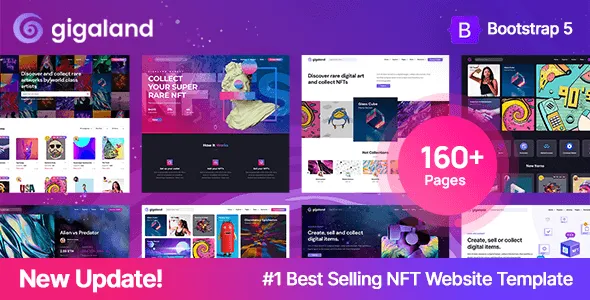
NFT Marketplace – Gigaland is a modern and visually engaging digital marketplace template designed for Web3 platforms, digital collectibles, blockchain projects, crypto communities, creators, artists, collectors, gaming projects, metaverse businesses, and technology startups. It provides a professional foundation for showcasing digital artwork, collections, creators, virtual assets, and blockchain-based products in an attractive and organized environment.
Gigaland combines a stylish interface with a flexible marketplace structure that can be adapted to different digital asset businesses. It can be used for an NFT marketplace, digital art platforms, creator marketplaces, gaming ecosystems, metaverse projects, blockchain startups, Web3 communities, and other businesses that need a visually focused online presence.
Modern Digital Marketplace Website
Digital asset platforms depend heavily on presentation. Visitors need to discover collections, explore artwork, view creator profiles, understand pricing information, and find relevant marketplace content without unnecessary complexity.
Gigaland is built around this visual-first experience. Large artwork areas, organized cards, collection sections, creator information, marketplace listings, and detailed product layouts provide a strong foundation for creating an engaging NFT website.
The flexible structure allows businesses to customize the interface according to their branding, content, target audience, and marketplace requirements.
Web3-Inspired Design
The Web3 ecosystem is commonly associated with futuristic interfaces, creative artwork, dark layouts, gradients, bold typography, digital illustrations, and technology-focused visual experiences.
Gigaland follows this modern design direction while keeping digital assets at the center of the website.
The design can be adapted for:
- NFT marketplaces
- Blockchain projects
- Digital art platforms
- Web3 startups
- Creator economies
- Gaming ecosystems
- Metaverse projects
- Digital collectible businesses
- Virtual asset platforms
- Decentralized communities
Colors, typography, imagery, content, and branding can be customized to create a unique identity for each project.
NFT Marketplace Homepage
The homepage introduces visitors to the platform and gives them an immediate overview of the available content.
A professional NFT marketplace homepage can include:
- Featured digital assets
- Popular collections
- Trending creators
- Recently added items
- Top sellers
- Top buyers
- Marketplace categories
- Creator highlights
- Promotional banners
- Community information
- Platform statistics
- Calls to action
The layout can be organized to encourage visitors to browse collections and discover interesting creators without overwhelming them with excessive information.
Digital Art Marketplace
Digital art is one of the most popular applications for blockchain-based collectibles.
Artists can use an NFT marketplace website to present:
- Digital paintings
- Illustrations
- Photography
- 3D artwork
- Animated artwork
- Generative art
- Pixel art
- Abstract designs
- Concept art
- Character artwork
- Motion graphics
- Experimental creations
Gigaland provides a visually focused environment where artwork remains the main attraction. Large image previews and structured collection layouts help visitors explore creative work more easily.
NFT Collection Discovery
Collections allow multiple digital assets to be organized under a common theme, creator, brand, or project.
NFT collection pages can display:
- Collection cover image
- Collection name
- Creator information
- Description
- Number of items
- Owners
- Floor price
- Trading volume
- Social links
- Individual assets
This structure allows visitors to explore groups of related items instead of searching through individual listings.
Digital Asset Cards
Marketplace cards are an important part of the browsing experience.
A typical card can display:
- Artwork preview
- Item title
- Creator name
- Collection
- Current price
- Previous price
- Auction status
- Favorite count
- Ownership information
- Blockchain information
- Purchase or bidding action
Well-organized cards make it easier for visitors to compare multiple assets while exploring the marketplace.
NFT Product Detail Pages
Each digital asset can have its own detailed page.
An NFT product detail page can provide:
- Artwork preview
- Item title
- Creator
- Collection
- Description
- Ownership history
- Attributes
- Pricing information
- Auction details
- Transaction activity
- Related assets
Providing detailed information gives potential buyers a better understanding of the asset before purchasing or placing an offer.
Creator Profiles
Creators are an important part of any digital marketplace.
Artists and creators can have dedicated profile pages containing:
- Profile image
- Cover image
- Creator name
- Username
- Biography
- Social links
- Collections
- Created items
- Sold items
- Followers
- Verification status
- Marketplace activity
A professional profile helps visitors discover the people behind the artwork and build familiarity with their work.
NFT Creator Marketplace
Creators can use the platform to build collections and showcase their work through dedicated pages.
An NFT creator profile can include collection information, digital artwork, biography, social links, statistics, and marketplace activity.
This structure can help independent artists establish a professional presence while giving collectors a convenient way to discover new creators.
Trending Digital Assets
A trending section can highlight items receiving significant attention.
Popularity can be influenced by:
- Views
- Favorites
- Bids
- Sales
- Trading activity
- New listings
- Community engagement
A visually attractive trending area encourages visitors to discover popular collections and creators.
Featured Collections
Featured collections provide additional visibility to selected projects and creators.
Marketplace administrators can use this area to highlight:
- New collections
- Premium artists
- Community favorites
- Sponsored projects
- Curated assets
- Special collaborations
This section can also be used as a promotional area for marketplace campaigns.
Recently Added Items
Newly listed assets can be displayed in a dedicated section.
Visitors interested in discovering fresh artwork can quickly identify recently published items.
A regularly updated section can also make the homepage feel active and encourage users to return to the platform.
Popular Creators
A popular creators section can introduce users to established and emerging artists.
Creator cards can include profile images, names, verification indicators, collection information, and relevant statistics.
This helps visitors discover creators rather than focusing only on individual assets.
Search Functionality
Search becomes increasingly important as the marketplace grows.
Visitors may want to search by:
- Asset names
- Creators
- Collections
- Categories
- Keywords
- Blockchain networks
- Attributes
An effective search experience helps users find relevant content quickly.
Marketplace Categories
Categories make a large marketplace easier to navigate.
Possible categories include:
- Art
- Collectibles
- Photography
- Music
- Gaming
- Sports
- Virtual worlds
- Domain names
- Membership assets
- Metaverse assets
- Generative art
- Utility assets
Categories can be customized according to the project’s business model.
Digital Collectibles
Collectibles can include themed digital items, limited editions, character collections, trading cards, virtual objects, and community-based assets.
Gigaland provides an attractive visual structure for organizing these products and presenting them to potential collectors.
Gaming Marketplace
Blockchain gaming creates opportunities for platforms focused on virtual items and player-owned assets.
A gaming marketplace can showcase:
- Characters
- Skins
- Virtual land
- Equipment
- Accessories
- In-game collectibles
- Avatars
- Special items
The interface can be customized with gaming-oriented graphics, colors, and branding.
NFT Gaming Assets
Gaming projects can use NFT technology for characters, skins, weapons, equipment, virtual land, avatars, and other player-owned digital assets.
Gigaland can provide the visual marketplace layer for presenting these items in categories and collections.
Metaverse Marketplace
Metaverse projects can use the template to present virtual assets and experiences.
Potential categories include:
- Virtual land
- Avatars
- Wearables
- Buildings
- Virtual furniture
- Digital vehicles
- Accessories
- Virtual experiences
The futuristic visual style can complement projects focused on virtual worlds and immersive digital environments.
NFT Metaverse Platform
An NFT metaverse platform can showcase virtual land, avatars, wearable items, digital properties, and other assets connected with virtual worlds.
Gigaland can be customized with project-specific graphics, collection information, creator profiles, and marketplace categories.
Photography Marketplace
Photographers can showcase digital photography through organized collections.
Photography categories may include:
- Landscape
- Portrait
- Fashion
- Architecture
- Travel
- Nature
- Street photography
- Fine art photography
Large image previews can make photography-focused websites especially engaging.
Generative Art Marketplace
Generative art platforms can showcase algorithmically created artwork, limited editions, visual experiments, and collection-based projects.
Each collection can include information about its artistic concept, creator, characteristics, and visual identity.
NFT Generative Art
Generative NFT collections can be presented through visually focused grids, collection pages, creator profiles, rarity information, and individual asset pages.
This makes the platform suitable for creative projects using algorithmically generated digital artwork.
Music Marketplace
Digital marketplaces can also be created for musicians and audio creators.
Music-related pages may include:
- Artist information
- Album artwork
- Audio previews
- Track information
- Edition details
- Collection information
- Ownership details
The design can be adapted to create an engaging platform for music-related digital assets.
Membership and Access Assets
Digital assets can represent memberships, access rights, tickets, experiences, and community benefits.
A marketplace can explain:
- Membership benefits
- Access levels
- Expiration information
- Community privileges
- Events
- Digital experiences
This allows businesses to explore applications beyond traditional collectibles.
Auction Experience
Auctions are an important marketplace mechanism.
An NFT auction interface can display:
- Current highest bid
- Minimum bid
- Ending time
- Number of bidders
- Previous bids
- Creator
- Asset information
- Bid action
Clear information helps visitors understand the current auction status.
Bidding Interface
The bidding experience should make important information easy to understand.
Users should be able to see the current bid, minimum acceptable amount, auction duration, and available actions.
Gigaland provides a visual foundation for presenting these details in a clear and organized manner.
Fixed-Price Listings
Not every digital asset needs to be auctioned.
Fixed-price listings can allow visitors to purchase an item for a predetermined amount.
A listing can display:
- Item name
- Creator
- Collection
- Price
- Currency
- Purchase action
This provides a straightforward buying experience.
NFT Minting Experience
An NFT marketplace can include a creation and minting experience for artists.
A typical process may include:
- Upload artwork
- Add a title
- Write a description
- Select a collection
- Add properties
- Configure royalties
- Review metadata
- Connect a wallet
- Mint the asset
The interface can be designed to make this process easier for creators to understand.
Create Digital Asset Page
A dedicated creation page can include fields such as:
- Upload file
- Item name
- Description
- Collection
- Properties
- Unlockable content
- Supply
- Royalties
- External link
A clean form structure can reduce confusion during the creation process.
Creator Onboarding
New creators may need to:
- Create a profile
- Add a biography
- Upload a profile image
- Connect social accounts
- Complete verification if required
- Connect a wallet
- Create a collection
- Upload assets
A well-organized onboarding flow can reduce friction and help creators get started quickly.
Collector Onboarding
Collectors can also benefit from a simple introduction to the platform.
A typical process may include:
- Create an account
- Connect a wallet
- Explore collections
- Save favorites
- Place bids
- Purchase assets
- Manage collected items
The interface can guide visitors through these activities.
Wallet Connection
Many Web3 marketplaces allow visitors to connect digital wallets.
The interface can provide a visible wallet connection action so users understand how they can access marketplace functionality.
Actual wallet functionality requires appropriate blockchain libraries, wallet providers, authentication systems, and technical integration.
Gigaland provides the front-end structure, while developers can implement the required functionality according to the project’s technology stack.
NFT Wallet Integration
A complete NFT platform can integrate wallet functionality to allow users to manage digital assets and interact with blockchain-based transactions.
The front-end can provide areas for:
- Connect wallet
- Account information
- Owned assets
- Creator assets
- Transaction history
- Marketplace activity
Blockchain Integration
A complete marketplace may connect to a supported blockchain ecosystem.
Depending on the project, technical requirements can include:
- Wallet integration
- Smart contracts
- Metadata
- Blockchain APIs
- Transaction handling
- Marketplace logic
- User authentication
- Token handling
- Event tracking
Gigaland provides the presentation layer while these technical systems can be developed separately.
NFT Blockchain Marketplace
An NFT blockchain marketplace can connect digital assets with blockchain records, ownership information, transaction history, and marketplace activity.
The exact blockchain implementation depends on the technology selected by the development team.
Ownership History
Ownership history can show previous owners, transactions, sale prices, and dates depending on the platform implementation.
This information can help collectors understand the background and marketplace journey of an asset.
Attributes and Traits
Many collectible projects use traits to define the characteristics of individual items.
Traits can include:
- Background
- Character
- Clothing
- Eyes
- Accessories
- Expression
- Environment
- Rarity
- Special features
An attributes section makes individual assets easier to understand and compare.
Rarity Presentation
Rarity can be an important element for collectible projects.
Possible rarity levels include:
- Common
- Uncommon
- Rare
- Epic
- Legendary
- Ultra rare
The terminology can be customized according to the project’s collection structure.
Collection Statistics
Collection pages can present useful statistics such as:
- Number of items
- Number of owners
- Total volume
- Floor price
- Number of sales
- Number of listings
- Creator information
These metrics can help visitors evaluate a collection.
Marketplace Statistics
Platform-level statistics can also be displayed on the homepage.
Examples include:
- Total digital assets
- Total creators
- Total collectors
- Total transactions
- Marketplace volume
- Active collections
Statistics can communicate the scale and activity of the platform.
Verified Creator Profiles
Verification indicators can help distinguish recognized or official creators.
A platform can display verification badges on creator profiles and listings where appropriate.
The final verification process should be implemented according to the marketplace’s authentication and moderation requirements.
Community-Focused Marketplace
Digital marketplaces often depend on active communities.
The platform can encourage interaction through:
- Creator profiles
- Social links
- Favorites
- Collections
- Community content
- Events
- Announcements
Gigaland provides a visual foundation for building a community-oriented experience.
Crypto-Oriented Interface
The interface can be customized for audiences familiar with cryptocurrency and blockchain technology.
Important information can be presented using appropriate terminology while still maintaining accessibility for visitors who are new to digital assets.
A good interface should avoid unnecessary complexity and clearly explain unfamiliar concepts.
Marketplace User Experience
User experience is one of the most important aspects of a digital marketplace.
Visitors should be able to:
- Discover assets
- Understand listing information
- Access creator profiles
- Explore collections
- Search for relevant items
- Save favorites
- Move toward important actions
Gigaland’s marketplace structure can be adapted around these usability principles.
Responsive Design
Users may access digital marketplaces from desktops, laptops, tablets, and smartphones.
A responsive layout helps ensure that:
- Artwork remains attractive
- Cards remain readable
- Navigation remains accessible
- Profiles work correctly
- Forms remain usable
- Marketplace content adapts to different screens
Mobile optimization is especially important for users discovering projects through social media and mobile devices.
Mobile Marketplace
A mobile-friendly interface can provide easy access to:
- Search
- Collections
- Listings
- Creator profiles
- Favorites
- Wallet actions
- Account information
Cards and content should remain readable without making the interface feel crowded.
Dark Marketplace Design
Dark interfaces are popular across many Web3 communities because they allow colorful artwork to stand out.
A dark design can create a futuristic appearance while allowing artwork and collection imagery to remain the primary visual focus.
Brand colors, gradients, buttons, typography, and accent elements can be customized.
Visual Asset Discovery
Visual discovery is important for creative marketplaces.
Instead of relying only on text navigation, visitors can explore:
- Artwork previews
- Collection covers
- Creator avatars
- Category imagery
- Featured projects
This encourages exploration and helps visitors discover content they may not have searched for directly.
Collection Landing Pages
Each collection can have a dedicated landing page.
A collection page may include:
- Collection banner
- Logo or avatar
- Collection name
- Description
- Creator
- Website
- Social links
- Item count
- Owners
- Floor price
- Volume
- Asset grid
This provides visitors with a complete introduction to the project.
Project Launch Pages
New projects can use dedicated launch pages to introduce their collections.
A launch page can explain:
- Project concept
- Artwork
- Roadmap
- Creator information
- Community
- Mint information
- Supply
- Benefits
- Frequently asked questions
This structure can help build interest before a collection becomes available.
SEO-Friendly NFT Website
Search engine optimization can help an NFT marketplace attract visitors searching for collections, creators, digital artwork, blockchain projects, and Web3 platforms.
Useful SEO practices include:
- Unique page titles
- Descriptive meta descriptions
- Search-friendly URLs
- Collection descriptions
- Creator biographies
- Project case studies
- Educational articles
- Optimized images
- Internal linking
- Structured content
- Fast page performance
Unique and useful content can help individual marketplace pages provide more value to search engines and visitors.
NFT SEO Strategy
An effective NFT SEO strategy can target a combination of commercial, informational, and long-tail search queries.
Useful content opportunities include:
- NFT marketplace
- NFT artwork
- NFT collections
- NFT creators
- NFT gaming
- NFT metaverse
- NFT auctions
- NFT minting
- Digital collectibles
- Web3 marketplace
- Blockchain artwork
The goal should be to create useful pages for visitors rather than repeatedly inserting the same keyword.
Collection SEO
Each collection can become an individual search landing page.
A collection description can explain:
- Concept
- Creator
- Artistic style
- Artwork
- Attributes
- Community
- Marketplace information
Unique content is preferable to repeating identical descriptions across multiple pages.
Creator SEO
Creator profiles can also attract organic traffic.
A profile can contain an original biography, portfolio, social information, project history, and links to collections.
This creates additional opportunities for visitors to discover creators through search engines.
Technical SEO
Large marketplaces can generate thousands of URLs.
Technical SEO should consider:
- Canonical URLs
- Indexation control
- Duplicate content
- Pagination
- Sitemap generation
- Metadata
- Structured data
- Crawl efficiency
- URL consistency
- Page performance
Careful technical implementation becomes increasingly important as the marketplace grows.
Image Optimization
Digital marketplaces often contain many high-resolution images.
Images should be optimized to maintain a balance between quality and loading speed.
Useful techniques include:
- Appropriate image dimensions
- Modern formats
- Compression
- Lazy loading
- Browser caching
- Content delivery networks
Optimized media can improve the browsing experience.
Marketplace Performance
A visually rich marketplace still needs to load quickly.
Performance improvements may include:
- Optimized images
- Efficient asset loading
- Lazy-loaded galleries
- Minified resources
- Browser caching
- Content delivery networks
- Optimized fonts
- Efficient API requests
- Pagination
- Progressive loading
Fast interfaces make it easier for visitors to explore large collections.
Search and Filtering
Advanced filters can improve asset discovery.
Possible filtering options include:
- Price
- Category
- Collection
- Creator
- Blockchain
- Rarity
- Sale type
- Auction status
- Recently listed
- Most viewed
- Most liked
Filtering becomes especially useful when a marketplace contains a large number of listings.
Favorites and Wishlist
A favorites system allows visitors to save assets they may want to revisit.
This can help users compare potential purchases and keep track of interesting collections and creators.
Marketplace Notifications
A mature marketplace can provide notifications for:
- Bid updates
- Auction endings
- New listings
- Sales
- Offers
- Collection updates
- Creator announcements
Thoughtful notifications can improve engagement and keep users informed.
Digital Ownership Experience
Digital ownership concepts should be presented clearly.
Users can be shown:
- Current owner
- Creator
- Transaction history
- Collection
- Relevant asset information
The website should clearly distinguish digital ownership from any separate intellectual property rights associated with the underlying artwork.
Marketplace Trust
Trust is essential for digital marketplaces.
A platform can build confidence through:
- Verified creators
- Clear collection information
- Transparent transaction history
- Community guidelines
- Moderation
- Security information
- Clear terms
- Support information
- Educational resources
Professional presentation and transparent information can help create a stronger user experience.
Marketplace Moderation
Digital asset platforms may require moderation systems for:
- Inappropriate content
- Impersonation
- Scams
- Copyright concerns
- Fraudulent collections
- Misleading information
The interface can provide reporting and support areas where appropriate.
Reporting System
A reporting feature can allow users to flag potentially problematic listings.
Possible report categories include:
- Fraud
- Impersonation
- Copyright concern
- Inappropriate content
- Misleading information
- Suspicious activity
The actual moderation process should be handled through the platform’s administrative system.
Help Center
A help center can answer common questions related to:
- Account creation
- Wallet connection
- Buying
- Selling
- Creating collections
- Minting
- Bidding
- Offers
- Royalties
- Security
- Marketplace policies
A useful support area can reduce confusion for new visitors.
NFT Marketplace FAQ
What is an NFT marketplace?
An NFT marketplace is an online platform where users can discover, display, buy, sell, trade, or auction blockchain-based digital assets.
Who can use Gigaland?
Gigaland can be used by digital marketplaces, artists, collectors, Web3 startups, blockchain companies, gaming projects, metaverse platforms, creative agencies, digital collectible businesses, and individual creators.
Can Gigaland be used for NFT art?
Yes. The visual marketplace structure is suitable for NFT artwork, illustrations, photography, 3D models, generative art, animations, digital paintings, and other creative assets.
Can creators have individual profiles?
Yes. Creator-focused websites can provide profile pages where artists present biographies, collections, social links, and individual work.
Can collections have dedicated pages?
Yes. Dedicated collection pages can present project information, creator details, statistics, and individual assets.
Can digital assets have detailed product pages?
Yes. Individual pages can contain artwork, title, creator, collection, description, attributes, pricing, ownership information, and marketplace activity.
Can Gigaland be used for NFT gaming projects?
Yes. Gaming businesses can adapt the structure for NFT characters, virtual items, skins, equipment, virtual land, and other digital game assets.
Can Gigaland be used for NFT metaverse projects?
Yes. The template can be adapted for NFT metaverse projects involving virtual land, avatars, wearables, digital properties, and virtual experiences.
Can cryptocurrency information be displayed?
The interface can be adapted to display cryptocurrency-related pricing and marketplace information. Actual cryptocurrency transactions require suitable blockchain and payment integrations.
Does the template create a complete marketplace automatically?
A website template primarily provides the visual design and front-end structure. Features such as wallet connections, smart contracts, minting, blockchain transactions, authentication, payments, and marketplace logic require separate technical implementation.
Can the design be customized?
Yes. Branding, images, content, colors, typography, categories, creator information, collections, and other visual elements can be customized according to the project’s requirements.
Can I create an NFT collection website?
Yes. Gigaland can be customized to create an NFT collection website with collection pages, artwork grids, creator information, statistics, and supporting content.
Can I create a creator marketplace?
Yes. The structure can be adapted for platforms where multiple artists and creators showcase their digital work and collections.
Can I create a collectibles website?
Yes. Gigaland can be customized for digital collectibles, trading-card-style assets, character collections, virtual items, and community-based projects.
Marketplace Branding
Strong branding is important in the Web3 and digital asset industry because many platforms compete for attention through visual presentation.
A marketplace should maintain consistency across:
- Logo
- Color palette
- Typography
- Imagery
- Buttons
- Cards
- Navigation
- Page layouts
Gigaland provides a strong starting point while allowing businesses to create their own visual identity.
Landing Pages
Dedicated landing pages can be used to promote individual projects, campaigns, launches, or collections.
A landing page can focus on:
- Project introduction
- Featured artwork
- Creator information
- Collection details
- Launch announcements
- Community
- Call to action
Community and Creator Economy
A successful digital marketplace can become a community where creators and collectors interact around artwork, collections, projects, and digital experiences.
Creator-focused features can help artists establish their identity while collectors can discover new projects and build personalized collections.
Digital Asset Discovery Platform
Gigaland does not have to function only as a transaction-focused marketplace.
It can also be positioned as a digital discovery platform where visitors explore:
- Artists
- Collections
- Projects
- Digital artwork
- Web3 communities
- Virtual assets
Final Overview
NFT Marketplace – Gigaland provides a modern and flexible foundation for creating professional digital marketplaces centered around digital artwork, collectibles, creators, blockchain projects, Web3 communities, gaming assets, metaverse experiences, and other digital products.
Its marketplace-focused design gives businesses space to showcase collections, creator profiles, individual assets, categories, statistics, project stories, blogs, FAQs, and support information in an attractive visual environment.
For artists, Gigaland can work as a portfolio and collection presentation platform. For collectors, it can provide an organized environment for discovering digital assets and creators. For Web3 startups, it can become a branded platform for presenting projects, communities, roadmaps, and digital ecosystems.
Gaming and metaverse businesses can also adapt the structure to display characters, avatars, virtual land, digital objects, skins, accessories, and other virtual products.
The template’s visual approach is particularly useful for businesses that depend on high-quality artwork and digital presentation. Large images, organized cards, collection layouts, creator profiles, and detailed product pages can create an engaging browsing experience.
A complete NFT marketplace requires more than visual design. Features such as wallet integration, blockchain infrastructure, smart contracts, transaction handling, authentication, security, moderation, payments, and marketplace logic require appropriate technical development. Gigaland provides the front-end visual foundation that can be customized and integrated with these systems.
For long-term growth, the website can be expanded with advanced search, filtering, favorites, notifications, auctions, offers, analytics, educational content, creator interviews, community features, and personalized experiences.
Whether the goal is to launch an NFT art platform, promote a collectible project, build a creator marketplace, showcase blockchain gaming assets, introduce a metaverse project, or establish a professional Web3 brand, NFT Marketplace – Gigaland offers a visually focused and flexible starting point for building a modern digital marketplace.