My Account
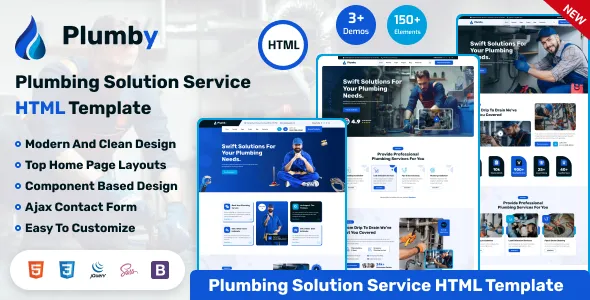
Plumby – Plumbing & Home Services HTML Template
Plumby – Plumbing & Home Services HTML Template is a professional website template designed for plumbing businesses, home maintenance companies, repair specialists, and residential service providers who want to establish a strong online presence. With a service-focused design approach, Plumby helps businesses present their services, communicate their expertise, showcase completed projects, and encourage potential customers to request assistance. Whether you operate an independent plumbing service, a local repair company, a home improvement business, or a team of skilled technicians, this HTML template provides a practical foundation for building a modern business website.
A well-designed website plays an important role in helping customers discover reliable home service providers. When people need a leaking pipe repaired, a bathroom fixture installed, a drainage issue inspected, or routine plumbing maintenance, they often search online for a company that appears professional and dependable. Plumby – Plumbing & Home Services HTML Template helps you organize essential business information into a clear website experience where visitors can learn about your company, explore available services, review your work, and find ways to contact your team. Its specialized concept makes it suitable for businesses that want their online presentation to reflect professionalism, reliability, and a commitment to customer satisfaction.
Built for businesses that need a dedicated online presence, Plumby can serve as the starting point for a plumbing company website, a residential maintenance service platform, or a general home repair business website. As an HTML template, it provides a front-end structure that developers can customize using HTML, CSS, JavaScript, and the technologies included in the purchased version. You can adapt its layout, colors, typography, imagery, and content to match your company’s identity without starting every page from scratch. The result is an opportunity to build a consistent digital presence that supports brand awareness, customer inquiries, and long-term business growth.
Professional Design for Plumbing and Home Service Businesses
Plumbing and home maintenance businesses need a website that communicates their services quickly and clearly. Visitors should be able to understand what the company does, which problems it can help solve, and how to get in touch. Plumby is designed around this service-oriented purpose, making it a suitable foundation for companies that want to communicate practical information without overwhelming visitors with unnecessary complexity.
The visual presentation of a plumbing website can influence how customers perceive a business before they make contact. A structured layout, readable text, relevant photographs, and consistent branding can help create a more professional first impression. Plumby allows developers to create a website that presents essential business details in an organized format while leaving room for brand-specific customization.
You can personalize the template with your company logo, brand colors, service descriptions, business photographs, technician profiles, and contact information. These adjustments help distinguish your company from competing providers and make the website feel connected to your actual services and working practices.
Whether your business focuses on emergency plumbing, residential repairs, commercial maintenance, bathroom installations, or general property services, Plumby provides a relevant design direction for presenting your offerings online.
Designed for Plumbing Services
A plumbing company may provide several different services, from small household repairs to larger installation and maintenance projects. A well-organized website helps customers identify the right service and understand how to contact the business for further information.
Plumby – Plumbing & Home Services HTML Template can be adapted to present a wide range of plumbing services, depending on your business requirements. You can create dedicated content sections for pipe repairs, faucet replacement, toilet repairs, drain cleaning, water leak detection, bathroom plumbing, kitchen plumbing, water heater installation, and preventive maintenance.
Each service can have its own description, relevant images, benefits, and inquiry instructions. Providing specific information makes it easier for visitors to understand the work your company performs and whether your team is an appropriate choice for their needs.
For example, a residential plumbing company can use service pages to explain common household plumbing problems, describe available repair solutions, and outline the process for arranging an inspection. A commercial plumbing provider can customize the same general structure to emphasize maintenance contracts, larger properties, commercial installations, and ongoing support.
Clear service presentation also creates opportunities to incorporate relevant search phrases naturally into website content. When service names, locations, and descriptions accurately reflect your business, they can help search engines understand the purpose of each page.
Suitable for Home Repair and Maintenance Companies
Although Plumby is centered on plumbing, its home services concept can also support related businesses that provide repairs and maintenance for residential or commercial properties. Many service companies need similar website sections, including an introduction to the business, a list of services, project examples, customer testimonials, and contact information.
With suitable customization, the template can be adapted for businesses offering general home repairs, property maintenance, bathroom renovations, kitchen fixture installation, water system servicing, handyman services, and other related work.
A home maintenance company may use the website to explain its service categories and communicate how customers can request assistance. A renovation business may emphasize before-and-after photographs, completed projects, and information about its working process. A local repair company may prioritize service areas, opening hours, and convenient contact options.
This flexibility makes Plumby a useful starting point for businesses that want a specialized home services design rather than a generic corporate layout. Before purchasing, review the supplied demo and documentation to confirm that the included pages and components match your intended website.
Organized Layout for Essential Business Information
A successful service website should help visitors find important information without unnecessary effort. Plumby provides a foundation for organizing content into logical sections that can support different customer needs.
An effective homepage can introduce the business, highlight its main services, communicate its key strengths, and guide visitors toward an inquiry. Supporting pages can provide more detailed information about the company, its service offerings, its completed work, and its contact channels.
You can customize the page structure to prioritize the information most important to your customers. If emergency plumbing is a major part of your business, you can emphasize emergency contact details and relevant service information. If your company specializes in installations and renovation projects, you can dedicate more space to project photography and descriptions of your work.
A consistent layout across the website also helps visitors understand where to find specific information. Reusing the same visual patterns for service descriptions, buttons, headings, and contact details can make the browsing experience feel more predictable and professional.
Responsive Website Customization
Customers may discover a plumbing company through a desktop computer, a laptop, a tablet, or a smartphone. A responsive website helps present business information across different screen sizes, allowing visitors to explore services and find contact details on the device they prefer.
When adapting Plumby for your business, pay attention to how page layouts behave on smaller screens. Service cards, navigation menus, images, text blocks, and contact sections should remain readable and usable across supported devices. Responsive behavior depends on the template’s implementation and any modifications made during development, so test the customized website before publishing it.
Mobile usability is especially important for home service businesses because customers may search for assistance while dealing with an immediate household problem. Clear headings, concise service descriptions, accessible phone details, and appropriately sized interactive elements can help visitors navigate the website more comfortably.
A responsive presentation also supports a consistent brand experience. Customers should be able to recognize your business and understand your services regardless of whether they view the website on a phone or a larger display.
Customizable HTML Structure
One of the main advantages of an HTML website template is the ability to customize the front-end code directly. Plumby provides a starting structure that developers can adapt to match a company’s branding, content strategy, and business objectives.
Using the technologies supported by the supplied package, developers can update HTML markup, adjust CSS styles, modify JavaScript interactions, replace images, and reorganize content sections. These changes can help transform the original design into a website that reflects your company’s services and visual identity.
You can update headings, buttons, navigation links, service descriptions, photographs, and page layouts to suit your requirements. Colors and typography can be aligned with your existing branding, while content sections can be expanded or simplified according to the needs of your audience.
The template can also be used as a foundation for more advanced development work. Developers may connect suitable back-end services, integrate a content management system, or build additional functionality where required. Such features are not automatically provided by a static HTML design and may require separate development, server configuration, or third-party services.
For best results, review the included file structure and documentation before making significant modifications. Following the original project’s organization can make future maintenance easier and reduce the risk of introducing unwanted layout or functionality problems.
Showcase Plumbing Projects and Completed Work
Customers often want to understand the quality and scope of a service provider’s previous work before making a decision. Project photographs and detailed case studies can help demonstrate practical experience while giving visitors a clearer picture of the services offered.
Plumby can be customized to showcase completed plumbing repairs, bathroom installations, pipe replacements, drainage improvements, water system projects, and other relevant work. A portfolio or project gallery can include photographs, project summaries, the type of service performed, and other information your company is comfortable sharing.
For instance, a bathroom plumbing project could describe the original issue, the work completed, and the final result. A commercial maintenance project could explain the property’s general requirements and the type of plumbing service provided. These examples help transform a simple service listing into a more informative presentation of your business capabilities.
Use authentic, high-quality photographs whenever possible. Ensure that images represent your actual work accurately and that you have the appropriate permission to publish them. Genuine project content can help build credibility and provide useful information for prospective customers.
Build Trust With Business Information
Trust is particularly important when customers invite technicians into their homes or arrange repairs for valuable properties. A professional website should communicate who the business is, what it does, and how customers can reach the team.
Plumby can be customized with an About Us section that explains your company’s background, service philosophy, experience, and approach to customer care. You can also include information about your team, service coverage, operating hours, and the types of properties you serve.
If your business has verified certifications, relevant licenses, insurance details, or professional memberships, you may display them accurately where appropriate. Only include credentials that your company actually holds, and keep all published claims current.
Customer reviews and testimonials can also support your presentation when they are genuine and used with permission. Avoid publishing invented ratings or misleading customer statements. Accurate business information creates a more dependable foundation for customer relationships and helps visitors make informed decisions.
Contact Sections That Encourage Inquiries
For a plumbing or home services company, the website should make it easy for potential customers to begin a conversation. A clearly presented contact section can reduce confusion and guide visitors toward the next step.
Depending on your business requirements, Plumby can be customized with a business phone number, email address, office location, operating hours, service area information, and inquiry instructions. You can also create prominent contact buttons that direct visitors to appropriate communication channels.
If you want visitors to submit service requests through an online form, remember that an HTML template alone may not process or store submissions. Form functionality generally requires suitable back-end processing, a third-party form service, or another configured solution. Before publishing, test the complete submission process and confirm that inquiries reach the correct destination.
A useful service inquiry form may request the customer’s name, contact information, property location, service category, and a short explanation of the problem. Collect only information that is necessary for responding to the request, and provide appropriate privacy information where required.
Search Engine Optimization Opportunities
Search engine optimization helps make your website more understandable to search engines and more relevant to people searching for your services. Plumby provides a front-end foundation that can be customized with useful content and appropriate on-page SEO elements.
You can optimize page titles, meta descriptions, heading structures, image alternative text, internal links, and service descriptions. Each page should communicate a clear topic and provide information that genuinely helps potential customers.
For example, a plumbing company serving a specific city may create useful content about its residential plumbing services in that location. A separate service page could explain drain cleaning, while another could cover bathroom fixture installation. These pages should be written for customers first, with relevant search terms incorporated naturally rather than repeated excessively.
Local SEO can be particularly valuable for service providers whose customers live within a defined geographic area. Keep business name, address, phone number, operating hours, and service-area details consistent wherever the company is listed. If appropriate, connect the website with a properly maintained business profile on relevant local search platforms.
The template itself does not guarantee higher search rankings, indexing, or traffic. Results depend on content quality, technical implementation, competition, site performance, local relevance, and other SEO factors. After customization, review the website for crawlable links, descriptive metadata, broken pages, and other technical issues.
Performance and Efficient Front-End Development
Website speed can influence how easily visitors access important information and interact with a business website. A streamlined front-end implementation can provide a useful starting point for developers who want to build a responsive and efficient online experience.
When working with Plumby, optimize image dimensions, use appropriately compressed image formats, avoid unnecessary scripts, and remove unused resources where practical. Large photographs can be particularly demanding on mobile connections, so choose image sizes that suit their actual display dimensions.
Developers should also check the number and size of external resources loaded by the website. Fonts, icon libraries, animation scripts, and other dependencies should be included only when they support the intended experience. Where suitable, caching, compression, and efficient asset delivery can further improve performance.
Actual loading speed depends on the template version, the assets you add, hosting quality, server configuration, third-party services, and implementation choices. Test the finished website using relevant performance tools rather than assuming that a template automatically meets a particular speed score.
Create a Consistent Brand Identity
Your website should communicate the same visual identity that customers encounter through your business cards, uniforms, vehicles, social media profiles, and other marketing materials. Plumby can be adapted to support this consistency through carefully chosen colors, typography, images, and messaging.
A plumbing business might prefer a clean, dependable visual style with a clear service hierarchy. A premium home maintenance company may choose a more refined presentation, while a general repair provider may emphasize practical information and straightforward navigation.
Replace generic content with your actual company details and use photographs that reflect the services you provide. Make sure that buttons, headings, icons, and other visual elements follow a consistent style across the website.
Brand consistency helps visitors recognize your business and understand its positioning. It also makes the website more useful as a destination for people who discover the company through search engines, advertisements, referrals, or social media.
Content Structure for Service Pages
Detailed service pages allow your company to explain what each service includes and answer common customer questions. Rather than listing every offering in a single block, consider organizing your services into separate sections or pages based on customer needs.
A residential plumbing business might create content covering the following areas:
- Leak Detection and Pipe Repair: Explain common signs of water leaks, the types of repairs your company provides, and how customers can request an assessment.
- Drain Cleaning: Describe the drainage problems you handle and explain when a professional inspection may be appropriate.
- Bathroom and Kitchen Plumbing: Present fixture installation, replacement, and related plumbing work.
- Water Heater Services: Outline the installation, maintenance, or repair services your company actually offers.
- Preventive Plumbing Maintenance: Explain how scheduled inspections and maintenance may help property owners identify potential issues.
- Emergency Plumbing Assistance: Provide accurate information about emergency availability, supported locations, and how customers should contact the team.
These topics are examples for customization rather than a guarantee that every service is included in the template. Choose categories that reflect your real capabilities, and ensure that descriptions accurately explain the work your business performs.
Flexible Foundation for Different Business Sizes
Plumby can provide a starting point for different types of service businesses, from independent plumbing professionals to established home maintenance companies. The amount of customization required will depend on the size of your business, the complexity of your services, and the functionality you want to introduce.
A solo plumber may need a concise website with a homepage, service information, company details, and contact options. A larger company may require additional pages for multiple service categories, technician profiles, project galleries, service locations, and customer resources.
Developers can organize the content around the most important customer journeys. For a small local business, this might mean helping visitors quickly find a phone number and understand the available services. For a larger organization, it might involve directing customers toward specialized departments or separate service inquiry processes.
The HTML format also gives developers control over how the site is deployed, subject to the project’s dependencies and hosting requirements. However, content management, appointment scheduling, customer accounts, online payments, and other dynamic features may require additional implementation rather than being available automatically.
Potential Integrations and Extended Functionality
A basic service website may be sufficient for a business that primarily receives phone calls and email inquiries. Other companies may want to expand their website with additional tools that support marketing, customer communication, and day-to-day operations.
Depending on the project’s technical requirements, developers may connect Plumby to a contact form service, map embed, analytics platform, email marketing tool, customer relationship management system, or appointment scheduling solution. Integrations should be selected according to their value to the business and the technical compatibility of the chosen services.
For example, a booking system could help customers request a preferred appointment time, while an analytics platform could help the business understand which pages attract visitors. A map can provide directions to a physical office when the business serves customers from a fixed location.
These integrations may require API credentials, third-party subscriptions, server-side code, privacy disclosures, or additional configuration. Review the relevant documentation and test each integration carefully before relying on it for customer-facing operations.
User-Friendly Navigation and Clear Calls to Action
Navigation should help visitors move between the most important sections without unnecessary steps. A plumbing website commonly needs straightforward access to service information, company details, project examples, and contact options.
When customizing Plumby, use descriptive navigation labels that make the purpose of each page immediately understandable. Avoid overcrowding the menu with too many items, especially if your business offers only a small number of core services.
Calls to action should also communicate a clear next step. Depending on your workflow, buttons might invite visitors to call the business, request a quote, submit a service inquiry, or learn more about a particular service. Use consistent wording and make sure each link leads to the correct destination.
A well-planned navigation structure helps customers explore the website with less effort and allows the business to present its most important information in a logical order.
Accessibility and Readability Considerations
A professional website should be usable by as many visitors as reasonably possible. Readable text, descriptive links, adequate color contrast, keyboard-accessible navigation, and meaningful image alternative text all contribute to a more accessible experience.
When adapting Plumby, use a clear heading hierarchy and write concise paragraphs that explain services in plain language. Avoid relying on color alone to communicate important information, and ensure that interactive controls have understandable labels.
Images should include alternative text when they communicate meaningful information. Decorative images can be handled appropriately according to the implementation, while important service photographs should have descriptions that reflect their actual content.
Test the customized website with keyboard navigation and accessibility checking tools. Accessibility quality depends on the implementation and the content added to the template, so review these areas as part of the development process.
Who Should Use Plumby – Plumbing & Home Services HTML Template?
Plumby is a relevant option for developers, freelancers, agencies, and service business owners who need a website design focused on plumbing and property maintenance.
It may be suitable for:
- Plumbing contractors who want to present residential and commercial services.
- Independent plumbers building a professional online portfolio.
- Home repair companies promoting multiple maintenance services.
- Bathroom and kitchen installation businesses showcasing their work.
- Property maintenance providers explaining their service packages.
- Drainage and pipe repair specialists sharing service information.
- Web development agencies creating websites for local service clients.
- Freelancers building customized business websites for contractors.
- Small businesses that need a structured front-end starting point for their online presence.
The template’s suitability depends on the included layouts, licensing terms, supported technologies, and the amount of customization required. Review the live demo and supplied documentation before purchasing to ensure that the design matches your intended project.
Benefits of Choosing an HTML Template
An HTML template can help developers begin with an existing visual structure instead of building every page from a blank file. For a plumbing business, this can make it easier to organize service content, establish a consistent design system, and develop a recognizable online presence.
Developers who are comfortable working with front-end code can directly adjust the page markup and styling. This approach offers flexibility for custom layouts, additional content sections, and integrations that match the business’s requirements.
An HTML template may also be suitable when a project does not require a full content management system. A relatively simple website with a limited number of pages can be deployed as static files, provided that its assets and any required functionality are configured correctly.
However, users should understand the distinction between an HTML template and a complete business platform. Features such as content editing through an administrative dashboard, automatic appointment management, customer databases, and server-side form processing typically require separate systems or additional development.
Customization Tips for Better Results
To get the most value from Plumby, begin by identifying the services that generate the most inquiries for your business. Organize the homepage around these priorities and ensure that visitors can quickly find the information they need.
Replace demonstration content with accurate business details. Update the company name, logo, contact information, service areas, photographs, and descriptions before publishing the website. Remove sections that are not relevant to your business rather than leaving generic content in place.
Use high-quality photographs that represent your actual services, and compress images to balance visual quality with loading speed. Write unique descriptions for each important service and avoid copying identical text across several pages.
Review all navigation links, buttons, phone links, email links, and form submissions. Test the site on mobile devices and desktop browsers, and check that the layout remains readable at different screen widths.
Finally, maintain the website after launch. Update service information when your offerings change, replace outdated photographs, check for broken links, and review customer feedback to identify areas for improvement.
Build a Professional Online Presence With Plumby
A well-planned website can help a plumbing company explain its services, introduce its team, showcase completed projects, and make it easier for potential customers to get in touch. Plumby – Plumbing & Home Services HTML Template offers a focused starting point for creating that kind of digital experience.
Its home services concept can be adapted for plumbing contractors, repair specialists, property maintenance companies, and related service providers. With thoughtful customization, useful content, consistent branding, and attention to mobile usability, the template can become the foundation of a website that reflects your business and supports your customer communication goals.
Whether you are developing a website for your own plumbing company or creating a project for a client, Plumby provides a direction for organizing service information into a professional front-end presentation. Adapt the design to your specific business, confirm the included features and dependencies, and test the finished implementation before launch.
Choose Plumby – Plumbing & Home Services HTML Template as a starting point for building a service-focused website that helps customers understand what you offer, explore your work, and take the next step toward contacting your business.