My Account
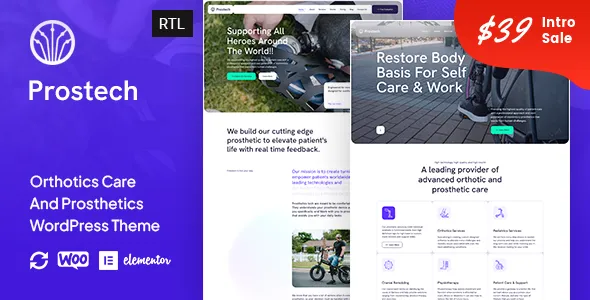
Prostech – Orthotics Care And Prosthetics WordPress Theme
Prostech – Orthotics Care And Prosthetics WordPress Theme is a website design solution for prosthetics clinics, orthotics specialists, rehabilitation centers, mobility equipment providers, orthopedic care businesses, and healthcare professionals who want to establish a professional online presence. Developed for the orthotics and prosthetics sector, Prostech can be considered as a starting point for creating a website that introduces clinical services, explains assistive devices, presents professional expertise, and helps patients and caregivers find relevant information. With appropriate customization, the theme can support a clear and welcoming digital experience for businesses focused on mobility support, assistive technology, rehabilitation services, and personalized orthotic or prosthetic care.
Healthcare websites need to communicate information clearly and responsibly. Patients and caregivers may want to understand the services offered, learn about available devices, review appointment procedures, and find contact information before visiting a clinic. A well-organized website can make these details easier to access while helping visitors understand the organization’s approach to care. Prostech provides a foundation for presenting this information in a structured format, allowing website owners to adapt the design to their brand identity, service offerings, and communication requirements.
WordPress provides a content management system for publishing pages, managing images, updating service information, and maintaining educational resources. A specialized WordPress theme can simplify the initial website design process by offering a starting structure suited to a particular industry. The final appearance and functionality of Prostech depend on the installed theme version, its included layouts, supported customization tools, and compatible plugins. Before installation, review the current product demo and documentation to confirm that the theme meets the technical and functional needs of your healthcare website.
What Is Prostech – Orthotics Care And Prosthetics WordPress Theme?
Prostech is a WordPress theme intended for websites related to orthotics, prosthetics, mobility support, rehabilitation, and assistive healthcare services. It can be evaluated by organizations that need to explain their services, introduce their team, present available products, and provide clear information for patients and caregivers.
Orthotics and prosthetics providers often serve people with different mobility requirements and individual care needs. Their websites may need to explain assessment services, custom orthotic devices, prosthetic solutions, fitting appointments, device adjustments, and ongoing support. Clear information helps visitors understand which services are available and how to contact the appropriate professional.
Prostech can serve as a starting point for organizing content such as service descriptions, device categories, clinic information, team profiles, frequently asked questions, educational articles, and contact details, depending on the layouts included in the selected version.
Because healthcare information can influence personal decisions, all published descriptions should be accurate, accessible, and appropriate to the provider’s professional scope. Device recommendations, treatment claims, and clinical information should be reviewed by qualified professionals before publication.
Professional Website Design for Orthotics and Prosthetics Providers
A professional healthcare website should balance visual presentation with clarity, accessibility, and trust. Visitors need to understand what a provider does, which services are available, and how to arrange an inquiry or appointment.
Prostech can be considered for orthotics and prosthetics businesses that need a dedicated website to introduce their services and communicate practical information. Depending on the available layouts, the website can include an overview of the organization, service summaries, product information, team introductions, patient resources, and contact options.
The design should use readable typography, consistent colors, clear headings, and straightforward navigation. Visitors may include people with mobility limitations, caregivers, older adults, and individuals accessing the website with assistive technologies. A simple structure can help these audiences locate information more easily.
Healthcare imagery should be relevant and respectful. Photographs of clinical environments, assistive devices, rehabilitation settings, and professionals can help explain the services offered, provided the images accurately represent the organization and are used with appropriate permissions.
The most effective presentation is one that helps visitors understand the provider without overwhelming them with technical language or unnecessary decorative elements.
Website Solution for Orthotics Clinics
Orthotics clinics help people explore and access devices designed to support body alignment, movement, stability, or function, depending on individual clinical needs. A website can introduce these services and explain how patients can begin the assessment process.
Prostech can be adapted for orthotics clinics that need to present their services, explain the role of orthotic devices, introduce their professionals, and provide appointment information. Depending on the actual services offered, content may cover foot orthotics, ankle-foot orthoses, spinal supports, braces, and other relevant devices.
Each service page should explain the general purpose of the service, who may benefit from a professional assessment, and what the consultation process involves. Device selection depends on individual circumstances, so website content should not suggest that a single product or approach is appropriate for everyone.
Clinics can also provide practical information about referrals, appointment preparation, follow-up visits, and device adjustments where relevant. Clear explanations help patients understand what to expect before contacting the clinic.
Accurate service information and convenient contact options can make an orthotics website more useful to patients, caregivers, and referring professionals.
Website for Prosthetics and Artificial Limb Services
Prosthetics providers support individuals who use or are exploring artificial limbs and related assistive solutions. Their websites can help explain available services, introduce the care team, and provide information about assessment, fitting, training, and follow-up support.
Prostech may be suitable for a prosthetics clinic that wants to present its services through a structured WordPress website. Depending on the provider’s actual capabilities, pages can introduce prosthetic assessments, device options, fitting appointments, maintenance support, and rehabilitation coordination.
Information should acknowledge that prosthetic solutions vary according to an individual’s needs, goals, health circumstances, and professional assessment. A website should not promise specific outcomes or imply that every device is suitable for every person.
A provider may explain the general stages involved in receiving a prosthetic device, from an initial consultation to fitting and subsequent adjustments. This overview can help visitors prepare questions and understand the importance of ongoing professional support.
Content should be reviewed by qualified practitioners and written in respectful, person-centered language. The goal is to provide helpful information without reducing people to their medical circumstances or making unsupported clinical claims.
Present Rehabilitation and Mobility Support Services
Rehabilitation and mobility support services can involve different professionals, devices, and care pathways. A website helps organizations explain the services they provide and guide visitors toward appropriate information.
Prostech can be evaluated for rehabilitation centers and mobility care businesses that offer services related to orthotic or prosthetic devices. Depending on the organization’s actual scope, the website may describe mobility assessments, device fitting, adjustment appointments, rehabilitation support, or coordination with other healthcare professionals.
Each service description should identify the purpose of the service and explain how visitors can request further information. If the organization offers appointments with specific professionals, their roles and relevant qualifications can be introduced on the website.
A rehabilitation provider should avoid presenting general website content as a substitute for an individual assessment. Information about mobility, recovery, device use, and clinical care should be accurate and appropriately qualified.
Clear service pages can help patients and caregivers understand the available support and identify the right contact point for their questions.
Showcase Orthotic and Prosthetic Devices
Organizations that provide assistive devices may need a website that introduces their product categories and explains how customers can obtain more information. A structured product presentation can make it easier for visitors to understand the range of solutions offered.
Prostech can be customized to display device categories and related information, depending on its supported layouts and the organization’s requirements. A provider may introduce orthotic supports, braces, prosthetic components, mobility accessories, and other products it genuinely supplies.
Product pages can include a device name, a general description, intended purpose, available options, and instructions for requesting professional guidance. Information about sizes, compatibility, materials, or maintenance should be included only when accurate and supported by the product documentation.
Assistive devices often require professional assessment, fitting, or adjustment. Website content should make these requirements clear rather than encouraging visitors to select complex medical devices solely from a product description.
A standard WordPress theme does not automatically provide complete ecommerce functionality. If the business needs online payments, inventory management, shipping calculations, or order processing, an appropriate ecommerce plugin or separate integration may be required.
Introduce Healthcare Professionals and Specialists
Patients often want to understand who will provide their care and what qualifications or experience those professionals have. A team section can introduce the people responsible for assessments, device fitting, rehabilitation support, and other services.
Prostech can be adapted to present professional profiles through suitable page layouts, depending on the available theme features. A profile may include the person’s name, professional role, relevant qualifications, areas of practice, and a short biography.
All credentials and professional descriptions should be accurate and current. Avoid implying that a person holds a license, certification, or specialist qualification unless that information has been verified.
If the organization includes orthotists, prosthetists, rehabilitation professionals, technicians, or administrative staff, their responsibilities can be described clearly. This helps visitors understand how different roles contribute to the service.
Obtain permission before publishing staff photographs or personal information. Profiles should focus on professional details relevant to patients and the organization rather than unnecessary private information.
A clear team section can help visitors understand the provider’s expertise and identify the appropriate point of contact.
Patient Education and Informational Resources
Educational content can help patients and caregivers prepare for appointments, understand terminology, and learn about the services available. A healthcare website should present this information in clear language and encourage appropriate professional guidance.
Prostech can be considered for websites that include informational pages, frequently asked questions, or educational articles, depending on the available WordPress layouts and publishing configuration.
An orthotics provider might explain the general purpose of different support devices, how to prepare for a fitting appointment, or why follow-up adjustments may be necessary. A prosthetics clinic could provide an overview of the fitting process, device care, or questions patients may wish to discuss with their practitioner.
Articles should be reviewed by appropriately qualified professionals when they discuss clinical topics. Information should distinguish general education from personalized medical advice and avoid guaranteeing treatment outcomes.
Content should also be accessible to readers with different levels of familiarity with healthcare terminology. Explain specialized terms, use concise paragraphs, and organize information with descriptive headings.
Helpful educational resources can improve the usefulness of a website while supporting clearer communication between patients and providers.
Homepage Design and Information Organization
The homepage is often the first point of contact for visitors exploring a healthcare provider online. It should communicate the organization’s purpose and direct visitors toward the information they need most.
A Prostech-based homepage can be organized around a clear introduction, service highlights, device categories, professional profiles, patient resources, and contact information, depending on the layouts included in the selected version.
The introductory section should identify the organization and summarize its main services. Supporting text can explain whether the provider focuses on orthotics, prosthetics, mobility support, or a combination of related services.
Service highlights can link to detailed pages, while a team section can introduce relevant professionals. Educational resources may help visitors learn more about devices and care processes, and a visible contact section can explain how to request further information.
Not every homepage needs every possible section. A small clinic may benefit from a concise structure that emphasizes services and contact details, while a larger provider may need separate navigation for multiple departments or locations.
The best homepage is based on patient needs. It should make essential information easy to find without overwhelming visitors with excessive text or decorative content.
Responsive Design for Mobile Healthcare Websites
Patients and caregivers may access a healthcare website using smartphones, tablets, laptops, or desktop computers. Mobile usability is important when visitors need to find directions, check contact information, review services, or request an appointment.
Before using Prostech, verify the responsive behavior of the current theme version and test the included layouts across common screen sizes. A responsive website should keep text readable, images appropriately sized, and navigation controls convenient to use.
Phone numbers should be easy to access, and appointment or inquiry forms should work properly on smaller displays. Important information should not become hidden or difficult to locate when the layout changes.
Testing should include service pages, device information, staff profiles, educational articles, and contact forms. Custom CSS, embedded maps, external forms, and additional plugins may affect the way individual pages behave.
A responsive layout alone does not guarantee a usable mobile experience. Website owners should test real content and common visitor tasks to identify problems before launch.
A well-tested mobile website helps patients and caregivers access essential information across different devices.
SEO-Friendly Structure for Healthcare Websites
Search engine optimization can help patients discover relevant healthcare services through online searches. A WordPress theme provides the design foundation, but search visibility also depends on the quality and accuracy of the content, technical setup, competition, and other factors.
A Prostech website should use descriptive page titles, clear headings, logical navigation, and useful content that reflects the organization’s actual services. Each page should address a specific subject instead of repeating the same general description across the website.
For example, an organization may create separate pages for orthotics services, prosthetics services, device fitting, rehabilitation support, and patient resources where those services are genuinely available. Location pages may be useful for providers serving multiple clinics or geographic areas.
Local search information should be accurate and consistent. The business name, address, telephone number, opening hours, and appointment instructions should match the organization’s actual details.
Images should be optimized with appropriate file sizes, descriptive file names, and meaningful alternative text when they communicate important information. Internal links can connect service pages with relevant educational resources and contact details.
Compatible SEO plugins may assist with meta descriptions, XML sitemaps, canonical settings, redirects, and supported structured data. These features require appropriate configuration and should be checked after installation.
Use relevant keywords naturally and prioritize accurate, helpful content. Healthcare pages should not make exaggerated claims or promise specific results. No theme can guarantee search rankings, traffic, or patient inquiries.
Content Marketing for Orthotics and Prosthetics Businesses
Content marketing can help healthcare providers answer common questions and explain the services they offer. Articles and informational pages may provide visitors with useful background before they contact the clinic.
Prostech can be considered for organizations that want to combine service pages with educational content, news, or professional updates, depending on the theme’s publishing capabilities.
An orthotics clinic might publish general information about device fitting, the purpose of orthotic supports, or questions to discuss during a consultation. A prosthetics provider could explain the stages of a fitting process, routine device care, or the role of follow-up appointments.
Content should be reviewed for accuracy and written with the intended audience in mind. Avoid giving individualized treatment instructions or suggesting that a general article can replace professional assessment.
Internal links can guide readers from educational articles to relevant service pages and contact information. This creates a natural path for visitors who want to learn more about the provider’s offerings.
A manageable publishing schedule is usually more effective than producing large amounts of repetitive content. Original, accurate resources can help the website remain useful while demonstrating the organization’s commitment to clear communication.
Appointment Requests and Patient Inquiries
A clear contact process helps patients, caregivers, and referring professionals request information about services or appointments. Visitors should be able to find the appropriate contact details without navigating through several unrelated pages.
Prostech can be configured with suitable contact sections and compatible form tools, depending on the theme’s available functionality. A basic inquiry form may request a name, preferred contact method, service of interest, and a short message.
Healthcare forms require particular care because visitors may disclose sensitive personal or medical information. Collect only the information necessary for the stated purpose, explain how it will be handled, and use an appropriate secure system for any sensitive data that must be submitted.
A visual form does not automatically provide secure storage, appointment management, or reliable message delivery. These functions may require additional plugins, backend services, or specialized healthcare systems.
Before launch, test form validation, confirmation messages, email routing, spam protection, and mobile usability. Make sure inquiries reach the appropriate staff and that visitors understand what will happen after submitting a request.
If online scheduling is required, confirm whether a suitable booking system can be integrated and whether it meets the organization’s privacy and operational requirements.
Accessibility and Patient-Friendly Navigation
Accessibility is especially important for healthcare websites because visitors may have different visual, motor, cognitive, or other accessibility needs. A clear website structure can help patients and caregivers find information with less effort.
When customizing Prostech, use readable typography, sufficient contrast, logical heading levels, descriptive links, and clear form labels. Informative images should have meaningful alternative text, while decorative images should not create unnecessary distractions for assistive technologies.
Navigation should use familiar labels such as Services, Devices, About, Patient Resources, and Contact where appropriate. Avoid hiding essential information behind confusing menus or visual effects.
Interactive components should be usable with appropriate input methods, including keyboard navigation where applicable. Visible focus indicators should be maintained, and error messages should explain how a visitor can correct an input problem.
Accessibility depends on the theme, the content, and the way each component is configured. Automated checks can identify some issues, but manual testing and practical usability reviews remain important.
A patient-friendly design should support clear communication and make essential healthcare information easier to access.
Customization and Healthcare Brand Identity
A healthcare provider’s website should reflect its identity while maintaining a professional, reassuring, and accessible presentation. Consistent branding helps visitors recognize the organization and understand its service focus.
Depending on the available settings and supported tools, Prostech may allow customization of colors, typography, imagery, layouts, and navigation. The precise options should be confirmed in the current theme documentation.
A specialist prosthetics clinic may prioritize detailed service information and professional profiles, while a mobility equipment provider might emphasize device categories and support services. A rehabilitation organization may need a structure that explains multiple related services.
Visual consistency should extend across the homepage, service pages, device information, staff profiles, and contact sections. Headings, buttons, spacing, and imagery should follow a coherent design approach.
Use genuine information and appropriate images to represent the organization. Healthcare-related claims, professional credentials, and service descriptions should be checked for accuracy before publication.
Before making extensive design changes, review the theme’s structure and identify which elements are managed by WordPress, the theme, the editor, or additional plugins. Keep backups and test substantial changes before applying them to the live website.
WordPress Plugins and Additional Functionality
Healthcare websites may need additional tools for contact forms, SEO, analytics, appointment scheduling, security, backups, and other operational requirements. The right combination depends on the functions already available in the theme and the provider’s specific needs.
Prostech should be used with plugins compatible with the installed WordPress version and the theme’s documented requirements. Before installing an extension, review its compatibility, documentation, update history, licensing terms, and support arrangements.
A form plugin may help collect general inquiries, while an SEO plugin can assist with metadata and sitemap management. A booking integration may support appointment requests, and analytics tools may provide information about website traffic subject to applicable privacy and consent requirements.
If the organization needs patient records, clinical documentation, billing, or secure communication, a standard website theme should not be treated as a complete healthcare management system. Such functions require appropriate specialized software and security controls.
Avoid installing several plugins that perform the same task without a clear reason. Too many overlapping tools can introduce compatibility problems and increase maintenance work.
After adding or updating an integration, test the affected pages and user journeys. Pay particular attention to forms, mobile layouts, external services, and any components that handle personal information.
Website Security and Ongoing Maintenance
A healthcare website requires regular maintenance to remain secure, reliable, and accurate. This is particularly important when visitors submit contact details or when the website integrates with external services.
Website owners should use reputable hosting, enable HTTPS, maintain strong administrator credentials, and assign user permissions according to staff responsibilities. WordPress, the theme, and compatible plugins should be updated carefully, with backups available before significant changes.
Only obtain themes and plugins from trustworthy sources. Review compatibility before installation, remove unused components when appropriate, and monitor the website for broken links and technical issues.
If the website collects personal information, use suitable privacy notices and secure data-handling procedures. Avoid collecting sensitive medical information through a general contact form unless the system has been designed and approved for that purpose.
Regular backups provide a recovery option if a technical problem or accidental change affects the website. The organization should also understand how to restore backups and confirm that the process works.
Content maintenance matters as well. Review service descriptions, professional profiles, contact details, opening hours, and educational resources periodically. Keeping information current helps patients and caregivers rely on the website as a source of practical information.
Who Should Use Prostech – Orthotics Care And Prosthetics WordPress Theme?
Prostech may be suitable for different organizations working in orthotics, prosthetics, mobility support, and related healthcare services, depending on the available layouts and customization requirements.
Orthotics clinics: Introduce assessment services, orthotic devices, professional staff, and appointment information.
Prosthetics providers: Explain prosthetic services, fitting processes, device options, and ongoing support.
Rehabilitation centers: Present relevant rehabilitation services, mobility support, and care information.
Mobility equipment businesses: Showcase assistive devices and explain how customers can request product information.
Orthopedic care providers: Introduce relevant services, professional expertise, and patient resources within their actual scope of practice.
Assistive technology suppliers: Organize device categories, product details, and customer support information.
Specialist healthcare practices: Create a structured online presence for services related to orthotics, prosthetics, or mobility support.
Clinical service organizations: Provide information about service locations, team members, operating hours, and contact procedures.
Healthcare consultants: Present relevant professional services and explain how organizations or individuals can request further information.
The best choice depends on the provider’s goals, technical requirements, and available resources. Review the current demo and documentation before selecting the theme for a live healthcare website.
Tips for Building a Successful Website with Prostech
Start by identifying the website’s main purpose. Determine whether the priority is introducing clinical services, explaining assistive devices, attracting appointment inquiries, or providing educational resources for patients and caregivers.
Prepare accurate content before making extensive design changes. This may include service descriptions, device information, professional biographies, clinic details, appointment procedures, and contact information. Have relevant healthcare content reviewed by qualified professionals.
Organize the navigation around common visitor needs. Make services, device information, team profiles, patient resources, and contact details easy to find. Use plain language and explain specialized terms where necessary.
Use appropriate, high-quality images that genuinely represent the organization and its services. Obtain the required permissions for staff or patient photographs, and avoid publishing identifiable patient information without suitable authorization.
Test the complete website on desktop and mobile devices. Review navigation, image loading, accessibility, forms, privacy practices, and the accuracy of published information before launch.
Finally, establish a maintenance plan that includes backups, software updates, security reviews, and periodic content checks. A well-maintained website helps healthcare providers communicate reliable information and offer a dependable experience to visitors.
Final Thoughts on Prostech – Orthotics Care And Prosthetics WordPress Theme
Prostech – Orthotics Care And Prosthetics WordPress Theme is a potential option for orthotics clinics, prosthetics providers, rehabilitation organizations, mobility equipment businesses, and related healthcare professionals looking to establish a dedicated website with WordPress. Its industry focus makes it relevant to projects that need to introduce services, explain assistive devices, present professional expertise, and provide clear contact information.
A successful healthcare website combines a professional visual presentation with accurate content, accessible navigation, privacy-conscious forms, and practical information for patients and caregivers. Visitors should be able to understand the services offered, explore relevant resources, and identify an appropriate way to contact the organization.
The final capabilities of Prostech depend on the theme version, its documented features, supported customization tools, and the plugins used alongside it. Appointment booking, ecommerce, secure patient communication, and clinical management may require separate systems or additional development.
Before installation, review the current product demo and documentation to confirm that the theme meets your design, compatibility, and functionality requirements. With thoughtful customization, professionally reviewed content, responsive testing, and regular maintenance, Prostech can provide a foundation for a clear and professional website serving the orthotics and prosthetics sector.