My Account
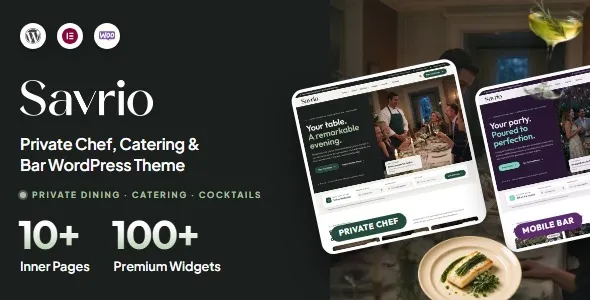
Savrio – Private Chef, Catering & Bar WordPress Theme
Savrio – Private Chef, Catering & Bar WordPress Theme is a modern website design solution for private chefs, catering companies, personal dining services, cocktail bars, event caterers, and hospitality professionals who want to establish a distinctive online presence with WordPress. Created for food, beverage, and event-related businesses, Savrio can serve as a foundation for presenting culinary services, showcasing menus, highlighting signature dishes, introducing professional chefs, and helping potential customers discover suitable dining and catering options. With thoughtful customization and well-organized content, businesses can develop a professional website that reflects their culinary identity and communicates the quality of their services.
In the food and hospitality industry, a website can play an important role in attracting new customers and building confidence before a booking or inquiry. Visitors may want to explore menu options, understand catering packages, view food photography, learn about private dining experiences, or contact a team to discuss an upcoming event. Savrio is positioned for businesses that need to communicate these details through an appealing and user-friendly digital experience.
Whether you operate a private chef service, a wedding catering business, a corporate event catering company, a cocktail bar, or a specialized hospitality brand, Savrio can be considered as a starting point for building a website around your business objectives. By combining attractive food imagery, clear service descriptions, consistent branding, and convenient contact options, you can create a website that presents your offerings and helps potential customers take the next step. The final capabilities depend on the theme version, its supported customization options, and compatible WordPress plugins.
What Is Savrio – Private Chef, Catering & Bar WordPress Theme?
Savrio is a WordPress theme focused on the private chef, catering, bar, and hospitality sectors. Its intended use makes it relevant to businesses that want to present culinary expertise, explain food and beverage services, display menus, and communicate essential booking information through a dedicated website.
A private chef may need to introduce personalized dining experiences and explain how customers can arrange a meal at home or at a private venue. A catering company may focus on event packages, menu selections, service arrangements, and event requirements. A bar may prioritize its drinks menu, atmosphere, location, and opening hours.
WordPress provides a content management system for creating pages, publishing articles, managing images, and maintaining website navigation. Depending on Savrio’s current version and available integrations, website owners may be able to customize page layouts, colors, typography, imagery, and other design elements to match their brand.
Before installing the theme, review the current product demo and documentation to confirm the available layouts, required plugins, editing tools, and supported integrations. This helps ensure that the theme’s capabilities align with the needs of your food or hospitality business.
Modern Website Design for Culinary and Hospitality Brands
A culinary website should communicate more than a list of dishes. It should convey the business’s personality, food philosophy, service quality, and overall customer experience. Visual presentation is particularly important when customers are choosing a chef, catering company, or bar for a special occasion.
Savrio can be customized to suit different hospitality brands. A private chef may prefer an elegant presentation featuring plated dishes and personalized dining experiences. A catering company might use vibrant event photography and clearly organized service packages. A cocktail bar could emphasize its atmosphere, signature drinks, and distinctive identity.
Typography, colors, spacing, and imagery should work together to create a consistent presentation. A refined dining business may favor understated colors and spacious layouts, while a casual catering service may choose a brighter visual style that reflects its personality.
High-quality photography can help visitors understand the kind of experience the business provides. Images of prepared dishes, food presentation, event setups, dining spaces, and beverage creations can support the website’s message. Whenever possible, use original photographs that accurately represent the actual services.
A successful design also prioritizes usability. Visitors should be able to locate the menu, understand available services, review relevant details, and contact the business without unnecessary steps.
Website for Private Chef Services
Private chefs provide personalized culinary experiences for individuals, families, and groups. Their services may include private dinners, home dining, small celebrations, vacation dining, customized menus, and special-event cooking.
Savrio can be considered for a private chef website that introduces culinary expertise, explains available services, and showcases previous food presentations. A homepage can communicate the chef’s approach to cooking, while dedicated pages can describe different dining experiences.
A private dining page might explain how clients can discuss menu preferences, dietary requirements, guest numbers, and venue arrangements. A special-occasion page could introduce services for birthdays, anniversaries, intimate celebrations, and other events, depending on the chef’s actual offerings.
A portfolio of dishes can help demonstrate culinary style and presentation. Supporting descriptions may explain the inspiration behind a dish, the type of occasion it suits, or the ingredients used when that information is relevant and accurate.
The website should clearly explain how customers can begin the planning process. Include appropriate contact details and describe whether inquiries are handled through a form, email, telephone, or another supported method.
Clear service information helps prospective clients understand what to expect before requesting a quotation or discussing a personalized dining experience.
Catering Business Website and Event Services
Catering companies serve a variety of customers, from families organizing private celebrations to businesses planning corporate events. A professional website can help explain these services and make it easier for customers to evaluate suitable options.
Savrio can be adapted for catering businesses that provide wedding catering, corporate meals, birthday parties, private celebrations, outdoor events, and other food services. The final presentation depends on the available theme layouts and the content structure selected for the website.
A catering page can describe the company’s service areas, food styles, event types, and general planning process. Separate pages may be useful for weddings, business functions, private parties, and other major categories when the company offers these services.
Catering packages can be presented with clear descriptions of what is included. If menus, staffing, equipment, transportation, setup, or cleanup are available as separate options, explain the arrangements accurately. Prices should be published only when they are confirmed and reflect the relevant conditions.
Event photography can help visitors understand the company’s presentation style and experience. Images should be genuine, appropriately licensed, and representative of the quality of service offered.
A well-organized catering website helps prospective customers identify suitable services and provides a convenient way to discuss event requirements.
Menu Presentation for Food and Beverage Businesses
A menu is one of the most useful sections of a culinary website. Customers often want to review available dishes, understand food styles, and identify options that match their preferences before making an inquiry.
Savrio can serve as a foundation for presenting food and beverage menus, depending on its available layouts and supported customization features. A private chef might organize menus by dining experience, while a catering company could group dishes into starters, main courses, desserts, and event packages.
Bars may use menu sections for cocktails, mocktails, wines, spirits, and non-alcoholic beverages where applicable. The website should reflect the business’s actual offerings and comply with any relevant local requirements.
Each menu item can include a clear name, concise description, and price when appropriate. Relevant dietary or allergen information should be accurate and maintained carefully. If dishes change seasonally or depend on ingredient availability, explain this clearly.
A well-structured menu makes it easier for visitors to compare options without having to contact the business for basic information. It can also help reduce repetitive questions and make event planning more convenient.
Review menu content regularly to ensure that prices, dish descriptions, and availability remain current.
Bar Website Design and Beverage Presentation
Bars need a website that communicates their identity, atmosphere, beverage selection, and essential visitor information. Depending on the business, the website may focus on a relaxed neighborhood bar, a cocktail lounge, a private event venue, or a specialized beverage service.
Savrio can be evaluated for bar businesses that want to introduce their concept, present drink menus, share photographs, and provide information about location and opening hours. The precise layouts and features should be confirmed in the current theme documentation.
A bar website can introduce signature cocktails, seasonal drinks, non-alcoholic alternatives, and other available offerings. Descriptions may explain flavor profiles, ingredients, presentation styles, or the inspiration behind selected drinks.
Photography can communicate the atmosphere of the venue and the presentation of its beverages. Images of the bar interior, seating areas, drinks, and event setups can help visitors understand what makes the business distinctive.
If the bar hosts private events, tasting experiences, or other special occasions, a dedicated section can explain the available arrangements. Any age restrictions and alcohol-related information should be handled responsibly and in accordance with applicable local laws.
The website should also make practical details easy to find, including location, operating hours, contact information, and relevant booking instructions.
Food Photography and Culinary Portfolio
Food photography can strongly influence how visitors perceive a private chef or catering business. Images allow potential customers to see the presentation style, variety, and overall aesthetic of the culinary services.
Savrio can be customized to showcase dishes, catering displays, private dining tables, desserts, beverage creations, and event setups, depending on the gallery and portfolio options available in the theme.
A culinary portfolio should be organized around meaningful categories rather than displaying every image in one long collection. A chef might group photographs by cuisine or dining experience, while a catering business could organize images by event type.
Each photograph should contribute to the presentation. Use clear, well-lit images that show the food accurately and avoid excessive editing that creates unrealistic expectations.
Where appropriate, short captions can explain the dish, event, or culinary concept. However, the visual layout should remain easy to browse, particularly on mobile devices.
Optimize image dimensions and file sizes to maintain performance. Large photographs can enhance a culinary website, but uncompressed images may slow down loading and make the visitor experience less convenient.
A carefully selected portfolio can help demonstrate the business’s style and provide customers with a clearer idea of what to expect.
Event Catering and Special Occasion Pages
Special events often involve specific requirements related to menus, guest numbers, service arrangements, and timing. A dedicated event page can help explain how the business supports different occasions.
Savrio can be used as a starting point for presenting services related to weddings, anniversaries, birthday celebrations, private dinners, corporate gatherings, and other events that the business actually serves.
Each event page should explain the relevant service options and provide useful information about the planning process. For example, a wedding catering page might describe menu consultation, food service arrangements, and options for different guest preferences.
A corporate catering page could explain how customers can discuss meeting meals, office celebrations, or larger business events. A private celebration page may focus on personalized menus and the practical details required to plan the occasion.
Include genuine photographs and relevant examples where permission has been obtained. If packages vary according to guest count, menu selection, location, or service requirements, explain that pricing may depend on these details.
A clear inquiry pathway encourages visitors to provide the information needed for an initial discussion and helps the business assess whether it can accommodate the event.
Customization and Brand Identity
A strong brand identity helps a culinary business communicate its personality and create a consistent impression across its website and other marketing materials.
Savrio can be considered as a design foundation for adjusting the visual presentation to suit a private chef, catering company, or bar. Depending on the theme’s settings and supported tools, customization may include colors, typography, imagery, page layouts, spacing, and other visual elements.
A private chef may choose an elegant and personal style, while a catering company might prefer a lively presentation that emphasizes events and food variety. A cocktail bar could focus on atmosphere and beverage photography.
Consistency is important across all pages. Use a defined color palette, a clear heading hierarchy, and consistent image treatments. Buttons and links should remain recognizable and should direct visitors toward useful actions.
The brand’s personality should also appear in the written content. A short introduction can explain the business’s culinary approach, service philosophy, and the types of customers it serves.
Before making extensive changes, identify which customization options are controlled by the theme, the WordPress editor, or additional plugins. Keep backups before significant updates and test substantial changes in a staging environment when possible.
Homepage Structure and Customer Journey
The homepage should introduce the business and guide visitors toward the information they need. For a culinary or hospitality brand, this often means making the main services, food presentation, and contact options easy to understand.
A Savrio-based homepage might include an introductory banner, a short business overview, featured services, menu highlights, selected photographs, testimonials, and a contact invitation, depending on the available layout options.
The opening section should communicate the business’s main offering. A private chef could emphasize personalized dining, while a catering company might highlight event catering and menu planning. A bar could introduce its atmosphere and beverage selection.
Featured services can direct visitors to more detailed pages. Selected food photographs can demonstrate the business’s style, while an About section can introduce the chef, team, or hospitality concept.
Customer testimonials may provide additional context when they are genuine and published with appropriate permission. Important information such as location, operating hours, and contact details should be easy to find.
Avoid adding every possible section to the homepage. A focused layout helps visitors understand the business and choose the next step without being overwhelmed.
Responsive Design for Desktop, Tablet, and Mobile
Customers may discover a catering service on a smartphone, review menus on a tablet, or explore a chef’s portfolio on a desktop computer. A responsive website helps make information accessible across these devices.
Savrio is positioned as a WordPress theme for food and hospitality businesses, but its actual responsive behavior should be checked using the current version and installed components.
On smaller screens, menus should remain readable, images should fit the available space, and navigation should be straightforward. Visitors should be able to find contact details, service information, and booking instructions without dealing with awkward layouts.
Image galleries and menu sections require particular attention because multiple columns or large images may not translate well to mobile screens without adjustments.
Test the homepage, service pages, menus, galleries, and contact forms across different screen sizes. Check that buttons are easy to tap, text is readable, and important information does not disappear behind overlapping elements.
Responsive testing should be repeated after major design changes or plugin updates. A convenient mobile experience is especially important for customers who are searching for catering services or making inquiries while planning an event.
Search Engine Optimization for Culinary Websites
Search engine optimization can help people discover a private chef, catering business, or bar through relevant online searches. A WordPress theme provides a useful starting point, but search visibility also depends on content quality, technical configuration, competition, and the business’s broader online presence.
Each important page should have a descriptive title, a clear heading structure, useful original content, and a logical URL. Separate pages for private dining, wedding catering, corporate catering, or other major services can help explain each offering in greater detail.
Use relevant search terms naturally in headings, page titles, descriptions, and body content. Avoid excessive keyword repetition or creating multiple nearly identical pages solely to target small variations of a search phrase.
Menu pages should include readable text rather than relying exclusively on images. This helps visitors access the information and gives search engines meaningful content to understand.
Image optimization also matters. Compress food photographs, use descriptive file names where practical, and provide suitable alternative text for meaningful images.
Compatible SEO plugins may assist with metadata, XML sitemaps, redirects, and other technical settings. Regularly check broken links, indexing issues, mobile usability, and website performance. No theme can guarantee a specific search ranking or a fixed amount of organic traffic.
Local SEO for Catering Companies, Chefs, and Bars
Local visibility can be especially important for hospitality businesses serving customers in a particular city or region. People often search for caterers, private chefs, and bars based on location and service availability.
A Savrio-based website can support local marketing by displaying accurate business information, including the company name, address where applicable, telephone number, operating hours, and service area.
Catering companies may explain the areas they serve and any travel or delivery limitations. Private chefs can describe their service locations, while bars should make their address and opening hours easy to find.
A location page can include practical details such as directions, parking information, venue access, or delivery arrangements when relevant. Keep these details consistent with appropriate business listings and other online profiles.
Useful local content can also answer common questions about event catering, private dining, or hospitality services in the business’s service area. Write naturally and avoid repeating location keywords unnecessarily.
Encourage genuine customer reviews through appropriate channels and respond professionally. Local search results depend on multiple factors beyond the theme, but accurate business information and useful content can support a stronger online presence.
Contact Forms and Catering Inquiry Management
A simple inquiry process helps customers discuss their requirements and understand the next steps. Catering and private dining services often need additional details before providing a quotation or confirming availability.
Savrio can be configured to provide contact opportunities through supported page layouts, buttons, and compatible WordPress form plugins. The exact functionality depends on the theme setup and the integrations selected.
A catering inquiry form might collect the customer’s name, email address, event type, expected guest count, preferred date, location, and a brief description of the requirements. A private chef inquiry may focus on the dining experience, menu preferences, and number of guests.
Only request information that is necessary for the initial discussion. Keep the form straightforward and explain how customers will receive a response.
After configuring a form, test the full submission process. Confirm that messages reach the correct recipient, validation works, confirmation messages are clear, and spam protection is configured appropriately.
If the business accepts bookings through telephone, email, or messaging, display those options clearly. A well-organized inquiry process helps customers communicate their needs and allows the business to assess requests efficiently.
Performance Optimization for Image-Rich Websites
Food and hospitality websites often use large photographs to showcase dishes, menus, events, and venues. These images can improve visual appeal, but poorly optimized assets may slow down page loading.
The performance of a Savrio website depends on the theme implementation, hosting environment, image sizes, plugins, scripts, and third-party integrations. Test the actual website rather than assuming that the theme guarantees a particular loading speed.
Resize images to suit their intended display area and compress them while retaining sufficient visual quality. Avoid uploading unnecessarily large photographs when smaller versions provide the same practical result.
Review animations, embedded content, external widgets, and decorative effects to determine whether they contribute enough value to justify their performance cost. Keep plugins updated and remove unnecessary extensions where appropriate.
Test important pages, including the homepage, menu, service listings, galleries, and contact forms. Different page types may have different performance requirements, particularly when they contain multiple high-resolution images.
Caching and other performance tools may help depending on the website’s configuration and hosting environment. Configure these tools carefully and retest important pages after making changes.
Accessibility and User-Friendly Navigation
A professional hospitality website should make information understandable and accessible to a wide range of visitors. Clear navigation, readable text, suitable color contrast, and properly labeled forms all contribute to a better user experience.
When customizing Savrio, use descriptive navigation labels and organize the menu around the information customers need most. Common sections may include Home, Services, Menu, About, Gallery, and Contact, depending on the business.
Provide meaningful alternative text for images that communicate useful information. Links should describe their destinations, and buttons should use clear wording that explains the action.
Menu items should be readable on smaller screens, and important dietary or allergen information should not be communicated through color alone. Contact forms should have visible labels and understandable error messages.
Test the website using different devices and input methods. Keyboard navigation and practical usability reviews can reveal issues that automated tools may miss.
Accessibility depends on the theme, its configuration, the content, and the selected plugins. Reviewing these elements during development helps make the website more convenient for a wider audience.
WordPress Plugins and Useful Integrations
A culinary business may require additional tools for contact forms, SEO, analytics, reservations, security, backups, and performance optimization. The right combination depends on the business model and the functionality available in the installed Savrio version.
A contact form plugin can collect catering inquiries, while an SEO plugin may assist with search-related settings. Analytics tools can help website owners understand visitor behavior, subject to applicable privacy requirements.
A restaurant or bar that requires table reservations may evaluate a compatible reservation plugin. A catering business may need an inquiry management workflow, while a private chef may prefer a simple consultation form. Online payments or deposits, if required, may involve additional compatible services.
Do not assume these features are included with the theme by default. Check the current documentation and the requirements of each integration before making a purchasing or implementation decision.
Avoid installing multiple plugins that perform the same task without a clear reason. Overlapping tools can create conflicts and increase maintenance work.
After installing or updating a plugin, test the pages and functions it affects, particularly forms, menus, mobile layouts, and any booking or payment workflow.
Security and Ongoing Website Maintenance
Regular maintenance helps keep a WordPress website reliable, secure, and accurate. A hospitality website may receive customer inquiries and display business information, so technical problems can affect both communication and customer confidence.
Use reputable hosting, enable HTTPS, maintain strong administrator passwords, and assign user permissions according to each person’s responsibilities. Keep WordPress, the theme, and compatible plugins updated after reviewing compatibility information.
Create backups before significant updates and verify that the recovery process works. Obtain themes and plugins from trustworthy sources, and remove unused components when appropriate.
Review inquiry forms regularly to confirm that messages reach the correct destination. Check service descriptions, menu items, prices, operating hours, contact information, and event details to ensure that they remain accurate.
Seasonal menus, special packages, and service offerings may change throughout the year. Update the website when those changes occur so customers do not rely on outdated information.
A consistent maintenance routine helps protect the website and supports a professional experience for visitors.
Who Should Use Savrio – Private Chef, Catering & Bar WordPress Theme?
Savrio may be suitable for a range of culinary and hospitality businesses, depending on the requirements of the project and the capabilities of the current theme version.
Private chefs: Introduce personalized dining services, showcase dishes, and explain how customers can discuss a private meal.
Catering companies: Present event packages, food menus, service options, and catering inquiry information.
Wedding caterers: Showcase wedding menus, event presentations, and relevant catering services.
Corporate catering providers: Explain meal services for meetings, business events, and workplace gatherings.
Cocktail bars: Display beverage menus, communicate the venue’s atmosphere, and provide location and opening-hour details.
Event food providers: Introduce food services for celebrations, private functions, and other occasions.
Personal chefs: Build a professional portfolio featuring culinary expertise, signature dishes, and service information.
Hospitality brands: Establish a consistent online identity and provide a central place for customers to explore their offerings.
Before choosing the theme, compare its available layouts and integrations with your actual business requirements. Confirm whether advanced menu management, table reservations, online payments, or booking workflows require additional plugins or services.
Tips for Building a Successful Website with Savrio
A successful culinary website combines attractive presentation with accurate information and a straightforward customer journey. Begin by defining the main purpose of the website, such as generating catering inquiries, promoting private chef services, presenting a bar menu, or introducing a hospitality brand.
Prepare service descriptions and menu content before customizing every page. Organize offerings into clear categories and ensure that pricing, availability, dietary information, and service conditions are accurate.
Use authentic food photography and images that represent the business. Select photographs that communicate the quality and style of the food or venue without creating unrealistic expectations. Ensure that all images are properly licensed and that customer privacy is respected.
Keep branding consistent across the homepage, service pages, menus, galleries, and contact sections. Use a defined color palette, readable typography, and clear calls to action.
Make contact details easy to locate and provide a convenient way for customers to submit inquiries. Test all forms, links, and booking-related integrations before launch.
Review the website on desktop, tablet, and mobile devices. Check page loading, image presentation, accessibility, and the accuracy of published details.
Finally, maintain the website with regular backups, software updates, security checks, performance reviews, and content updates. These practices help ensure that the website remains useful as the business grows and its offerings change.
Final Thoughts on Savrio – Private Chef, Catering & Bar WordPress Theme
Savrio – Private Chef, Catering & Bar WordPress Theme is a theme option for private chefs, catering companies, bars, event food providers, and hospitality professionals seeking to create a polished online presence with WordPress. Its food and hospitality focus makes it relevant to businesses that want to present menus, showcase culinary work, explain services, and help potential customers make inquiries.
With suitable customization, a Savrio-based website can bring together service descriptions, food photography, event information, menu content, business details, and contact opportunities in a coordinated digital experience. Private chefs can focus on personalized dining, catering companies can communicate event services, and bars can introduce their atmosphere and beverage offerings.
The final capabilities depend on the theme’s current release, available layouts, documented requirements, and compatible plugins. Reviewing the current product demo and documentation before installation helps confirm whether the theme supports the intended website structure and functionality.
Long-term website effectiveness also depends on original content, responsive testing, image optimization, accessibility, security, and regular maintenance. A theme alone cannot guarantee search rankings, bookings, or business growth, but it can provide a useful foundation for a well-organized hospitality website.
For businesses seeking to communicate their culinary identity and make their services easier to discover, Savrio can be evaluated as part of a broader website strategy focused on clear presentation, convenient customer communication, and a consistent brand experience.