My Account
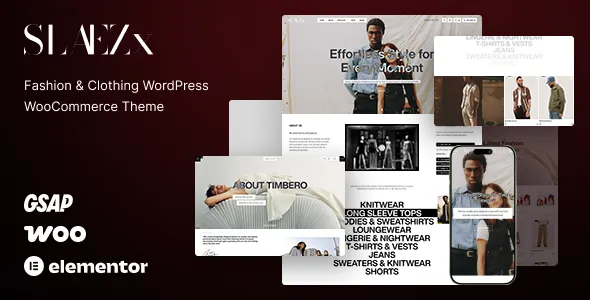
Slaezx – Fashion & Clothing Shop WooCommerce WordPress Theme with GSAP Animations
Introduction to Slaezx
Slaezx – Fashion & Clothing Shop WooCommerce WordPress Theme with GSAP Animations is designed for fashion brands, clothing retailers, online boutiques, and modern apparel businesses that want to create a visually engaging shopping experience. With a contemporary presentation, animation-focused design, and eCommerce-oriented structure, Slaezx helps businesses build an online store that reflects their brand identity while making it convenient for customers to discover and purchase products. Whether you sell everyday clothing, premium fashion collections, seasonal outfits, streetwear, accessories, or designer apparel, this WordPress theme provides a foundation for presenting your products in an attractive and organized way.
Fashion customers often make purchasing decisions based on visual presentation, product details, brand personality, and the overall shopping experience. A successful online clothing store needs more than attractive product images. It also requires intuitive navigation, clear product categories, responsive layouts, and a smooth checkout journey. Slaezx brings these priorities together in a fashion-focused design that can help store owners showcase their collections and communicate the character of their businesses.
Built around WooCommerce, Slaezx supports the creation of a product-focused shopping website using the familiar WordPress ecosystem. Store owners can organize their catalog, present product variations, display pricing, and create dedicated shopping pages. The inclusion of GSAP animations adds an opportunity to introduce movement and visual transitions that make important sections feel more dynamic when implemented appropriately.
For entrepreneurs launching their first fashion store, established retailers expanding online, and creative teams building client websites, Slaezx offers a starting point for developing a recognizable digital storefront. Its combination of fashion-oriented styling, WooCommerce functionality, and animation-led presentation makes it suitable for brands that want to balance visual appeal with practical shopping requirements.
A Modern Design for Fashion and Clothing Stores
Fashion is a highly visual industry, and a website should communicate the personality of a clothing brand as soon as visitors arrive. Product imagery, typography, spacing, colors, and page composition all contribute to the impression customers form about a store. Slaezx is designed around the needs of fashion retailers, making it possible to create a storefront that gives clothing collections an appealing digital presentation.
A contemporary fashion website should allow products to remain the main focus. Clean product grids, well-organized category sections, promotional banners, and carefully arranged content can help visitors explore a collection without unnecessary distractions. This approach is useful for stores selling products across multiple categories, from casual wear and formal clothing to seasonal collections and fashion accessories.
Store owners can adapt the visual direction to match their branding. A premium boutique may favor understated colors, generous whitespace, and elegant typography, while a streetwear retailer may prefer stronger contrasts and more energetic visual elements. A minimalist clothing label might emphasize product photography and simple navigation, whereas a trend-driven fashion shop could use promotional sections to highlight new arrivals.
The flexibility of a WordPress-based storefront also gives businesses room to evolve. As collections change, brands can refresh banners, update featured products, introduce seasonal campaigns, and reorganize categories to support new merchandising priorities.
WooCommerce Functionality for Online Clothing Retailers
WooCommerce provides the eCommerce foundation for Slaezx, helping store owners manage the essential parts of an online shopping operation within WordPress. Instead of treating a website as a static catalog, retailers can build a store where customers browse products, review product information, select available options, and proceed through the purchasing process.
Clothing stores frequently need to present products in different sizes, colors, fits, and styles. WooCommerce supports product variations when configured with the appropriate attributes, allowing merchants to organize these choices within their product listings. This is particularly helpful for fashion businesses whose customers expect to compare available options before adding an item to their carts.
Store owners can also structure their inventory into useful categories. For example, a clothing shop might separate men’s apparel, women’s apparel, footwear, accessories, seasonal wear, and sale items. More specialized businesses can create categories for denim, activewear, formal clothing, outerwear, or designer collections. A clear structure makes it easier for shoppers to narrow their choices and discover relevant products.
Product pages are equally important. Customers may want to see multiple product photographs, review descriptions, check prices, understand sizing information, and learn about available options before placing an order. Merchants should use these pages to provide accurate information and answer common purchasing questions.
WooCommerce’s broader ecosystem can also support additional store requirements through compatible extensions. Depending on business needs, merchants may configure payment providers, shipping methods, tax settings, inventory management, discount codes, customer accounts, and other eCommerce features. The availability of individual capabilities depends on the chosen configuration, plugins, and service providers.
GSAP Animations for a More Dynamic Shopping Experience
Movement can play an important role in modern fashion website design when it supports the content rather than competing with it. Slaezx highlights GSAP animations as part of its design identity, providing a direction for creating more expressive transitions and visually engaging page experiences.
GSAP, commonly known as GreenSock Animation Platform, is a JavaScript animation library used to animate elements on websites. Depending on the implementation included in a theme, animation effects may be used for page introductions, text reveals, image transitions, scrolling sections, and other visual details.
For fashion retailers, subtle movement can help direct attention toward a new collection, introduce a promotional message, or make a homepage feel more polished. An animated headline can establish the mood of a campaign, while a carefully timed image reveal can draw attention to the products being presented. These effects can complement strong photography and thoughtful page composition.
Animation should always serve a clear purpose. Excessive movement can slow down the perceived browsing experience, distract visitors from product information, or make navigation less comfortable. A balanced approach uses motion to support storytelling while keeping shopping controls easy to find and use.
Store owners should also consider accessibility when using animated effects. Important content should remain understandable without animation, and movement should not prevent customers from interacting with navigation, product options, or checkout elements. Where supported by the implementation, respecting reduced-motion preferences can make the experience more comfortable for visitors who prefer less movement.
Designed for Fashion Brands and Clothing Boutiques
Slaezx can be used as a foundation for several types of fashion-related businesses. Its usefulness depends on how the store owner organizes the catalog, customizes the presentation, and configures the required eCommerce functions.
Independent fashion boutiques can use a dedicated online store to extend their reach beyond a physical location. Product categories and collection pages can help customers discover new arrivals, signature pieces, and seasonal merchandise. A consistent visual identity across the website can also reinforce the boutique’s personality.
Clothing labels developing their own collections may use the storefront to present the story behind their products. Carefully selected photography, descriptive product copy, and well-organized collection pages can communicate the intended style of the brand. This can be especially valuable for businesses that want to distinguish their designs from mass-market alternatives.
Streetwear brands often rely on bold imagery, strong visual identity, and product-led campaigns. With an appropriate customization approach, the website can be styled around limited releases, graphic apparel, everyday essentials, and featured collections. Promotional sections can help highlight products that deserve additional attention.
Premium fashion retailers may prefer a more restrained visual direction. Neutral colors, refined typography, consistent photography, and uncluttered layouts can help create a polished presentation for higher-end clothing and accessories.
The theme can also serve stores selling accessories such as handbags, belts, hats, scarves, jewelry, and other fashion-related products, provided the chosen product structure and required store features are configured accordingly.
Showcase New Arrivals and Seasonal Collections
Fashion catalogs change frequently. New products arrive, seasonal collections replace older merchandise, and customer preferences shift throughout the year. An effective store should make these updates easy to communicate without requiring a complete redesign each time the catalog changes.
Slaezx can be organized to highlight new arrivals and recently introduced collections. A featured section on the homepage can direct visitors toward newly listed products, while dedicated category pages can keep different product groups organized. Retailers may also use campaign banners to introduce spring collections, summer essentials, winter apparel, festive clothing, or other time-sensitive ranges.
Seasonal merchandising becomes more effective when the website clearly communicates what makes a collection relevant. A retailer promoting winter clothing might feature coats, knitwear, scarves, and cold-weather accessories. A summer collection could focus on lightweight fabrics, breathable outfits, dresses, and vacation essentials.
Limited-time promotions should be presented with accurate terms and dates. Clear messaging helps customers understand which products are included and when an offer ends. Retailers should avoid creating urgency through misleading countdowns or inaccurate stock claims because trust is essential to long-term customer relationships.
By refreshing product photography, featured categories, and promotional content regularly, store owners can keep the storefront aligned with their current inventory and marketing calendar.
Product Pages That Help Customers Make Decisions
A product page should do more than display an image and a price. It should provide the information customers need to decide whether an item matches their preferences, fits their requirements, and represents good value.
Clothing retailers should include clear product titles, useful descriptions, accurate pricing, and high-quality photographs. Where relevant, product information should explain fabric composition, fit, available sizes, color choices, care instructions, and other details that influence purchasing decisions.
For fashion products, sizing information deserves particular attention. Customers cannot physically try on garments before ordering from most online stores, so a useful size guide can help reduce uncertainty. Merchants should ensure that measurements and fit descriptions are accurate for each product rather than relying on vague or inconsistent wording.
Product photographs should show the item clearly. Images from multiple angles, close-up details, and appropriate lifestyle photography can help visitors understand the product’s appearance. Image files should also be optimized to balance visual quality with loading speed.
Where the store’s configuration supports them, product reviews can provide additional information about fit, quality, and customer satisfaction. Retailers should manage reviews responsibly and respond professionally to reasonable questions or concerns.
A well-prepared product page can make the buying process easier by answering common questions before a customer needs to contact the store. This supports a more convenient shopping experience and helps establish confidence in the brand.
Organized Categories for Easier Product Discovery
An online clothing store can quickly become difficult to navigate when products are added without a clear organizational plan. Categories, subcategories, filters, and search functionality help shoppers move through a catalog more efficiently.
With WooCommerce, store owners can establish product categories based on clothing type, audience, collection, or other useful attributes. A general apparel retailer might organize its products into men’s clothing, women’s clothing, children’s clothing, footwear, and accessories. A specialist store may instead focus on activewear, formalwear, modest fashion, sustainable clothing, or designer collections.
Attributes can help customers distinguish between products. Depending on the site’s configuration and available extensions, shoppers may be able to narrow product choices by size, color, material, price range, or other relevant characteristics.
Category names should be understandable and consistent. Visitors should not have to guess where a product belongs or whether two similar categories contain different items. A well-planned structure can also help store administrators maintain the catalog as inventory grows.
Navigation should prioritize the sections customers use most often. New arrivals, bestsellers, sale items, and major product categories are often useful destinations for fashion shoppers. The most appropriate structure will depend on the size of the store and the way its customers typically browse.
Responsive Shopping Across Desktop, Tablet, and Mobile
Customers shop for clothing on a wide range of devices. Some browse collections on desktop computers, while others discover products through mobile search, social media, or direct links shared by friends. A responsive storefront helps ensure that the shopping experience remains usable across different screen sizes.
On desktop, retailers can take advantage of larger screens to present multiple products across a row, show broad campaign imagery, and organize navigation around several product categories. Tablet layouts need to preserve clarity while adapting to a smaller available area. Mobile layouts should make product images, prices, variant selectors, and shopping controls easy to view and operate.
Responsive behavior is especially important for fashion stores because images play such a large role in product discovery. Product photographs should remain clear without forcing users to zoom in excessively or scroll through awkward layouts. Text should remain legible, and buttons should provide enough space for comfortable touch interaction.
Store owners should test the complete purchasing journey on real devices or representative screen sizes. Important checks include opening navigation menus, changing product variations, adding items to the cart, reviewing cart contents, entering customer details, and completing checkout.
A responsive layout is only one part of mobile usability. Loading performance, accessible form controls, readable product information, and a straightforward checkout process all contribute to the overall experience.
A Strong Visual Identity for Fashion Businesses
A clothing brand’s visual identity should remain consistent from its homepage to its product pages and promotional campaigns. Color choices, typography, photography, icons, and spacing contribute to the impression customers form about the business.
Slaezx provides a starting point for developing a fashion-focused website, while customization can help align the presentation with a specific brand. A luxury label may use a limited palette and refined typography. A youth-focused streetwear brand might favor striking graphics and bold contrasts. A family clothing retailer may choose a more approachable style with clear navigation and friendly imagery.
Product photography should support the same visual direction. Mixing images with dramatically different lighting, backgrounds, or proportions can make a catalog feel inconsistent. Retailers should aim for a recognizable photography style that suits their products and target audience.
Promotional graphics should complement the store rather than overwhelm it. A homepage filled with competing banners can make it harder for customers to understand which products matter most. A more deliberate hierarchy gives priority to the primary collection, key categories, and important offers.
Brand consistency should also extend to written content. Product descriptions, category introductions, shipping information, and customer service pages should use a tone that reflects the business. A coherent presentation helps customers recognize the brand across different parts of the shopping experience.
Homepage Sections for Better Merchandising
The homepage is often the first page customers see, particularly when they arrive through branded searches, advertisements, or direct links. It should quickly communicate what the store sells and provide clear paths toward the products customers want.
A fashion store homepage can include a primary campaign area, selected product categories, new arrivals, featured collections, popular products, and promotional content. The exact structure should reflect the retailer’s inventory and commercial priorities.
A hero section can introduce a seasonal campaign or the brand’s main collection. Supporting category links can then help customers explore specific product groups. Featured products may highlight bestsellers, recently launched items, or merchandise the business wants to promote.
The homepage should not attempt to display the entire catalog. Its role is to introduce the brand and direct visitors toward relevant destinations. Clear calls to action, recognizable navigation labels, and a sensible content hierarchy help customers understand where to go next.
Store owners should also review homepage content regularly. A campaign for an expired sale or an unavailable collection can create confusion and reduce confidence. Updating the featured products and promotional messaging keeps the website aligned with the current store offering.
Shopping Cart and Checkout Considerations
A smooth checkout experience is an important part of online retail. Customers who have selected products should be able to review their choices, understand the expected costs, provide the required information, and complete payment without unnecessary confusion.
WooCommerce supplies core cart and checkout functionality, with the final experience depending on the active theme, payment configuration, plugins, and store settings. Retailers should verify that these pages work correctly with their selected products, shipping methods, taxes, and payment providers.
For clothing stores, cart contents should clearly identify the chosen products and variations. If a customer selects a particular size or color, that information should remain visible during cart review so the customer can confirm the intended item.
Shipping charges and delivery expectations should be communicated as clearly as possible. Customers may hesitate when additional fees appear unexpectedly near the end of checkout. Publishing useful shipping and returns information can help reduce uncertainty before customers commit to an order.
Retailers should test common scenarios, including products with variations, promotional codes, out-of-stock items, and different shipping destinations where relevant. They should also check order confirmation messages and ensure that the store’s customer support process is ready to handle questions after purchase.
Search Engine Optimization for a Fashion Store
Search engine optimization helps customers discover a clothing business when they search for relevant products, brands, and styles. A well-structured website can make product information easier for search engines to understand while helping shoppers find relevant pages through organic search.
Slaezx can serve as the design foundation for an SEO-focused WooCommerce store, but rankings depend on much more than theme selection. Useful product content, technically sound pages, internal links, site performance, crawlability, and competition all influence search visibility.
Retailers should create descriptive product titles that accurately identify each item. Instead of relying on generic names, a product title can include relevant information such as the clothing type, style, or intended use when it helps customers understand the product. Descriptions should explain real product characteristics rather than repeat the same keywords unnaturally.
Category pages can target broader shopping needs, while individual product pages can focus on specific items. For example, a store may have a category for linen shirts and separate product pages for individual shirts within that collection. Internal links between related products and categories can help visitors discover more items and clarify the relationship between pages.
Image optimization is also important. Meaningful image filenames and accurate alternative text can improve accessibility and provide context about product photographs. Alternative text should describe the actual image rather than serve as a place to insert repeated search terms.
Retailers should maintain unique content for important product pages, avoid publishing thin or repetitive descriptions across large portions of the catalog, and use a suitable SEO plugin if they need additional control over metadata and structured data. They should also monitor indexing and search performance through relevant webmaster tools.
Performance and Page Loading Experience
A visually attractive store still needs to load efficiently. Fashion websites often rely on large photographs, promotional graphics, web fonts, scripts, and animation effects. Without careful optimization, these elements can increase page weight and make browsing feel slower, particularly on mobile connections.
Store owners should start by optimizing images. Use appropriately sized files, compress photographs without sacrificing necessary detail, and select efficient formats when supported by the site’s setup. Avoid uploading oversized source images when a smaller version will serve the displayed layout.
Animation effects should also be reviewed. GSAP can create sophisticated visual transitions, but the performance impact depends on how animations are implemented, which elements they affect, and how much JavaScript the page loads. Avoid animating too many elements simultaneously, and test important pages on mobile devices.
Caching, suitable hosting, and a well-configured content delivery network can further improve performance where appropriate. Retailers should review the number of active plugins and remove tools that are no longer needed. Third-party scripts should be added selectively because analytics, marketing, and other integrations can contribute to page-loading overhead.
Performance testing should cover more than the homepage. Category pages, product pages, cart pages, and checkout should all be evaluated because they have different technical requirements. Regular testing can help identify problems introduced by new products, extensions, or design changes.
Accessibility and Comfortable Browsing
Accessibility helps more people use an online store successfully. It is particularly important for shopping websites, where visitors need to navigate menus, read product information, select options, and complete forms.
Retailers should use descriptive links and buttons that communicate their purpose. Navigation should be understandable, and interactive controls should be operable using a keyboard where required. Text and background colors should provide sufficient contrast, while product information should not depend on color alone to communicate important differences.
Images should have appropriate alternative text when they convey meaningful information. Decorative images can be handled differently from images that communicate product details, but store owners should avoid leaving useful visual information inaccessible to customers who use assistive technology.
Animation deserves additional consideration. Movement should not make text difficult to read or cause essential information to disappear before visitors can interact with it. Where practical, the site should accommodate reduced-motion preferences and keep essential content available even when animations are disabled or do not run.
Form labels, validation messages, and error explanations should be clear. If a customer selects an unavailable size or enters incomplete checkout information, the interface should explain the issue in a way that supports correction.
Accessibility is an ongoing process rather than a single design setting. Store owners should test common tasks, review the site with keyboard navigation, and address issues as the catalog and website evolve.
Product Photography and Fashion Storytelling
Product photography can significantly influence how customers perceive clothing online. Since shoppers cannot touch the fabric or try on a garment through a standard product page, images need to communicate its appearance as clearly as possible.
Retailers should use photographs that represent the actual product. Where practical, include front and back views, close-up details, and images that show the garment being worn. Consistent image proportions can make product grids easier to scan, while well-lit photography helps customers distinguish colors and textures.
Lifestyle images can provide context about how a garment fits into everyday life or a particular style. A sportswear brand might show active clothing in an appropriate setting, while a formalwear retailer could present outfits in more polished environments. The imagery should remain relevant to the products being sold.
Image descriptions should be accurate and useful. Avoid using the same alternative text for every photograph in a product gallery when the images show different details. Clear descriptions improve the experience for people who rely on assistive technology and help make the site’s media more understandable.
Retailers should also consider image-loading behavior and file sizes. A store with hundreds of high-resolution product photographs can become slow if assets are not optimized. A balance between image quality and performance helps customers browse the catalog without unnecessary delays.
Building a More Effective Clothing Catalog
A well-maintained product catalog makes a store easier to manage and easier to shop. As the number of products increases, consistent naming conventions, category assignments, attributes, and inventory information become more important.
Each product should have an informative title and a description that explains its most relevant characteristics. Clothing attributes should be applied consistently so customers can compare products more easily. If one shirt uses a color attribute while a similar product includes the color only in its description, shoppers may have difficulty finding both items through the same filtering process.
Retailers should review product availability and pricing regularly. Outdated products, incorrect prices, and unavailable variations can create unnecessary frustration. When an item is discontinued, store owners should consider whether the page should remain available, redirect to a relevant alternative, or be handled in another way based on its search value and business needs.
Related products can help customers discover complementary items. For example, a store selling formal clothing may suggest matching accessories, while a sportswear shop may present coordinating garments. Recommendations should be genuinely relevant rather than added indiscriminately.
A consistent catalog structure also supports internal operations. Store administrators can more easily maintain inventory, prepare promotional campaigns, and identify which product groups need updated photography or descriptions.
Marketing Opportunities for Online Fashion Stores
A WooCommerce storefront can be part of a wider marketing strategy that brings together organic search, email campaigns, social media, paid advertising, and returning customers. The most suitable combination depends on the brand’s audience, budget, product range, and business goals.
Social media can help fashion brands introduce new collections and direct interested visitors to product pages. Campaigns work best when the landing page matches the message in the promotion. If an advertisement features a particular collection, customers should arrive at a page where those products are easy to find.
Email marketing can support new-arrival announcements, seasonal campaigns, and customer updates when visitors have chosen to subscribe. Store owners should use appropriate consent practices and provide a clear way for recipients to manage their subscriptions.
Discount codes can be used for selected campaigns, subject to the store’s pricing strategy and WooCommerce configuration. Promotions should have clear terms, including relevant eligibility rules and expiry dates. Excessive discounting can undermine perceived value, so offers should support a deliberate commercial objective.
Returning customers may appreciate relevant product recommendations and useful information about new collections. However, marketing communications should remain respectful and transparent. Building trust over time is more valuable than relying on aggressive messaging or misleading promotional claims.
Useful Store Information That Builds Confidence
Customers are more likely to feel comfortable buying from a store when important information is easy to find. In addition to product details, fashion retailers should provide clear information about shipping, returns, exchanges, payment methods, privacy, and customer support.
A shipping policy should explain the available delivery options and realistic processing expectations. If delivery times differ by destination or product type, that distinction should be communicated clearly. Retailers should avoid promising delivery dates that they cannot reliably meet.
A returns and exchanges policy is especially important for clothing because sizing and fit can vary. Customers should understand the applicable time limits, item conditions, exclusions, and steps required to request a return or exchange. Policies should accurately reflect the retailer’s actual practices and legal obligations.
Contact information should be easy to locate. Customers may need help with sizing, order status, product availability, or payment issues. A clearly presented support process helps them understand how to obtain assistance.
Trust also depends on consistency. Product descriptions, prices, promotional terms, checkout information, and policy pages should agree with one another. A well-presented website cannot compensate for inaccurate information or unreliable order handling, so store operations should support the quality of the design.
Customization and Long-Term Store Growth
Fashion businesses rarely remain static. A small boutique may expand its catalog, a clothing label may introduce new collections, or an established retailer may begin selling to additional customer groups. A flexible website foundation helps businesses respond to these changes without rebuilding every page from scratch.
With WordPress and WooCommerce, store owners can update product listings, create categories, publish editorial content, and introduce compatible extensions as their needs change. The extent of visual customization depends on the theme’s settings, templates, and the tools included in the specific installation.
Before introducing major changes, retailers should test them on a staging site where possible. Updates to themes, plugins, and WordPress can affect layouts, checkout behavior, and integrations. Keeping backups and maintaining a sensible update process reduces the risk of avoidable disruption.
As the business grows, store owners may also need to review hosting capacity, product organization, customer service processes, and inventory management. A larger catalog may require stronger search and filtering tools, while higher order volumes can place greater demands on the checkout and operational workflow.
The best approach is to build a store around current business needs while leaving room for practical improvements. New features should solve identifiable problems rather than add complexity without a clear benefit.
Why Choose Slaezx for a Fashion Website?
Slaezx brings together a fashion-focused presentation, WooCommerce-based shopping capabilities, and an animation-oriented design direction. This combination makes it a relevant option for retailers who want their website to express a distinctive visual identity while supporting the practical requirements of online clothing sales.
Its fashion-oriented approach can help businesses organize product collections around the way customers shop. Whether the catalog focuses on everyday apparel, boutique fashion, streetwear, premium clothing, or accessories, the site can be structured to make products easier to discover and compare.
The GSAP animation concept offers another design dimension for brands that want to create a more expressive browsing experience. When used thoughtfully, animation can support campaign storytelling, introduce important content, and add visual character without compromising usability.
WooCommerce provides a familiar foundation for managing products and configuring core shopping functionality. Its wider ecosystem gives retailers options for extending their stores as their requirements develop, although individual features depend on the selected extensions and configuration.
As with any WordPress theme, the final result depends on the quality of implementation. Appropriate photography, useful product descriptions, a carefully planned catalog, responsive testing, and performance optimization all contribute to a successful storefront. Slaezx can provide the starting point, while the store owner’s content and business decisions shape the overall customer experience.
Create a Fashion Store That Reflects Your Brand
An effective clothing website should combine an appealing visual identity with a reliable, straightforward shopping journey. Customers need to discover products easily, understand what they are buying, compare available options, and complete purchases without unnecessary obstacles.
Slaezx – Fashion & Clothing Shop WooCommerce WordPress Theme with GSAP Animations offers a fashion-focused foundation for building that experience. Its combination of WordPress flexibility, WooCommerce shopping functionality, and animation-led presentation can suit businesses looking to create a distinctive online destination for their collections.
For new retailers, the website can become the starting point for establishing a recognizable online presence. For existing clothing brands, it can support a refreshed presentation of products and campaigns. For developers and designers building client projects, it provides a direction for creating fashion storefronts that combine visual storytelling with eCommerce requirements.
The strongest results come from pairing the right design foundation with thoughtful execution. Keep the catalog organized, present products honestly, optimize imagery, test the shopping process, and make important customer information easy to find. With those essentials in place, a fashion store can offer a more engaging experience while giving the business a practical foundation for future growth.