My Account
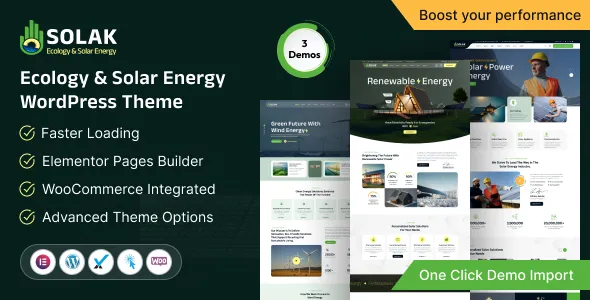
Solak – Ecology & AI Solar Energy WordPress Theme
Solak – Ecology & AI Solar Energy WordPress Theme is a modern website design solution for solar energy companies, renewable energy providers, environmental organizations, green technology businesses, and sustainability-focused professionals. Designed around the themes of clean energy, ecological responsibility, and technological innovation, Solak offers a potential foundation for creating a professional online presence that communicates environmental values and renewable energy solutions. Whether you operate a solar installation company, promote sustainable technologies, provide energy consulting, or develop AI-powered energy management solutions, this WordPress theme can serve as a starting point for presenting your services, projects, and business information.
As demand for renewable energy continues to grow, businesses need websites that explain their solutions clearly and help customers understand the benefits of sustainable power. A well-organized website can introduce solar products, showcase completed installations, explain energy-saving strategies, and provide convenient ways for potential customers to request consultations. By combining an appropriate visual identity with useful content and a clear navigation structure, Solak can help businesses communicate their expertise and build a consistent digital presence.
WordPress provides a flexible content management system for publishing service pages, managing articles, displaying images, and maintaining business information. A theme focused on ecology and solar energy provides a relevant design direction for organizations working in the renewable energy sector. The final functionality depends on the installed theme version, its available templates, supported customization tools, and compatible plugins. Before launching a website, review the current theme documentation and demo to confirm that the available features meet your project’s requirements.
What Is Solak Ecology & AI Solar Energy WordPress Theme?
Solak is a WordPress theme positioned for solar energy, environmental technology, and sustainability-related website projects. Its specialized concept makes it worth considering for businesses that want their online presence to reflect clean energy, ecological awareness, and modern technological solutions.
Unlike a generic business website, a solar energy website often needs to explain technical services in an accessible way. Visitors may want to understand how solar panels work, what installation involves, which systems are suitable for their property, and how to contact a qualified provider. A focused website structure can help answer these questions while presenting the company’s services and experience.
Solak can be evaluated for a range of renewable energy applications, including solar panel installation, residential solar solutions, commercial energy systems, renewable energy consulting, sustainable building services, and environmental initiatives. Businesses exploring artificial intelligence in energy management may also use a suitable website structure to explain predictive analytics, energy monitoring, and intelligent resource optimization.
The specific layouts, interactive elements, and AI-related components included with the theme should be verified through its official product information. A theme’s name or design concept alone does not establish that it includes operational AI tools, energy monitoring systems, or automated calculations. These capabilities may require separate software, APIs, or integrations.
Modern Design for Solar Energy Businesses
A professional visual presentation helps renewable energy companies communicate reliability, technical expertise, and environmental responsibility. Customers researching solar installations or clean energy services often compare several providers before deciding which business to contact. A clear and consistent website can make that research process easier.
Solak’s ecology and solar energy positioning provides a relevant direction for websites that need to communicate sustainability and innovation. Depending on the available design options, businesses can build pages around renewable energy services, installation projects, company information, environmental benefits, and customer inquiries.
A solar energy website can use clean layouts, readable typography, suitable photography, and carefully selected visual elements to explain its services. Images of solar panels, rooftop installations, commercial solar facilities, and renewable energy infrastructure can help visitors understand the company’s work.
Design should support the message rather than distract from it. Important information, such as available services, project experience, consultation options, and contact details, should be easy to locate. Consistent colors, spacing, headings, and buttons can also help establish a recognizable brand identity.
Businesses should replace placeholder content with accurate company information and relevant project examples. Original photographs, clear service descriptions, and genuine customer feedback can make the website more informative and credible.
Responsive Design for Desktop, Tablet, and Mobile
Responsive design is essential for modern business websites because visitors may access information from smartphones, tablets, laptops, and desktop computers. A solar installation company may receive inquiries from homeowners researching rooftop systems on their phones, while commercial customers may review technical information on larger screens.
Solak is positioned as a WordPress website theme for a specialized business category, making responsive presentation an important consideration when evaluating it. The actual behavior should be checked using the current demo and installed version, particularly if the website includes large images, complex layouts, or third-party components.
A responsive website should adjust its content to fit different screen sizes without making navigation difficult. Headings need to remain readable, images should scale appropriately, and buttons should be easy to select on touchscreens. Contact forms should also remain convenient to complete on mobile devices.
For renewable energy businesses, mobile usability is particularly important when customers want to call a provider, submit a consultation request, or review installation services while comparing options. Essential contact details should remain easy to find throughout the website.
Testing should cover more than the homepage. Service pages, project galleries, blog articles, quotation forms, and other important sections should be checked across multiple screen sizes. Custom CSS, page-building tools, and additional plugins may affect responsive behavior, so the complete website should be tested before launch.
Website Solutions for Solar Panel Installation Companies
Solar panel installation businesses need websites that explain their services, demonstrate experience, and guide potential customers toward a consultation. Visitors may be interested in residential rooftop installations, commercial solar systems, maintenance services, or assistance evaluating renewable energy options.
Solak can be considered as a starting point for an installation company website organized around these needs. A homepage can introduce the business and its primary services, while dedicated pages provide more detailed information about individual offerings.
A residential solar page might explain the installation process, property suitability, system planning, and the importance of professional assessment. Commercial service pages can focus on the needs of offices, warehouses, retail facilities, factories, and other business properties.
Project galleries can showcase completed installations and provide visual examples of the company’s work. Where appropriate, each project can include information about the property type, system capacity, installation scope, and project objectives. Any technical specifications or performance figures should be accurate and supported by reliable records.
A useful contact pathway allows visitors to request a site assessment or discuss their energy requirements. The website should explain what information customers may need to provide, such as property location, electricity consumption, available roof space, or the intended installation type.
Renewable Energy and Sustainable Technology
Renewable energy businesses often work across several related areas, including solar power, energy efficiency, sustainable infrastructure, and environmental technology. Their websites need to explain these services without overwhelming visitors with technical terminology.
Solak’s ecology-focused concept can support a website that presents sustainability as a central business objective. Companies can use their content to explain how their services contribute to renewable energy adoption, resource efficiency, and long-term environmental planning.
A renewable energy provider might organize its website around solar power systems, energy consulting, system maintenance, and sustainable project development. An environmental organization could prioritize its mission, initiatives, educational resources, and community activities, depending on the theme’s available layouts and customization options.
Content should distinguish between general environmental benefits and results specific to a particular project. For example, a business may explain that solar energy can reduce dependence on grid electricity, while any claim about cost savings or emissions reductions should be based on appropriate assumptions and evidence.
Clear explanations help visitors understand both the opportunities and the practical considerations associated with renewable energy. This approach can make the website useful to homeowners, commercial property owners, business managers, and other audiences evaluating sustainable solutions.
AI-Powered Energy Solutions and Intelligent Technology
Artificial intelligence is becoming relevant to several areas of energy management, including demand forecasting, predictive maintenance, consumption analysis, and system optimization. Businesses working in these fields need websites that explain the technology in practical terms.
Solak’s AI solar energy positioning may make it a potential design foundation for companies that combine renewable energy with intelligent software or data-driven services. Such businesses can use dedicated pages to explain their solutions, identify the problems they address, and describe how their technology supports energy-related decisions.
For example, an AI-focused energy company might provide software that analyzes electricity usage patterns, identifies unusual equipment behavior, or helps estimate future demand. A solar operations provider could explain how data analysis supports maintenance planning or helps operators review system performance.
However, the actual availability of AI features depends on the products and integrations used by the business. The theme itself should not be assumed to include artificial intelligence engines, live solar monitoring, automated energy recommendations, or predictive analytics unless these functions are explicitly documented.
Where interactive AI tools are required, they may need to be developed separately or connected through appropriate APIs and plugins. The website should clearly explain which functions are available, what information they use, and what results visitors can expect.
Homepage Layout and Content Organization
The homepage is often the first introduction to a solar energy company. It should quickly communicate the business’s main offering and help visitors find the information they need.
A Solak-based website can be planned around a clear introductory section, a summary of renewable energy services, selected projects, company information, sustainability messaging, educational content, and contact opportunities. The final layout will depend on the templates and design options included in the installed theme.
The introductory section should explain what the company provides and who it serves. A residential solar installer, for example, might focus on home solar installations, while a renewable energy consultancy could emphasize planning, technical assessments, and energy strategy.
Service summaries can direct visitors to dedicated pages that explain each offering in greater detail. Project previews can demonstrate practical experience, while company information can introduce the team, qualifications, and working approach.
A homepage does not need to include every possible section. Its structure should reflect the audience’s priorities and guide visitors toward meaningful next steps, such as exploring a service, reviewing a project, or requesting a consultation.
Customization and Solar Brand Identity
A consistent brand identity helps a renewable energy business stand out and communicate its values. The website’s visual presentation should reflect the company’s positioning, whether it focuses on residential installations, commercial projects, advanced energy technology, or environmental consulting.
Depending on the theme’s available settings and compatible design tools, Solak may be customizable through options related to colors, typography, spacing, page layouts, imagery, and other visual elements. The exact controls should be confirmed through the current product documentation.
Green tones are often associated with environmental responsibility, while yellow and orange can suggest sunlight and energy. Blue can communicate technology and professionalism. These are optional design directions rather than fixed requirements, and the final palette should match the business’s existing branding.
Consistent typography and spacing help make technical content easier to read. Buttons and calls to action should also follow a recognizable style so visitors can identify interactive elements across different pages.
Businesses should use genuine project photographs and relevant visual assets wherever possible. Replacing generic imagery with real installations, equipment, team photographs, and documented project examples can make the website more specific and informative.
Before making extensive changes, review which design settings belong to the theme, the page builder, or additional plugins. Maintain backups and test substantial updates in a staging environment when possible.
SEO-Friendly Structure for Solar Energy Websites
Search engine optimization can help a renewable energy business improve the discoverability of its website. A theme can provide a design foundation, but search performance also depends on content quality, site structure, technical implementation, competition, and the needs of the intended audience.
A useful SEO strategy begins with clearly defined pages. Instead of placing every service on one page, a solar company can create dedicated sections for residential installations, commercial systems, maintenance, energy consulting, and other relevant offerings.
Each page should have a descriptive title, a clear heading hierarchy, informative content, and internal links to related resources. The content should answer the questions potential customers are likely to ask before contacting a provider.
Local businesses may benefit from location-specific service pages when they genuinely serve those areas. These pages should provide useful local information rather than simply repeating place names. Accurate business details, consistent contact information, and a properly maintained business profile can also support local discoverability.
Images should use descriptive filenames and meaningful alternative text where appropriate. Image dimensions and file sizes should be optimized to help pages load efficiently.
Compatible SEO plugins may assist with metadata, XML sitemaps, redirects, canonical settings, and supported structured data. Website owners should also monitor indexing issues, broken links, duplicate content, and other technical problems.
No WordPress theme can guarantee first-page rankings or a specific level of organic traffic. Sustainable SEO requires useful content, ongoing technical maintenance, and a consistent focus on the questions and needs of potential customers.
Content Marketing for Solar and Ecology Businesses
Educational content can help renewable energy companies explain their services and demonstrate industry knowledge. Articles, guides, project stories, and frequently asked questions can provide useful information for visitors who are still evaluating their options.
Solak can be considered for a business website that combines service pages with a WordPress blog, subject to the available blog layouts and archive options. The content strategy should reflect the company’s expertise and the information its audience needs.
A solar installation company might publish articles explaining the installation process, the differences between system types, routine maintenance, and factors that influence solar system sizing. A commercial energy provider could discuss energy efficiency, planning considerations, and the practical challenges of managing electricity consumption.
Businesses exploring AI and energy technology could publish accessible explanations of energy data analysis, predictive maintenance, and intelligent monitoring. Articles should distinguish between established capabilities, potential applications, and results that depend on specific systems or conditions.
Useful content should be accurate, readable, and based on credible information. Avoid promising guaranteed savings or presenting estimates as universal outcomes. When discussing financial benefits, explain the factors that can influence results.
Internal links can connect educational articles with relevant service pages and contact options. A sustainable publishing schedule focused on quality and usefulness can help build a more informative website over time.
Lead Generation and Solar Consultation Forms
Generating qualified inquiries is an important objective for many solar energy websites. Visitors may want to arrange a property assessment, request an installation quotation, discuss a commercial project, or learn more about renewable energy options.
Solak can be configured for contact and lead-generation workflows through the available page elements and compatible WordPress form plugins. The precise functionality depends on the theme’s capabilities and the additional tools installed.
A solar consultation form might collect a visitor’s name, email address, phone number, property type, location, and general service requirements. Commercial inquiry forms may ask about the business facility, estimated electricity usage, or project objectives.
Forms should collect only the information needed to respond appropriately. Clear labels, helpful instructions, and understandable validation messages make the process easier to complete.
Calls to action should match the page’s purpose. A residential installation page could invite visitors to request an assessment, while a commercial energy page might encourage businesses to discuss project requirements with a specialist.
Before launching the website, test form submissions, notification delivery, spam protection, and confirmation messages. Check that inquiries reach the intended team and that contact information remains accurate.
Performance and Website Speed Optimization
Website performance influences usability and can affect how easily visitors access important information. Solar energy websites may contain large project photographs, service illustrations, videos, maps, and other media that require careful optimization.
The performance of a Solak website will depend on the theme implementation, hosting environment, images, scripts, plugins, fonts, and third-party integrations. A responsive layout does not automatically guarantee fast loading, so performance should be measured after the site has been configured.
Start by resizing images to suitable dimensions and compressing them without sacrificing necessary visual detail. Use video and animation selectively, particularly on mobile pages where large media files may slow down loading.
Quality hosting, caching, and other optimization tools may help depending on the site’s configuration. Unnecessary plugins and external scripts should be reviewed to reduce overhead and avoid overlapping functionality.
Test important pages separately, including the homepage, service descriptions, project galleries, and contact forms. Pages containing interactive maps, third-party widgets, or extensive animations may behave differently from simpler pages.
Regular performance checks help identify issues as the website grows. Keeping the theme, WordPress installation, and compatible plugins updated can also support reliability when updates are managed carefully.
Accessibility and User-Friendly Navigation
A professional website should make information accessible and straightforward to navigate. This is especially important for solar energy businesses that need to explain technical services to visitors with different levels of knowledge.
Use clear navigation labels, readable text, appropriate color contrast, and logical heading structures. Important links should have descriptive text, and images that communicate useful information should include suitable alternative text.
Contact forms need properly associated labels and understandable error messages. Interactive elements should be distinguishable from ordinary text, and important information should not rely on color alone.
Navigation should reflect the website’s main objectives. A typical solar business website may include Home, About, Services, Projects, Resources, and Contact sections. Additional pages can be introduced when they provide genuine value to visitors.
Accessibility should be reviewed across the complete website, including mobile menus, galleries, forms, and any interactive components. Automated testing can identify some problems, while keyboard navigation and manual usability checks can reveal others.
A clear, accessible structure makes it easier for a wider range of visitors to understand the company’s services and locate relevant information.
Integrations and Supporting WordPress Plugins
A renewable energy website may need additional tools for search optimization, contact forms, analytics, security, backups, caching, and customer communication. The right combination depends on the website’s goals and the functionality already available in the theme.
Solak should be paired with plugins that are compatible with the installed WordPress version and the theme’s documented requirements. Before installing an extension, review its compatibility information, update history, documentation, licensing terms, and support options.
A contact form plugin can support consultation requests, while an SEO plugin may assist with metadata and sitemap management. Analytics tools can help businesses understand visitor behavior, subject to applicable privacy and consent requirements.
If a business needs AI-powered energy analysis, real-time solar performance data, appointment scheduling, or a customer portal, these functions may require specialized external services or custom development. Confirm the availability of the required integrations before planning the final website.
Avoid installing multiple plugins that perform the same task without a clear reason. Overlapping functionality can increase maintenance work and create compatibility issues.
After installing or updating a plugin, test the pages and workflows affected by the change. This is particularly important for forms, navigation, responsive layouts, and external integrations.
Security and Ongoing Website Maintenance
A professional WordPress website requires regular maintenance to remain reliable and secure. Solar energy companies may rely on their websites to receive customer inquiries, publish service information, and communicate project updates, making consistent upkeep important.
Use reputable hosting, enable HTTPS, create strong administrator passwords, and assign user roles according to individual responsibilities. Keep WordPress, the theme, and compatible plugins updated, with suitable backups available before major changes.
Obtain themes and plugins from trustworthy sources and review their compatibility before installation. Remove unused components when appropriate and avoid granting unnecessary administrative access.
Backups should be created regularly and stored in a location that supports recovery if the website experiences a technical issue. Website owners should also understand how to restore a backup and verify that the restored site works correctly.
Maintenance should include content reviews as well as technical checks. Service descriptions, project details, staff information, contact numbers, and business policies should remain current.
A planned maintenance routine helps reduce avoidable problems and supports a more dependable experience for customers and business partners.
Who Should Use Solak Ecology & AI Solar Energy WordPress Theme?
Solak may be worth evaluating for organizations that need a WordPress website focused on solar energy, sustainability, and related technologies.
Solar installation companies: Businesses can organize information about residential and commercial solar systems, installation services, maintenance, and customer consultations.
Renewable energy providers: Companies working with solar power and other sustainable energy solutions can explain their services and present relevant projects.
Green technology startups: Emerging businesses can introduce their products, explain their technical approach, and communicate their sustainability objectives.
AI energy technology companies: Organizations developing data-driven energy tools can use a suitable website structure to introduce their solutions, provided that the required software functionality is implemented separately where necessary.
Environmental organizations: Sustainability-focused groups can communicate their mission, initiatives, educational content, and environmental programs.
Energy consultants: Professionals can present their services, technical expertise, project experience, and consultation options.
Commercial solar providers: Businesses serving offices, warehouses, factories, and other facilities can create dedicated pages explaining their commercial energy solutions.
Sustainable construction companies: Organizations involved in energy-conscious building projects can present their capabilities and relevant case studies.
The best choice depends on the intended website, the available theme layouts, the required integrations, and the technical needs of the business. Reviewing the current demo and documentation before installation can help establish whether Solak fits the project.
Tips for Building a Successful Website with Solak
A well-designed theme is only one part of a successful website. The finished result also depends on clear communication, accurate information, useful content, and a consistent approach to maintenance.
Begin by defining the website’s primary objective. Determine whether the main goal is to generate solar installation inquiries, explain renewable energy services, showcase completed projects, promote energy technology, or publish sustainability resources.
Prepare the essential content before customizing every page. This may include company information, service descriptions, project photographs, technical details, frequently asked questions, and contact information. Accurate content makes it easier to choose layouts that support the business’s goals.
Establish a consistent brand identity using suitable colors, typography, photography, and button styles. Replace placeholder content with original information and ensure that all technical claims are accurate.
Keep the navigation simple and make important services easy to find. Each page should have a clear purpose and provide visitors with an appropriate next step.
Test the website on different devices before launch. Review page speed, accessibility, contact forms, navigation, image quality, and any third-party integrations. Confirm that business information is current and that all important links work correctly.
Finally, create a maintenance plan that includes software updates, backups, performance monitoring, and periodic content reviews. These practices help the website remain useful as the business develops.
Final Thoughts on Solak Ecology & AI Solar Energy WordPress Theme
Solak – Ecology & AI Solar Energy WordPress Theme is a potential website design option for solar energy companies, renewable energy providers, environmental organizations, green technology startups, and professionals working in sustainability-related fields. Its specialized positioning makes it relevant to projects that need to communicate clean energy, ecological awareness, and modern technological innovation.
A well-planned website can bring together service information, installation projects, educational resources, company details, and convenient consultation options. Solar businesses can use these elements to explain their offerings, while sustainability-focused organizations can communicate their objectives and showcase relevant initiatives.
Businesses interested in artificial intelligence and energy technology should verify the actual functionality provided by the theme and identify any external tools or development work required. The product name alone does not guarantee that AI services, live monitoring, or automated energy analysis are included.
The final website’s effectiveness will depend on the theme version, its documented capabilities, customization choices, content quality, and supporting integrations. Responsive testing, SEO practices, accessibility, performance optimization, and ongoing maintenance are also important parts of the overall process.
For organizations seeking a specialized WordPress design foundation for solar power and sustainability, Solak can be evaluated as part of a broader digital strategy. With accurate information, relevant project examples, thoughtful customization, and reliable maintenance, a professional website can support brand awareness, customer communication, and the wider adoption of renewable energy solutions.