My Account
Structo – Construction & Building Company HTML Template
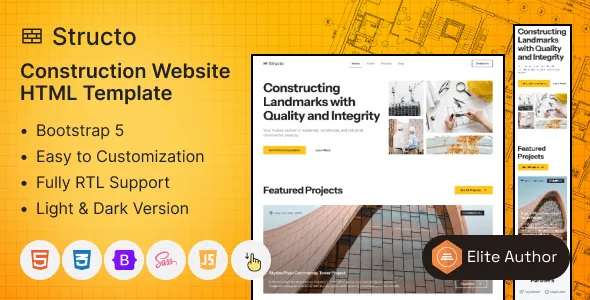
Structo – Construction & Building Company HTML Template is a professional website template designed for construction companies, building contractors, engineering firms, renovation specialists, and infrastructure service providers looking to establish a strong online presence. With a focus on presenting construction services, completed projects, company expertise, and business capabilities, Structo offers a potential frontend foundation for creating a credible and informative construction industry website. Its HTML-based structure allows developers to customize layouts, typography, colors, images, and content according to a company’s branding and business requirements.
A well-designed construction website helps potential clients understand the services a company provides, review its experience, explore completed projects, and request information about upcoming work. Whether a business specializes in residential construction, commercial buildings, industrial facilities, renovations, or civil engineering, a structured online presence can make its capabilities easier to understand. Clear service descriptions, project photographs, company information, and contact details can also help prospective customers evaluate whether the contractor matches their requirements.
Structo can be evaluated for construction businesses, general contractors, property developers, architectural construction firms, renovation companies, and engineering service providers. Developers can adapt the template to highlight project portfolios, construction processes, team information, industry expertise, and inquiry options. The exact layouts, components, and included functionality depend on the template version, so reviewing the current demo and documentation is recommended before implementation.
What Is Structo Construction & Building Company HTML Template?
Structo is an HTML website template intended for businesses operating in the construction, building, renovation, and engineering sectors. It provides a starting point for presenting company information and professional services through a structured website without requiring developers to create every frontend element from scratch.
Construction clients often evaluate multiple factors before choosing a contractor. They may want to understand the company’s experience, available services, project types, working approach, technical capabilities, and previous results. A well-organized website makes this information easier to locate and review.
Structo can provide a visual framework for arranging these details into dedicated pages and content sections. Developers can customize the supplied HTML, CSS, JavaScript, and other included assets, depending on the package, to reflect the company’s identity and service offerings.
The template may be suitable for a small building contractor, a residential construction company, a commercial construction firm, or a larger organization involved in infrastructure and industrial projects.
As an HTML template, Structo primarily provides frontend presentation. Features such as customer portals, project tracking, quotation management, appointment scheduling, and database-driven project administration generally require backend development or third-party integrations unless explicitly included in the package.
Professional Design for Construction Businesses
A construction company website should communicate professionalism, reliability, and practical expertise. Visitors should be able to understand the company’s services and experience without navigating through confusing layouts or excessive promotional content.
Structo can be customized to reflect different construction business identities. A residential builder may prefer warm architectural photography and approachable content, while an industrial contractor might emphasize technical projects, engineering capabilities, and large-scale infrastructure work.
A balanced design can combine strong project imagery with readable text, clear headings, service summaries, and accessible contact information. Visual elements should support the company’s message rather than distract visitors from essential details.
Project photographs can help demonstrate the scale and variety of completed work. Images of building exteriors, construction stages, interior finishes, structural work, and site activities may provide useful context when they accurately represent the company’s projects.
Consistent typography, colors, spacing, buttons, and navigation help maintain a recognizable visual identity throughout the website. A professional presentation should also remain functional across different screen sizes and browsers.
Homepage Design for Construction and Building Companies
The homepage introduces the business and helps visitors discover its main services, experience, and project portfolio. It should communicate the company’s focus quickly and provide convenient pathways to more detailed information.
A Structo-based homepage can be organized around a prominent construction banner, company introduction, featured services, completed projects, business strengths, and contact opportunities, depending on the layouts available in the selected version.
The introductory section should explain what the company does and the types of clients or projects it serves. A residential contractor may emphasize home construction and renovation, while a commercial builder may focus on offices, retail spaces, industrial facilities, or larger developments.
Service summaries can direct visitors toward dedicated pages explaining the company’s capabilities. Featured projects can provide examples of the work performed, while a company overview can introduce its experience, working approach, and professional values.
The homepage may also include project statistics, client testimonials, team introductions, or frequently asked questions when reliable information is available.
Every section should have a clear purpose. A focused homepage that communicates genuine expertise and guides visitors toward relevant information is more useful than one filled with generic claims.
Construction Services and Dedicated Service Pages
Construction companies often provide several related services, and dedicated service pages make it easier to explain each offering in detail.
Structo can be adapted to present services such as residential construction, commercial building, industrial construction, renovation, remodeling, structural work, civil engineering, and general contracting, depending on the company’s actual capabilities and the layouts available in the template.
A residential construction page might explain the company’s approach to building homes, coordinating trades, and managing construction stages. A renovation page could describe remodeling services, property improvements, and interior or exterior upgrades.
Commercial construction content may introduce office developments, retail buildings, warehouses, or other facilities that the business is equipped to deliver. Engineering-focused pages can describe relevant technical services, subject to the company’s qualifications and scope of work.
Each service page should explain the work involved, the intended clients, and the information needed to begin a discussion. Visitors may also benefit from an overview of the project process, expected deliverables, and factors that influence timelines or costs.
Service descriptions should remain accurate and avoid unsupported promises about completion dates, project scale, certifications, or guaranteed outcomes.
Project Portfolio and Construction Case Studies
A construction portfolio helps prospective clients understand the company’s experience and evaluate the types of projects it has completed.
Structo can provide a starting point for presenting project photographs, summaries, and case studies, depending on the available gallery and portfolio layouts.
Each project entry can include the project name, location where appropriate, building type, scope of work, completion status, and relevant photographs. Additional details may describe the construction challenge, the company’s responsibilities, and the approach used to address the requirements.
For example, a residential case study might explain the property’s design objectives, construction stages, and selected finishing details. A commercial project could outline the building’s purpose, broad scope, and coordination requirements.
High-quality photographs can show the progression from construction stages to the completed structure. Images should be authentic, accurately described, and published with appropriate permissions.
Case studies should avoid disclosing confidential client information or sensitive site details. Where project metrics are included, they should be verifiable and presented with suitable context.
An organized portfolio allows visitors to compare relevant examples and gain a clearer understanding of the company’s capabilities.
Residential Construction and Home Building
Residential construction businesses need websites that help homeowners understand the available services and the process of building or improving a property.
Structo can be customized to present home construction, new residential developments, extensions, remodeling, and related services where these match the company’s actual offerings.
A residential service page may describe the company’s approach to planning, construction coordination, structural work, and finishing. Visitors may also want information about the types of properties the company handles, its working process, and how to arrange an initial consultation.
Project galleries can showcase completed houses, apartments, extensions, and renovations. Each example should explain the scope of work rather than relying solely on photographs.
Useful content can also address common homeowner questions, such as how to prepare for a construction consultation, what information is needed for an estimate, and which factors may affect a project’s cost or duration.
Construction costs and timelines vary according to design, materials, site conditions, approvals, and project complexity. Website content should explain these factors without making unrealistic guarantees.
Clear residential service information can help prospective customers determine whether the company is suitable for their project before making contact.
Commercial and Industrial Building Projects
Commercial and industrial construction projects often involve different requirements from residential work. Clients may need to evaluate the contractor’s experience with larger structures, technical coordination, project planning, and operational requirements.
Structo can be adapted to present commercial and industrial capabilities through dedicated service pages and relevant case studies, subject to the business’s actual experience.
Commercial construction content may cover offices, retail spaces, hospitality buildings, warehouses, or mixed-use properties. Industrial projects may involve production facilities, storage buildings, workshops, or other specialized structures.
A useful project page should explain the building’s purpose, the contractor’s role, and the general scope of work. Where appropriate, it can also describe coordination with architects, engineers, subcontractors, and other project stakeholders.
Clients may value clear information about quality management, site coordination, safety practices, and project communication. These statements should reflect the company’s documented procedures rather than generic claims.
Accurate descriptions of commercial and industrial work help prospective clients assess whether the contractor’s capabilities align with their project requirements.
Renovation, Remodeling, and Property Improvement
Renovation and remodeling services help property owners update existing buildings, improve functionality, and address changing space requirements.
Structo can be customized to showcase renovation projects and explain the types of improvements offered by the company.
Service descriptions may cover interior remodeling, exterior upgrades, structural repairs, room additions, office renovations, and general property improvements where applicable.
Before-and-after photographs can provide a useful comparison of the original condition and completed work. Each example should include a concise explanation of the project scope and the improvements made.
A renovation page can also describe the initial assessment, planning process, material selection, construction stages, and final inspection, provided these reflect the company’s actual working practices.
Renovation projects can involve hidden structural conditions, material availability, permits, and changes to the original scope. Website content should avoid presenting all projects as identical or promising fixed timelines without a proper assessment.
Clear service information helps property owners understand the company’s capabilities and identify the next step toward discussing their renovation plans.
Company Profile, Team, and Professional Expertise
A company profile helps visitors learn about the people, experience, and working approach behind a construction business.
Structo can be adapted to include an About Us page, team profiles, company history, and information about relevant professional capabilities, depending on the template’s available layouts.
The company introduction can explain the types of projects the business undertakes, its service area, and the principles that guide its work. Team profiles may introduce management staff, engineers, project managers, or other professionals where appropriate.
Professional qualifications, licenses, certifications, and memberships should be included only when they can be verified. Accurate details are particularly important in industries where clients rely on technical competence and compliance with applicable requirements.
A company page may also explain the business’s approach to communication, project coordination, workmanship, and customer service.
Keep the content practical and specific. Rather than relying on broad statements about being the best in the industry, provide useful information about the company’s experience, services, and working methods.
Construction Process and Project Management
Clients often want to understand how a construction project moves from an initial discussion to completed work. Explaining the process can make it easier to prepare for a consultation and set realistic expectations.
Structo can be customized to present a project workflow through numbered steps, descriptive sections, or other suitable content layouts.
A typical process might begin with an initial consultation to understand the client’s goals, site conditions, budget considerations, and general requirements. The next stage may involve project assessment, design coordination, estimating, and planning, depending on the company’s responsibilities.
Construction then proceeds according to the agreed scope, applicable approvals, schedule, and project arrangements. Communication during the work helps clients understand progress and any relevant changes.
The final stages may include inspections, completion checks, documentation, and handover according to the contract and applicable requirements.
Actual processes vary by project type and contractual responsibilities. Website content should explain the company’s own workflow without suggesting that every project follows an identical sequence.
A clear project process page can help prospective clients understand what information to prepare and what to expect when working with the company.
Project Estimates and Client Inquiry Forms
Many construction clients visit a company website because they want to discuss a project or request an estimate. A clear inquiry process can make it easier to start that conversation.
Structo can provide a frontend structure for contact forms or quotation inquiry sections, depending on the included components and any additional development.
A project inquiry form might collect the client’s name, preferred contact details, project type, location, approximate scope, and a short description of the work. It may also allow visitors to indicate whether they are planning new construction, a renovation, or a commercial project.
The form should request only the information necessary for the initial discussion. If detailed drawings or documents are required, the website can explain how clients should provide them through an appropriate channel.
An HTML template does not automatically generate accurate construction estimates or securely manage project inquiries. Functional forms require suitable processing, validation, and a destination for submitted information.
Before publishing the form, developers should test required fields, confirmation messages, error handling, and email delivery. The company should also explain how submitted contact information is used.
Clear inquiry pathways help convert website interest into practical conversations without promising an estimate before the project requirements have been reviewed.
Responsive Design for Mobile and Desktop
Construction clients may browse a company website from desktop computers in an office, tablets during project discussions, or smartphones while visiting a property or worksite. Responsive design helps the website remain usable across these environments.
Structo’s responsive behavior should be confirmed through the current demo and documentation. Where the supplied layouts support responsive design, developers can use them to adapt navigation, project grids, text sections, images, and contact elements to different screen sizes.
Desktop layouts can display multiple project cards or service summaries side by side. On smaller screens, these sections may need to stack vertically, with navigation adapted to a compact menu.
Project photographs should scale appropriately without becoming distorted, while headings and body text should remain readable. Contact buttons and form controls should be convenient to select with touch input.
Responsive testing should cover the homepage, service pages, portfolio, company information, and inquiry forms. Complex galleries and wide project tables may require additional adjustments.
A consistent mobile experience makes it easier for potential clients to review the company’s services and contact the business when they are ready to discuss a project.
Customization and Construction Brand Identity
A construction website should reflect the company’s identity, project specialization, and professional standards. Customization helps turn a generic starting point into a website that represents the business accurately.
As an HTML template, Structo allows developers to work with its supplied markup and styling files, subject to the package structure and licensing terms. Depending on the implementation, changes may include colors, typography, page layouts, navigation, project cards, icons, banners, and images.
A residential builder may choose a warm visual style that emphasizes completed homes and customer communication. An industrial construction company may prefer a more technical presentation featuring facilities, equipment, engineering capabilities, and project information.
The logo, colors, headings, buttons, and image treatments should remain consistent across the website. A defined visual system helps maintain a professional appearance as additional pages are created.
Developers should keep custom CSS organized and test modifications across different page layouts. Changes to shared styles can affect navigation, portfolio grids, forms, and responsive behavior.
Before making extensive adjustments, review the template’s file structure, dependencies, and documentation to understand how the supplied components are organized.
SEO-Friendly Structure for Construction Websites
Search engine optimization can help potential customers discover construction companies when searching for building contractors, renovation services, commercial construction, and related expertise.
Structo provides a possible frontend foundation, but search visibility depends on content quality, technical implementation, competition, service-area relevance, and other factors beyond the template.
Each important page should have a clear subject, descriptive title, logical headings, and useful original content. Separate pages for residential construction, commercial building, renovation, and other major services can help visitors find the information most relevant to their needs.
Project case studies can provide additional context about the company’s experience. They should include accurate descriptions, relevant images, and meaningful details about the work performed.
For local businesses, accurate company information can support discovery. The website should present the business name, address where appropriate, phone number, service areas, and operating hours consistently.
Images should be appropriately sized and include meaningful alternative text when relevant. Internal links can connect service pages, case studies, and inquiry information.
Additional tools or development may be required for metadata management, XML sitemaps, redirects, canonical URLs, and structured data. No template guarantees particular search rankings, traffic levels, or project inquiries.
Website Performance and Image Optimization
Website speed is important for construction businesses that use large project photographs and visual portfolios. Visitors should be able to review the company’s work without waiting unnecessarily for pages to load.
Structo’s actual performance depends on its code, image assets, hosting environment, external scripts, and any customizations made during implementation. Developers should test the completed website to identify specific performance issues.
Construction project galleries may contain photographs with large file sizes. Images should be resized to appropriate dimensions and compressed while preserving enough detail to communicate the quality and scope of the work.
Unused scripts, unnecessary third-party widgets, and oversized assets should be reviewed. Depending on the implementation, browser caching, efficient font loading, and lazy loading for below-the-fold images may help improve performance.
Testing should include the homepage, service pages, portfolio galleries, and contact forms. Pages with many photographs may behave differently from simpler text-based pages.
Optimization should balance speed with presentation quality. Project images remain important evidence of a contractor’s work, so compression should not make structural details, finishes, or other relevant features difficult to inspect.
Accessibility and User-Friendly Navigation
An accessible construction website helps a wider range of visitors understand the company’s services and navigate its content.
When customizing Structo, developers should use readable typography, sufficient color contrast, descriptive links, and meaningful labels for form fields. Important information should not rely solely on color or decorative icons.
Navigation should use familiar terms such as Services, Projects, About Us, Our Team, and Contact where appropriate. Visitors should be able to locate essential information without unnecessary steps.
Project images that convey meaningful information should have suitable alternative text. Interactive elements such as menus, galleries, and inquiry forms should support keyboard navigation and provide visible focus indicators.
Forms should explain errors clearly and identify fields that need attention. The website should also remain understandable when viewed on smaller screens or with assistive technologies.
Accessibility testing should combine automated checks with keyboard navigation and manual review. These practices can improve usability and help the business communicate its services more effectively.
HTML Structure and Third-Party Integrations
Structo is an HTML website template, making it a potential choice for developers who want direct access to the frontend structure and styling of a construction company website.
Depending on the package, the supplied files may include HTML pages, CSS stylesheets, JavaScript, icons, fonts, and image assets. Developers should inspect the actual download and documentation to confirm the included files and dependencies.
The template can be incorporated into a larger website project when the license and technical requirements permit. Additional development may be required to connect it with a content management system, customer relationship management platform, quotation system, or other business tools.
For example, a project portfolio can display completed work using static HTML, but a dynamic project database requires a data source and appropriate application logic. Likewise, a contact form may need server-side processing to deliver inquiries to the business.
Integrations should be tested for compatibility, responsive behavior, and security. Developers should also document custom changes and avoid exposing private credentials in frontend files.
Understanding the distinction between the supplied interface and additional application functionality helps businesses plan development resources more accurately.
Security, Privacy, and Ongoing Maintenance
A construction company website should remain accurate, secure, and reliable as the business and its services evolve.
Developers should use HTTPS, handle inquiry forms appropriately, and ensure that personal information is sent only to intended systems. Sensitive project documents or confidential client information should not be published in publicly accessible website files.
If the website connects to a backend application or customer management system, access controls and appropriate security practices should be implemented for the information being handled.
Third-party dependencies should be reviewed and maintained, with updates tested before deployment. Routine maintenance should include checking navigation links, reviewing service descriptions, verifying contact information, and replacing outdated project details.
Project portfolios should be updated as new work is completed, subject to client permissions and confidentiality requirements. Claims about certifications, licenses, safety practices, and professional qualifications should also be reviewed periodically.
Backups, a documented deployment process, and regular performance checks can help maintain a dependable online presence as the company grows.
Who Should Use Structo Construction & Building Company HTML Template?
Structo can be evaluated by businesses and developers creating websites for construction, building, renovation, and engineering services.
Construction companies: Present core services, completed projects, company information, and contact options.
General contractors: Explain project capabilities, construction processes, and the types of work undertaken.
Residential builders: Showcase houses, apartments, extensions, and other residential construction projects.
Commercial construction firms: Present offices, retail developments, warehouses, and other commercial building projects.
Industrial contractors: Introduce industrial construction services, technical capabilities, and relevant case studies.
Renovation companies: Highlight remodeling, structural improvements, interior upgrades, and property renovation services.
Civil engineering businesses: Present relevant engineering services and infrastructure projects that match the company’s qualifications.
Property developers: Introduce development projects, building concepts, and company information.
Web development agencies: Adapt the template for construction-industry clients, subject to the applicable license and project requirements.
The best fit depends on the company’s services, the layouts available in the selected version, and the additional functionality required. Reviewing the current demo and documentation can help determine whether Structo meets the project’s needs.
Tips for Building a Successful Construction Website
Begin by identifying the main services the company wants to promote and the clients it wants to reach. This will help determine the website’s navigation, page structure, and content priorities.
Prepare accurate service descriptions, company information, project summaries, and contact details before customizing every page. Authentic project photographs and well-written case studies can provide more value than generic promotional statements.
Organize the project portfolio so visitors can quickly find examples relevant to their requirements. Include the project scope and the company’s role where that information can be shared appropriately.
Make the inquiry process straightforward. Explain what information potential clients should provide and how the company responds to project requests. Test all contact forms and confirmation messages before launch.
Review the website across mobile devices and desktop browsers. Check page loading, navigation, image quality, accessibility, and external links.
Finally, maintain the content and technical components regularly. Current project information, accurate service details, secure forms, and reliable performance help establish a more professional online presence.
Final Thoughts on Structo Construction & Building Company HTML Template
Structo – Construction & Building Company HTML Template is a potential frontend solution for construction firms, general contractors, residential builders, commercial construction businesses, renovation specialists, and engineering service providers seeking a professional website.
Its intended focus makes it relevant to projects that need to present construction services, showcase completed work, introduce company expertise, and provide convenient ways for prospective clients to make inquiries. With appropriate customization, developers can create a consistent website that combines service information, project case studies, company details, and clear contact pathways.
The final capabilities depend on the specific template version, included assets, and additional integrations. Features such as quotation management, project tracking, customer portals, dynamic content management, and automated inquiry processing should be verified or implemented separately where necessary.
For businesses planning a construction-focused online presence, Structo can be considered as part of a broader web development strategy. Thoughtful customization, authentic project presentation, responsive layouts, accessible navigation, secure integrations, and ongoing maintenance can help turn the template into a useful digital platform for communicating construction expertise and connecting with potential clients.