My Account
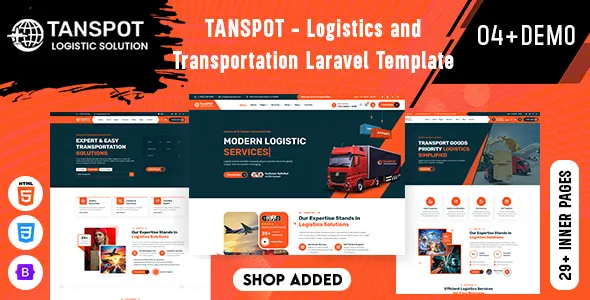
Tanspot – Logistics and Transportation Laravel Template
Tanspot – Logistics and Transportation Laravel Template is a website template designed for logistics companies, transportation providers, freight forwarding businesses, shipping services, cargo operators, courier companies, and supply chain management organizations that want to establish a professional online presence. Built around the needs of the logistics and transportation industry, Tanspot provides a potential starting point for creating a website that communicates service offerings, presents business information, and helps customers understand available transportation solutions. With Laravel as its underlying framework, the template can support a structured approach to website development and customization, depending on its included components, implementation, and documentation.
In the modern logistics industry, a professional website plays an important role in communicating reliability, operational capabilities, and service value. Businesses need to explain how they transport goods, which locations they serve, what types of cargo they handle, and how customers can request additional information. Tanspot can be considered for organizing these details into a clear digital experience that serves businesses, commercial clients, manufacturers, retailers, distributors, and individuals seeking transportation services.
Whether you operate a freight transportation company, a cargo delivery business, a warehouse and distribution service, or a regional logistics provider, a well-structured website can help present your services and business identity. The Tanspot Laravel template offers a foundation for developing a transportation-focused website that can be adapted to different branding requirements and business objectives. Its final functionality depends on the version purchased, the available page layouts, the Laravel implementation, and any additional customization performed during development.
What Is Tanspot – Logistics and Transportation Laravel Template?
Tanspot is a Laravel website template intended for projects associated with logistics, transportation, shipping, cargo handling, and related commercial services. Rather than building every page from scratch, developers can use a suitable template as a starting point for organizing website layouts, content sections, navigation, and visual presentation.
Laravel is a PHP framework commonly used to develop web applications with structured routing, reusable components, and maintainable application logic. A Laravel-based template can help developers establish a foundation for a website while allowing them to adapt the design and implementation to a particular business.
For a transportation company, this may involve presenting freight services, introducing the organization, explaining delivery options, displaying operational information, and providing contact details. A logistics business may also require pages for warehousing, supply chain services, cargo transportation, distribution, or international shipping.
The exact pages, reusable components, scripts, and customization options included with Tanspot should be verified against its current product demo and documentation. A website template should be evaluated according to the features actually supplied rather than assuming that every possible logistics function is included by default.
Designed for Logistics and Transportation Businesses
Logistics businesses operate across different markets, delivery networks, and customer requirements. Some specialize in local transportation, while others manage long-distance freight, international cargo, warehouse operations, or commercial distribution. Their websites need to communicate these services clearly without overwhelming visitors with unnecessary information.
Tanspot can provide a starting point for presenting a company’s logistics capabilities in an organized format. Businesses can use suitable page sections to explain their services, introduce their operating model, share company information, and guide prospective customers toward relevant contact channels.
For example, a freight transportation company may emphasize cargo movement and delivery coordination. A courier business may focus on parcel delivery and service coverage, while a warehouse operator may highlight storage, inventory handling, and distribution support.
A clear service structure helps potential customers identify the solutions that match their needs. It can also make the website easier to navigate, especially when a company provides multiple services to different industries.
With appropriate customization, the website’s branding, imagery, content, and calls to action can be aligned with the company’s business model. Accurate service descriptions and realistic claims are essential for creating a credible online presence.
Laravel Framework and Development Flexibility
Laravel provides a development foundation for building and maintaining PHP-based websites and web applications. Developers familiar with Laravel can use the framework’s established conventions when working with compatible templates, subject to the implementation supplied with the product.
For a logistics website, the framework may serve as the foundation for organizing routes, templates, shared layouts, and other application elements. Developers can adapt the website’s presentation and structure to meet the requirements of the business.
Customization may include updating company information, adjusting page layouts, replacing images, modifying colors and typography, creating additional service pages, and integrating appropriate website functionality. More advanced changes may require knowledge of PHP, Laravel, frontend technologies, databases, and server configuration.
It is important to distinguish between the template’s included presentation features and functionality that must be developed separately. For example, a visual section describing shipment tracking does not necessarily mean that a working tracking system is included. Real-time tracking, booking workflows, customer accounts, automated notifications, and logistics management features may require separate development or third-party integrations.
Before installation, review the template’s Laravel version requirements, dependencies, setup instructions, and compatibility with the intended hosting environment. This helps developers determine whether Tanspot is suitable for their existing project and technical requirements.
Professional Website Design for Transportation Services
A transportation website should help visitors understand the business quickly. Potential customers may be comparing freight companies, checking service options, looking for delivery information, or searching for a reliable provider for recurring commercial shipments.
A professional design can support these tasks by presenting the company’s primary services, business strengths, and contact options in a logical order. Tanspot can be evaluated as a starting point for developing this type of structured website.
The homepage should communicate the company’s main offering and intended audience. Supporting sections can introduce important services, explain the business approach, and direct visitors toward more detailed information.
Visual elements should reinforce the message rather than distract from it. Relevant images of freight vehicles, cargo handling, warehouses, shipping operations, and transportation networks can help visitors understand the business’s area of specialization.
Typography, spacing, colors, and navigation should remain consistent across the website. This creates a recognizable visual identity and helps customers move between pages without confusion.
A template provides the starting structure, but the quality of the finished website depends on how effectively its layout is customized. Replacing generic text and placeholder images with accurate business information is an important part of creating a credible transportation website.
Suitable for Freight Forwarding Companies
Freight forwarding companies coordinate the movement of goods between locations and may work with multiple transportation methods, carriers, warehouses, and customs-related service providers. Their websites need to explain the available services and help businesses understand how to make an inquiry.
Tanspot can be adapted for a freight forwarding website that presents domestic and international shipping services, cargo coordination, transportation options, and business contact information, depending on the company’s actual offerings.
Dedicated service pages can describe the types of freight handled, the locations served, and the general process for requesting a shipment quotation. Businesses can also explain the industries they serve, such as manufacturing, retail, wholesale distribution, or industrial supply.
Clear information helps prospective clients evaluate whether the company is appropriate for their shipping requirements. Where applicable, businesses should provide accurate details about supported cargo types, service areas, documentation requirements, and available transportation methods.
If the company provides online quotation requests, the website may be extended with a suitable form or inquiry workflow. The exact implementation depends on the template’s existing functionality and any additional development required.
Build a Website for Cargo and Shipping Services
Cargo and shipping businesses need to communicate how they move goods, which services they offer, and how customers can contact them. A dedicated website can organize this information in a format that is easy for commercial clients and individual customers to understand.
Tanspot can serve as a foundation for presenting cargo transportation, shipping coordination, freight handling, and related services. The content can be structured around the business’s actual operations rather than using broad descriptions that do not explain its value.
A cargo company may create separate pages for road freight, air cargo coordination, sea freight services, or specialized transportation where those offerings are available. Each page can describe the service, explain its intended use, and provide a clear way to request additional information.
Images and supporting content can help illustrate the business’s operations, but all claims should remain accurate. For example, statements about international coverage, delivery speed, cargo capacity, or specialized handling should reflect the company’s real capabilities.
A well-organized shipping website helps customers find relevant information and makes it easier for businesses to communicate their requirements before entering into a commercial arrangement.
Useful for Courier and Delivery Service Providers
Courier and delivery companies depend on clear communication, convenient customer contact, and reliable service information. Their websites often need to explain parcel delivery options, business delivery services, service locations, and customer support channels.
Tanspot may be customized for courier businesses that want to present local delivery, regional transportation, business parcel services, or other delivery-related offerings. The website’s structure can be adjusted to reflect the services the company actually provides.
A delivery service page can explain accepted parcel categories, general service conditions, supported locations, and how customers can request assistance. Business clients may also need information about recurring shipments, commercial delivery arrangements, and bulk parcel handling.
If the business requires a shipment tracking feature, developers should confirm whether the purchased template includes one. Otherwise, a working tracking interface must be connected to a suitable tracking system or developed to communicate with the company’s logistics platform.
The same principle applies to online bookings, automated delivery updates, payment processing, and customer dashboards. These functions should only be advertised as available after they have been implemented and tested.
Website Solutions for Warehousing and Distribution
Warehousing and distribution are important parts of many supply chains. Companies providing these services may need to communicate storage options, goods handling, order distribution, and the relationship between warehouse operations and transportation.
Tanspot can be adapted for businesses that want to present warehouse and distribution services alongside their logistics offerings. A dedicated page can describe storage facilities, inventory handling processes, distribution arrangements, and the types of businesses served.
A distribution company may use its website to explain how it supports retailers, manufacturers, wholesalers, and e-commerce businesses. A warehouse operator may focus on available storage solutions, goods receiving, dispatch coordination, and related services.
Businesses should use genuine photographs and verified information when describing their facilities and capabilities. Details such as storage capacity, specialized equipment, temperature-controlled environments, and geographic coverage should only be included when they are accurate.
If the company manages warehouse operations through a separate software platform, the website may need custom integration to provide live inventory information or customer access. These requirements should be assessed independently of the template’s visual presentation.
Responsive Website Experience Across Devices
Customers and business partners may access a logistics website from desktop computers, laptops, tablets, and smartphones. A responsive layout helps content adapt to different screen sizes and supports easier navigation across devices.
Tanspot should be assessed for responsive behavior using its current demo and documentation. Developers should test the actual implementation rather than relying exclusively on product descriptions or preview images.
Important information should remain readable on smaller screens. Navigation menus should be easy to operate, service sections should fit available space, and buttons should be large enough to select comfortably. Contact information and inquiry forms should also remain accessible.
Mobile usability can be particularly important when customers need to contact a transport provider while coordinating a shipment or checking service details away from their office.
Responsive testing should cover the entire website, including service pages, company information, contact forms, and any interactive components. Custom scripts, embedded tools, and third-party integrations can affect mobile behavior, so these elements should be checked after implementation.
A consistent cross-device experience helps visitors access the information they need without unnecessary navigation difficulties.
Organize Logistics Services with Clear Navigation
Logistics companies may offer several related services, making website navigation an important part of the user experience. Visitors should be able to locate the right service without searching through unrelated pages.
A Tanspot-based website can organize information into sections such as Home, About Us, Services, Industries, Company Information, Blog, and Contact, depending on the template’s available layouts and the company’s requirements.
Individual service pages can explain specific offerings in greater detail. For example, a company providing road freight, warehousing, and distribution may create separate pages for each service while maintaining a consistent design.
Navigation labels should be clear and familiar. Avoid using vague terms that make visitors guess what a page contains. Important actions, such as requesting a quotation or contacting the company, should be easy to find.
The website’s structure should also reflect the needs of its audience. A company serving commercial clients may prioritize freight services, industry solutions, and business inquiries, while a local courier provider may emphasize delivery services, service areas, and customer support.
Good navigation supports usability and helps search engines understand how the website’s content is organized.
Customize Branding and Business Identity
A transportation website should reflect the identity and professional positioning of the company behind it. Consistent branding can help visitors recognize the business and distinguish its services from those of competing providers.
Depending on the template’s supported customization options, developers may be able to adjust colors, typography, images, layouts, logos, and other presentation details. The available controls should be verified before making assumptions about the extent of customization.
A freight forwarding business may prefer a clean, corporate visual style, while a local delivery service may choose a more approachable presentation. An international logistics provider may use imagery that communicates large-scale transportation networks and global operations.
Brand consistency should extend beyond the homepage. Service pages, company information, contact sections, and blog articles should follow the same visual guidelines.
Use the company’s actual logo and suitable business photography wherever possible. Avoid generic claims such as guaranteed delivery times or worldwide coverage unless the business can substantiate them.
Thoughtful customization helps transform a general-purpose template into a website that accurately represents the company’s identity, services, and business objectives.
SEO-Friendly Structure for Logistics Websites
Search engine optimization helps businesses improve the discoverability of their website through relevant search queries. A Laravel template can provide a foundation for organizing pages, but search visibility depends on content quality, technical implementation, competition, and other factors.
A logistics website should use descriptive page titles, clear headings, useful service descriptions, logical URLs, and relevant internal links. Each page should focus on a meaningful topic and provide information that helps the intended audience.
For example, a freight company may create separate pages for road transportation, cargo handling, warehousing, and distribution rather than combining every service into a single page. A regional provider can develop useful content around its actual service areas without creating misleading location pages.
Images should have descriptive alternative text where appropriate, and file sizes should be optimized to support efficient loading. Important pages should be accessible through the site’s navigation and internal linking structure.
Depending on the Laravel implementation, developers may need to configure metadata, canonical URLs, XML sitemaps, redirects, structured data, and other technical SEO elements. These should be reviewed as part of the deployment process rather than assumed to be included automatically.
Content should be written for customers first. Natural use of relevant terms such as logistics services, transportation solutions, freight forwarding, cargo delivery, and supply chain management can clarify page topics without excessive keyword repetition.
No template can guarantee search rankings or a specific level of traffic. Consistent technical maintenance and useful, original content remain important for long-term SEO.
Generate Business Inquiries and Quotation Requests
For many logistics companies, the website’s main purpose is to generate qualified inquiries. Potential clients may want to discuss cargo requirements, compare transportation options, request pricing, or establish a recurring business relationship.
Tanspot can be customized to guide visitors toward suitable contact options. Depending on the available components, a business may include contact forms, telephone details, email addresses, service inquiry buttons, or links to other communication channels.
A quotation form could request basic information such as the customer’s name, company, email address, shipment type, origin, destination, and a brief description of the requirement. The form should collect only the information needed to respond appropriately.
A clear submission process helps visitors understand what happens next. Confirmation messages and accurate contact details can reassure users that their inquiry has been received.
Before launch, developers should test form validation, email delivery, spam protection, and mobile usability. If the form collects business or personal information, it should be handled according to applicable privacy and data-protection requirements.
Quotation requests, online bookings, payment processing, and shipment management may require additional functionality beyond the template’s basic pages. These capabilities should be implemented and tested before being presented as operational services.
Performance and Loading Speed
Website performance affects how easily visitors can access information. Slow pages may create frustration, particularly for users on mobile connections or devices with limited resources.
The performance of a Tanspot website depends on its implementation, hosting environment, images, scripts, database queries, third-party services, and other technical factors. Using a Laravel template does not automatically guarantee fast loading.
Developers should optimize images, remove unnecessary assets, review scripts, and configure the hosting environment appropriately. Caching and other performance techniques may be useful when compatible with the website’s architecture.
Testing should include the homepage, service pages, contact pages, and any additional sections containing large images or interactive elements. Mobile performance should also be checked because the loading experience can differ across devices and networks.
Where possible, use reliable performance testing tools to identify bottlenecks before launch. Recheck the website after major changes, particularly when new integrations or content-heavy sections are added.
A well-maintained website can provide a smoother experience for prospective customers and support the broader technical quality of the online presence.
Security and Maintenance for Laravel Projects
A professional business website needs regular maintenance to remain dependable. Laravel applications should be deployed and maintained according to the framework’s security guidance and the requirements of the particular project.
Developers should review environment configuration, dependency updates, access permissions, database credentials, and server settings before deploying the website. Sensitive configuration values should not be exposed in publicly accessible files or source control.
Regular backups can help protect website content and important data against accidental changes or technical problems. Backup restoration procedures should also be tested so that recovery is practical when needed.
Updates should be reviewed for compatibility before being applied to a live website. A staging environment can help developers test changes without disrupting the public-facing site.
Contact forms and other input-handling components should be configured carefully, and any custom authentication or customer-account functionality should receive appropriate security testing.
The exact maintenance requirements depend on the Laravel version, installed dependencies, hosting environment, and any custom functionality. Following current framework documentation and using a planned maintenance process helps support a more reliable website.
Who Can Use Tanspot – Logistics and Transportation Laravel Template?
Tanspot may be suitable for a range of businesses that need a website focused on moving, handling, storing, or distributing goods.
Logistics companies: Present transportation services, operational capabilities, company information, and customer inquiry options.
Freight forwarding businesses: Explain freight coordination, cargo services, and shipment-related processes for commercial clients.
Cargo and shipping providers: Organize information about cargo handling, shipping services, and transportation options.
Courier companies: Introduce parcel delivery services, supported locations, and customer communication channels.
Transportation operators: Present road freight, commercial transportation, and related logistics services.
Warehousing businesses: Describe storage facilities, goods handling, and distribution support based on actual operations.
Supply chain service providers: Explain how the business supports the movement and management of goods across the supply chain.
Distribution companies: Present distribution services for retailers, manufacturers, wholesalers, and other commercial customers.
Startups in logistics: Establish an initial online presence and explain the company’s services, target audience, and business identity.
Suitability depends on the features provided with the current template and the requirements of the project. Businesses that need advanced tracking, booking, customer portals, or logistics management systems should evaluate these requirements separately and confirm whether custom development or external integrations are necessary.
Tips for Building a Successful Website with Tanspot
Start by identifying the primary purpose of the website. Determine whether the business needs to generate freight inquiries, promote courier services, introduce warehousing facilities, or explain a wider range of logistics solutions.
Prepare accurate business content before customizing the pages. This includes company information, service descriptions, supported locations, contact details, and any genuine certifications or operational credentials.
Organize the navigation around the services customers need most. Use dedicated pages for important offerings and ensure that visitors can find contact information without unnecessary steps.
Choose images that reflect the actual business wherever possible. Authentic photographs of vehicles, warehouses, facilities, and operations can make the website more relevant than unrelated stock imagery.
Review the template’s technical requirements before installation. Confirm the supported Laravel version, required packages, environment configuration, and deployment instructions. Test customization changes in a development or staging environment before publishing them.
Before launch, verify that all pages work correctly across desktop and mobile devices. Test forms, navigation links, page loading, accessibility, and any custom integrations. Review the content for accuracy and remove placeholder information.
Finally, establish a maintenance routine covering backups, security updates, performance checks, and content reviews. These practices help the website remain useful as the business grows and its service offerings evolve.
Final Thoughts on Tanspot – Logistics and Transportation Laravel Template
Tanspot – Logistics and Transportation Laravel Template is a potential starting point for logistics companies, freight forwarders, cargo operators, courier services, transportation providers, and distribution businesses seeking a professional website built around their industry.
Its transportation-focused positioning makes it relevant for projects that need to communicate service offerings, introduce business capabilities, organize company information, and provide convenient contact options. Laravel offers a development foundation that experienced developers can use to adapt the website to suitable project requirements.
The quality of the finished website depends on the actual template features, the customization process, the content provided, and the technical environment in which it is deployed. Advanced capabilities such as real-time shipment tracking, customer dashboards, booking systems, and automated delivery updates should be verified or developed separately when required.
For businesses planning a new logistics website, reviewing the current demo, documentation, dependencies, and licensing terms is an important first step. With accurate content, consistent branding, responsive testing, suitable SEO practices, and ongoing maintenance, a Tanspot-based website can support business communication and help potential customers learn more about the company’s transportation and logistics services.