My Account
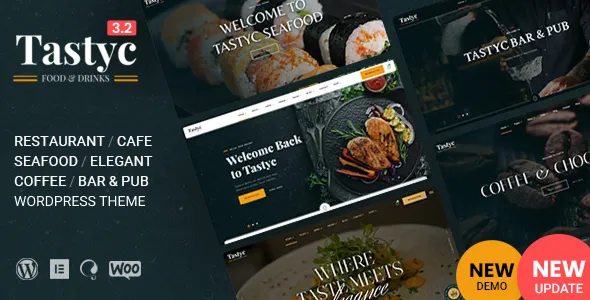
Tastyc – Cafe Restaurant Theme
Tastyc – Cafe Restaurant Theme is a website design solution for cafes, restaurants, coffee shops, bistros, bakeries, dining establishments, and hospitality businesses looking to build a professional online presence. A restaurant website plays an important role in introducing a food business, presenting its menu, showcasing signature dishes, communicating its atmosphere, and helping customers discover essential information before visiting. With a suitable WordPress setup and thoughtful customization, Tastyc can provide a foundation for creating an attractive digital destination that reflects a restaurant’s identity and encourages visitors to explore its food and services.
Today’s customers often search online before choosing a place to eat. They may want to review the menu, check opening hours, discover the restaurant’s location, view photographs of the food, or find out whether reservations are available. A well-organized cafe and restaurant website brings these details together in one convenient place. It can help a business communicate its personality, introduce its culinary offerings, highlight special experiences, and make it easier for potential customers to get in touch.
Tastyc is suited to restaurant-focused website projects where visual presentation and clear food-related content are important. Depending on the theme version, available layouts, and compatible plugins, website owners may be able to create pages for menus, restaurant information, galleries, events, reservations, and contact details. The precise functionality should be confirmed through the current product documentation before installation. By combining a suitable design with authentic food photography, accurate information, and useful content, businesses can create a website that supports their brand and everyday customer communication.
What Is Tastyc Cafe Restaurant Theme?
Tastyc is a cafe and restaurant website theme intended for businesses that want to present their food, dining experience, and hospitality services through a dedicated website. Rather than adapting a generic business layout, a restaurant-focused theme provides a starting point for organizing content around menus, food photography, restaurant details, and customer visits.
Cafe owners can use this type of website to introduce their coffee selection, pastries, breakfast options, and relaxed dining environment. Restaurants may focus on their cuisine, signature dishes, dining areas, and seasonal menus. Bakeries can highlight fresh products and custom orders, while bistros can showcase their atmosphere and food offerings.
WordPress offers a flexible content management system for updating pages, publishing articles, uploading photographs, and maintaining website navigation. Depending on the available theme features and compatible extensions, a Tastyc website may also be configured with menu presentations, reservation forms, event information, and other hospitality-related functions.
The theme should be customized to match the actual business rather than used as an unchanged demonstration website. Original photographs, accurate opening hours, a clear menu, and convenient contact information help visitors understand what the establishment offers.
Before building the complete website, review the theme’s current documentation, supported WordPress version, available templates, and plugin compatibility. This helps ensure that the selected setup meets the restaurant’s operational and design requirements.
Modern Website Design for Cafes and Restaurants
A restaurant website should create a strong first impression while making essential information easy to find. Visitors may arrive from a search engine, a social media profile, an online recommendation, or a link shared by a friend. The website needs to communicate the restaurant’s identity quickly and encourage visitors to explore further.
Tastyc can be considered for a website that combines food-focused imagery with organized content and clear navigation. The visual direction should reflect the restaurant’s style, whether it is a contemporary cafe, an elegant dining establishment, a casual family restaurant, or a neighborhood bakery.
A cafe might emphasize warm colors, comfortable seating, coffee preparation, and freshly baked products. A fine-dining restaurant may prefer refined typography, carefully selected photography, and a more spacious presentation. A casual restaurant could focus on popular meals, practical menu information, and easy access to location details.
The homepage should communicate the establishment’s main offering without overwhelming visitors. A clear headline, an introduction to the cuisine, a selection of featured dishes, and links to the menu and contact pages can provide a useful starting point.
Consistency across the website is equally important. The same visual identity should appear in headings, buttons, images, and other elements so that customers can recognize the business and associate its online presentation with the physical dining experience.
Showcase Your Restaurant Menu
The menu is one of the most important sections of a cafe or restaurant website. Customers often visit a restaurant website specifically to discover what is available, compare options, and determine whether the food suits their preferences.
A Tastyc-based website can be organized around a clear menu presentation using the theme’s available layouts or compatible menu tools. The exact menu functionality depends on the installed version and supporting plugins.
A restaurant menu may include categories such as starters, main courses, salads, desserts, beverages, coffee, and seasonal specials. A cafe might separate espresso-based drinks, tea, cold beverages, sandwiches, pastries, and breakfast dishes. Organizing items into familiar categories helps visitors find what they want without reading an unnecessarily long list.
Each menu item should include an accurate name and a concise description. Prices should be current, and ingredient or dietary information should only be included when it has been verified. Where relevant, restaurants can identify vegetarian options or explain common allergens using a reliable process.
Food photographs can make selected menu items more appealing, but images should represent the actual dishes as closely as possible. A balanced menu presentation combines visual appeal with practical details, allowing visitors to make informed decisions.
Menu information should also be easy to update. Seasonal dishes, price changes, sold-out items, and new beverages may require regular revisions. Keeping the online menu consistent with the restaurant’s current offerings helps avoid confusion and improves the customer experience.
Ideal for Coffee Shops and Modern Cafes
Coffee shops often serve as places to meet friends, work remotely, take a break, or enjoy a light meal. Their websites should communicate both the products available and the atmosphere customers can expect.
Tastyc can be evaluated for a coffee shop website that highlights specialty coffee, espresso drinks, tea, pastries, breakfast items, sandwiches, and other refreshments offered by the business. A well-designed homepage can introduce the cafe’s character and direct visitors toward its menu, location, and opening hours.
A dedicated coffee section may explain different drink options, signature beverages, seasonal flavors, or the cafe’s approach to coffee preparation. Where accurate information is available, the business can also introduce its coffee beans, brewing methods, or sourcing practices.
Photographs of the counter, seating areas, baristas, and signature drinks can help communicate the atmosphere of the cafe. Images should be selected carefully so that they reflect the actual location and brand.
A neighborhood cafe may benefit from practical details such as Wi-Fi availability, outdoor seating, takeaway options, or accessibility information, provided these services are genuinely available. These details help visitors determine whether the establishment fits their needs.
By combining a clear menu with authentic photography and useful visitor information, a cafe can create an online experience that reflects its personality and encourages customers to stop by.
Create a Professional Restaurant Website
A restaurant website should provide a central destination for food information, business details, and customer communication. It can help a restaurant introduce its cuisine, explain its dining experience, and present the services it genuinely offers.
Tastyc can serve as a starting point for organizing a restaurant website into pages such as Home, About Us, Menu, Gallery, Events, Reservations, and Contact. Additional pages can be added when the business has specific needs, such as private dining, catering, takeaway, or group bookings.
The homepage should introduce the restaurant’s identity and primary food offering. A short description can explain the cuisine, atmosphere, or dining concept, while featured dishes provide an introduction to the menu.
An About page can tell the story behind the restaurant, introduce its culinary approach, and describe the experience it aims to provide. A dedicated menu page should make dishes and prices easy to review, while the contact page should display accurate location details and opening hours.
Businesses should only advertise services that are actually available. For example, online ordering, delivery, catering, or table reservations may require separate systems or integrations rather than being automatically provided by the theme.
A professional website combines attractive presentation with dependable information, helping customers understand the restaurant and plan their visit.
Food Photography and Visual Presentation
Food photography is a valuable part of restaurant marketing because it allows visitors to see the dishes and dining environment before they arrive. Well-chosen photographs can communicate freshness, presentation, portion style, and the personality of a food business.
Tastyc can be customized around food imagery using the available image sections, gallery layouts, and compatible tools supported by the theme. Restaurants should select photographs that accurately represent their menu and premises.
A gallery may include signature dishes, beverages, desserts, the dining room, outdoor seating, and details of food preparation. Showing a balanced selection helps visitors understand the complete dining experience rather than focusing on only one aspect of the business.
Images should be well-lit, appropriately framed, and consistent with the brand’s visual identity. A contemporary restaurant may use clean compositions and natural colors, while a bakery might emphasize textures, fresh ingredients, and the details of its baked goods.
Image quality should not come at the expense of performance. Large photographs should be compressed and displayed at suitable dimensions so that gallery pages remain practical on mobile connections.
Alternative text should describe meaningful images where appropriate, helping visitors who use assistive technologies. Image filenames and descriptions can also be organized sensibly as part of the site’s content management process.
Authentic, consistent food photography can help make a restaurant website more informative and visually appealing without making claims that the actual dining experience cannot support.
Highlight Signature Dishes and Special Offers
Signature dishes can help distinguish one restaurant from another. A website can give these items special attention by featuring selected meals, seasonal specialties, chef recommendations, or popular beverages.
Depending on the available layouts, Tastyc can be customized to include featured food sections that direct visitors toward important menu items. The content should reflect the restaurant’s genuine offerings and current priorities.
A cafe might highlight a house coffee, a popular pastry, or a breakfast combination. A restaurant may feature a signature main course, a tasting menu, or a dessert prepared in-house. A bakery could showcase specialty cakes or seasonal baked products.
Special offers should be communicated clearly and accurately. If a promotion is available only during certain hours or on selected days, the website should explain those conditions. Expired offers should be removed promptly so that visitors do not arrive expecting an unavailable deal.
Seasonal menus can also provide a reason for returning customers to revisit the website. Fresh information about holiday meals, summer drinks, or limited-time dishes can keep the business’s online presence relevant.
Featured content should support the main menu rather than replace it. Visitors should still be able to access complete, current menu information and understand how to order or visit.
Responsive Design for Mobile Visitors
Customers often search for cafes and restaurants using smartphones. They may be looking for a place nearby, checking a menu while traveling, or confirming opening hours before leaving home. A mobile-friendly website is therefore important for everyday restaurant discovery.
Tastyc’s responsive behavior should be checked against the current theme version and tested across common screen sizes. A website should remain easy to read and navigate on smartphones, tablets, laptops, and desktop computers.
On smaller screens, menu categories should remain readable, images should fit their containers, and navigation should be convenient to operate. Important details such as opening hours, location, telephone number, and reservation links should not be buried under unnecessary sections.
Buttons should be large enough to tap comfortably, and forms should avoid excessive fields. Visitors using a mobile device should be able to find the information they need without repeatedly zooming or scrolling through complicated layouts.
Responsive testing should include all important pages, not just the homepage. Menu pages, food galleries, event details, and contact forms can behave differently depending on their content and layout.
Third-party reservation tools, embedded maps, and online ordering systems may affect the mobile experience. After adding these integrations, check that they work correctly on both small and large screens.
Restaurant Reservations and Table Booking
Some restaurants need a website that allows customers to request or make table reservations. An online reservation pathway can reduce the effort required to contact the restaurant and help visitors understand how to plan a dining visit.
A Tastyc website can be configured with suitable reservation options if supported by the current theme setup or compatible plugins. The exact functionality should be verified before assuming that real-time table availability or automatic booking management is included.
Depending on the restaurant’s requirements, a reservation form may collect the visitor’s name, contact details, preferred date, time, party size, and any relevant notes. The restaurant should explain whether the request is confirmed immediately or requires staff approval.
For businesses that need live availability, confirmation emails, booking calendars, cancellation management, or integration with an existing reservation platform, a dedicated booking service may be necessary.
Reservation forms should be tested carefully. The restaurant should verify that submitted requests reach the correct staff members, that confirmation messages work, and that the process is understandable on mobile devices.
If a restaurant accepts reservations only by telephone or through an external platform, the website should communicate that process clearly instead of displaying a booking form that does not work.
A reliable reservation experience can make planning a visit more convenient while helping the restaurant manage customer expectations.
Online Ordering and Takeaway Options
Many cafes and restaurants offer takeaway or online ordering in addition to dine-in service. A website can help visitors discover these options and understand how to place an order.
Tastyc may be used as a visual foundation for a restaurant that wants to introduce ordering services, but an operational online ordering system generally requires appropriate software, plugins, or third-party integrations. Its availability should be confirmed separately from the theme’s design capabilities.
An ordering experience may need menu categories, item variations, prices, order notes, pickup times, payment options, delivery information, and confirmation messages. The appropriate features depend on how the restaurant handles orders.
A small cafe may prefer a simple link to an existing ordering platform, while a larger restaurant might require a more integrated solution. Businesses should consider order volume, payment processing, staff workflows, and customer support before choosing a system.
Menu items and prices must remain consistent across the website and the ordering platform. If a dish is unavailable, the restaurant should have a process for updating its status and preventing customers from ordering it incorrectly.
The ordering pathway should be tested from beginning to end, including order submission, payment where applicable, confirmation, and communication with staff.
A clear and reliable ordering process can complement the restaurant’s website and give customers a convenient way to access its takeaway or delivery services.
SEO-Friendly Structure for Restaurant Websites
Search engine optimization can help customers discover a restaurant when searching for relevant food, dining, and hospitality options. A theme can provide a design foundation, but search visibility also depends on useful content, technical configuration, local competition, and the restaurant’s broader online presence.
A Tastyc website should use descriptive page titles, meaningful headings, readable URLs, and original descriptions of the restaurant and its offerings. Each page should have a clear purpose and answer questions that visitors may reasonably ask.
For example, a cafe can explain its coffee selection and breakfast menu, while a restaurant may describe its cuisine, dining experience, and available services. Menu pages should use current information, and location pages should display accurate business details.
Local SEO is particularly relevant for cafes and restaurants because customers often look for dining options in a particular area. The website should clearly state the business name, address, telephone number, opening hours, and service information where applicable.
Compatible SEO tools may help manage meta descriptions, XML sitemaps, canonical settings, and other supported optimization tasks. Website owners should also review broken links, page loading performance, mobile usability, and indexing issues.
Images should be optimized, and meaningful photographs should have suitable alternative text. Relevant internal links can connect the menu, About page, events, and contact information.
Avoid excessive keyword repetition or publishing generic content solely to target search terms. Useful, accurate information is more valuable to visitors and provides a stronger foundation for long-term SEO efforts. No theme can guarantee a particular ranking position or amount of website traffic.
Local SEO and Restaurant Discovery
Local search visibility can be important for restaurants that depend on nearby customers, travelers, and people searching for dining options in a specific neighborhood. A website should make it straightforward for visitors to identify the restaurant’s location and determine whether it suits their plans.
A Tastyc-based website can include a dedicated location or contact section with the restaurant’s verified address, telephone number, opening hours, and directions. Where appropriate, a map can help visitors understand how to reach the premises.
The business should keep its core information consistent across its website and other public business listings. Incorrect addresses, outdated telephone numbers, and inconsistent opening hours can confuse customers.
Restaurants may also maintain a business profile on relevant local search services. Genuine photographs, accurate categories, updated opening hours, and helpful responses to customer questions can support a consistent online presence.
If the restaurant has multiple branches, each location should have accurate details and useful information about its own services. Separate location pages should provide genuine value rather than repeating the same content with only a city name changed.
Customer reviews can influence restaurant discovery, but testimonials should be authentic and presented appropriately. Businesses should not invent reviews or make unsupported claims about their reputation.
A well-maintained local presence makes it easier for customers to find the restaurant, learn what it offers, and plan a visit.
Blog and Content Marketing for Cafes and Restaurants
A restaurant blog can help a food business share updates, introduce its culinary philosophy, explain ingredients, and provide information that customers may find useful. WordPress makes it possible to publish articles and organize them into categories alongside the main website pages.
Tastyc can be considered for a restaurant website that combines its menu and business information with ongoing editorial content, depending on the theme’s blog layouts and configuration.
A cafe might publish articles about different coffee preparation methods, seasonal drinks, or the story behind its signature pastries. A restaurant could share chef introductions, information about special events, or explanations of its culinary influences.
Content should be based on the restaurant’s actual experience and offerings. If the business discusses ingredients, sourcing, dietary preferences, or food preparation, those details should be accurate and current.
Articles can also introduce new menu items, explain changes in opening hours, and announce special dining experiences. Relevant links can direct readers toward the menu, reservation information, and contact page.
A sustainable publishing schedule is generally more practical than publishing large quantities of low-value content. Focus on answering real customer questions and providing information that helps readers understand the business.
Useful articles, accurate updates, and original photographs can support the website’s relevance while giving customers additional reasons to explore the restaurant online.
Events, Catering, and Private Dining
Some cafes and restaurants host special events, private gatherings, business meetings, celebrations, or catering services. A website can help communicate these offerings to visitors who are planning a group experience.
Depending on the restaurant’s services and the available website configuration, Tastyc can be customized with pages that explain event options, private dining arrangements, or catering packages. These functions should be presented only if the business genuinely provides them.
An event page can describe the type of gatherings the restaurant accommodates, the available space, approximate group capacity where verified, and the process for making an inquiry. Catering information can outline menu options, service areas, and the information customers should provide when requesting a quote.
Photographs of actual event setups can help visitors understand the atmosphere and layout. However, images should not imply that facilities or arrangements are available if they are not.
For businesses that require event registration, deposits, date selection, or automated booking confirmations, suitable booking tools may be needed. The restaurant should confirm that any integrated form or booking system matches its operational process.
A clear event and catering section can help businesses communicate additional services without distracting from their main menu and dining information.
Customization and Restaurant Branding
A restaurant’s website should reflect its food, atmosphere, and identity. Customization allows the business to create a consistent presentation rather than appearing like an unchanged theme demonstration.
The available customization options in Tastyc should be checked in the current documentation. Depending on the theme version and supported tools, users may be able to adjust colors, typography, layouts, images, menus, and other design details.
A specialty coffee shop might use warm tones, simple typography, and close-up images of beverages. A modern bistro could choose clean layouts and a restrained color palette, while a family restaurant might prefer brighter colors and friendly photography.
Brand consistency should extend across the homepage, menu, gallery, About page, and contact section. The logo, heading styles, buttons, imagery, and writing style should feel connected.
Use the restaurant’s genuine identity, including its actual name, food offering, location, and atmosphere. Replace placeholder photographs and sample text with accurate business information before launch.
The design should also support usability. Decorative effects and large images can be effective when used thoughtfully, but they should not make the menu difficult to read or slow down access to essential information.
By combining a distinctive visual style with clear navigation, a restaurant can create a website that feels recognizable and professional.
Website Speed and Performance Optimization
Website speed is important for visitors who want to check a menu or location quickly, particularly when using mobile devices. A visually attractive restaurant website should also load reliably and allow users to reach essential information without unnecessary delays.
The actual performance of a Tastyc website depends on the theme implementation, hosting environment, image sizes, installed plugins, scripts, fonts, and external integrations. Performance should be measured after the website has been configured.
Food photography can occupy substantial space, so images should be compressed and displayed at appropriate dimensions. A large gallery does not need to load every full-resolution photograph immediately if a more efficient presentation is available.
Review the use of animations, embedded media, external widgets, and additional scripts. Keep only the elements that support the visitor experience and the business’s objectives.
Quality hosting, caching, and suitable optimization tools may improve loading performance when configured correctly. Test the website before and after major changes rather than assuming that an optimization has helped.
Important pages to test include the homepage, full menu, food gallery, event pages, and contact form. A page containing many images or external integrations may perform differently from a simple informational page.
Regular performance reviews help identify problems as new content and plugins are added. A faster website supports a more comfortable browsing experience and helps customers find information efficiently.
Accessibility and User-Friendly Navigation
An accessible restaurant website helps a wider range of visitors find information and use its features. Clear navigation, readable typography, appropriate color contrast, descriptive links, and understandable forms all contribute to a more convenient experience.
When customizing Tastyc, organize navigation around common visitor needs. Menu, About, Gallery, Location, Reservations, and Contact may be useful options, depending on the services offered.
Heading structures should be logical, and links should describe their destinations. Buttons should be recognizable as interactive elements, and form fields should have clear labels.
Meaningful food photographs should have suitable alternative text where appropriate. Decorative images can be handled differently according to their purpose.
Opening hours, menu prices, and contact details should be presented in a readable format. Avoid placing important information exclusively inside images where visitors may be unable to select, enlarge, or interpret the text easily.
Accessibility should be reviewed across the full website, including reservation forms, ordering integrations, and mobile menus. Automated checks can identify some problems, while keyboard testing and practical reviews can reveal additional issues.
Prioritizing usability helps make the restaurant’s information more approachable and creates a more dependable online experience.
WordPress Plugins and Restaurant Integrations
A restaurant website may require additional tools for contact forms, reservations, online ordering, search optimization, analytics, security, backups, and performance management. The right combination depends on the restaurant’s operations and the features already supported by the theme.
Before installing plugins alongside Tastyc, review their compatibility with the current WordPress version and the theme’s documented requirements. Check maintenance history, documentation, support options, and licensing terms where relevant.
A contact form plugin may help customers send inquiries. A dedicated booking solution may be necessary for table reservations, while an ordering platform can support takeaway or delivery workflows. SEO tools may assist with metadata and sitemap management.
Analytics tools can help a business understand how visitors interact with its website, subject to appropriate privacy practices and applicable consent requirements.
Avoid installing multiple plugins that perform the same task unless there is a clear reason. Overlapping functionality can increase maintenance work and introduce compatibility issues.
After adding an integration, test the pages and customer journeys it affects. Verify that menu links, reservation requests, order confirmations, contact messages, and mobile layouts work as intended.
The theme provides the visual foundation, while the right supporting tools help extend the website according to the business’s real requirements.
Security and Ongoing Website Maintenance
A professional restaurant website requires regular maintenance to remain reliable. Menus, opening hours, event information, and contact details can become outdated, while software updates may be necessary to address compatibility and security issues.
Website owners should keep WordPress, Tastyc, and compatible plugins updated according to the documented requirements. Before major changes, create a backup and consider testing the update in a staging environment.
Use strong passwords, appropriate user permissions, HTTPS, and reputable hosting. Install themes and plugins from trustworthy sources and remove components that are no longer required.
Backups should be stored securely, and the restoration process should be tested so that the business can recover from accidental changes or technical problems.
Maintenance also includes checking that important website features continue to work. Contact forms should deliver messages, reservation links should lead to the correct service, and external ordering integrations should remain functional.
Content reviews are equally important. Update prices, remove expired promotions, revise seasonal menus, and make sure the website’s published information matches the restaurant’s current operations.
A regular maintenance routine helps preserve the quality of the website and reduces the risk of avoidable disruptions.
Who Should Use Tastyc Cafe Restaurant Theme?
Tastyc may be suitable for a variety of food and hospitality businesses that need a dedicated website to present their offerings and communicate with customers.
Cafes and coffee shops: Introduce coffee selections, beverages, pastries, breakfast options, seating areas, and opening hours.
Restaurants: Present cuisine, menus, signature dishes, dining spaces, and customer information through an organized website.
Bistros and casual dining establishments: Communicate the food offering, atmosphere, daily specials, and practical visitor details.
Bakeries and pastry shops: Showcase breads, cakes, pastries, desserts, and seasonal products with accurate descriptions and photography.
Fine-dining restaurants: Create a refined presentation for menus, culinary experiences, chef introductions, and private dining where available.
Family restaurants: Make menu information, opening hours, location details, and contact options easy for customers to find.
Brunch and breakfast venues: Highlight morning menus, coffee, breakfast combinations, and the restaurant’s dining environment.
Catering businesses: Present catering services, event menus, service areas, and inquiry options when these offerings are available.
Food and hospitality startups: Establish an online presence that introduces the brand, communicates its concept, and provides essential business information.
The best fit depends on the business’s actual requirements. Review the theme’s current layouts, customization tools, responsive behavior, and plugin compatibility before making a final selection.
Tips for Building a Successful Website with Tastyc
A restaurant theme provides a starting point, but the quality of the finished website depends on the content, presentation, and usefulness of the customer experience.
Begin by identifying the website’s primary goals. A cafe may want to promote its menu and location, while a full-service restaurant may need to communicate dining options and handle reservations. A bakery may focus on product photography and custom-order inquiries.
Plan the navigation around the information customers need most. Make it easy to find the menu, opening hours, address, contact details, and any genuine reservation or ordering options.
Prepare accurate content before customizing every page. Gather the restaurant’s logo, menu, current prices, food photographs, business description, opening hours, and contact information. This helps create a more authentic and consistent presentation.
Choose a visual style that reflects the restaurant’s identity. Maintain consistent colors, typography, image treatments, and button styles throughout the website.
Test the experience on different screen sizes and verify that all important links and forms work correctly. Review image loading, menu readability, mobile navigation, and any third-party reservation or ordering integrations.
Keep the website current after launch. Update seasonal menus, remove expired promotions, correct outdated information, and review performance periodically.
Most importantly, focus on the customer. A useful restaurant website answers practical questions, presents food honestly, and makes it easy for visitors to decide whether and how to visit.
Final Thoughts on Tastyc Cafe Restaurant Theme
Tastyc – Cafe Restaurant Theme is a cafe and restaurant-focused website design option for coffee shops, dining establishments, bakeries, bistros, and other food businesses seeking to establish a professional online presence. Its restaurant-oriented positioning makes it relevant to websites that need to combine food photography, menu information, business details, and customer communication.
With thoughtful customization, a restaurant can create a website that introduces its culinary identity, showcases signature dishes, explains available services, and helps visitors find practical information. A clear menu, authentic photographs, accurate opening hours, and convenient contact options can contribute to a more useful experience for prospective customers.
The exact capabilities of a Tastyc website depend on the current theme version, its documented features, the available customization tools, and compatible plugins. Functions such as online reservations, ordering, payment processing, or advanced menu management should be verified separately before being included in the website plan.
Long-term website quality also depends on responsive testing, loading performance, accessibility, security, accurate content, and regular maintenance. A theme alone cannot guarantee search rankings, restaurant visits, or sales, but it can provide a foundation for a well-organized digital presence.
For cafe and restaurant owners seeking a dedicated website design, Tastyc can be evaluated as part of a broader digital strategy. By combining a suitable layout with genuine food imagery, clear information, and dependable website management, businesses can create an online destination that reflects their identity and helps customers discover what they offer.