My Account
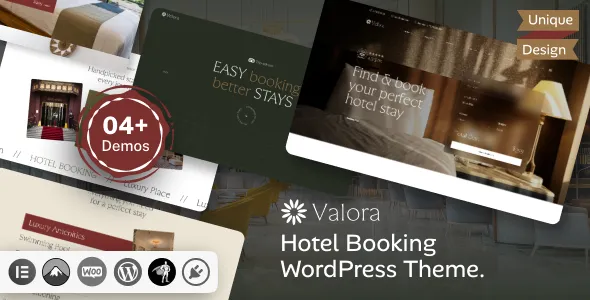
Valora – Hotel Booking WordPress Theme
Valora – Hotel Booking WordPress Theme is a hospitality-focused website solution designed for hotels, resorts, boutique accommodations, guest houses, serviced apartments, and other businesses that want to present their properties professionally online. A well-designed hotel website helps potential guests explore available accommodation, discover property amenities, understand services, view photographs, and find the information they need before planning a stay. Valora provides a starting point for building a hospitality website that brings these important elements together within the WordPress environment.
In the hospitality industry, the online experience plays an important role in how travelers evaluate accommodation. Guests often compare room types, property facilities, location, photographs, and available services before making a reservation. A clear and visually appealing website can help a hotel communicate its atmosphere, explain its offerings, and make the planning process more convenient for visitors. Rather than relying exclusively on third-party travel platforms to introduce their properties, hospitality businesses can use a dedicated website to develop their brand identity and provide information directly to prospective guests.
Valora is intended for businesses that want to create a dedicated online presence around accommodation and hospitality services. It can serve as a foundation for organizing property information, presenting rooms, highlighting facilities, and creating a consistent visual identity. Website owners can shape their content around the type of accommodation they operate, whether they manage a boutique hotel, a luxury resort, a city property, or a collection of holiday apartments.
With WordPress as its content management foundation, Valora offers a practical starting point for creating and maintaining a hospitality website. The final booking experience will depend on the theme’s included functionality, the booking plugins or integrations selected, and the configuration of the website. By combining attractive property presentation with clear information and a convenient visitor journey, businesses can build a website that supports their hospitality goals.
A Modern Website Solution for the Hospitality Industry
Hotels and accommodation providers need websites that communicate more than room availability. Guests want to understand the character of a property, explore its surroundings, learn about available amenities, and determine whether the accommodation suits their travel plans.
Valora is designed around the needs of hospitality businesses that want to present these details in an organized digital environment. Its hotel-focused concept provides a starting point for creating pages that introduce the property, showcase accommodation options, and explain the services available to guests.
A hotel website can include an engaging homepage, an overview of the property, room descriptions, facilities, a photo gallery, location information, and contact details. Depending on the business model and the functionality configured, the website may also incorporate a reservation system that allows guests to submit booking requests or complete reservations online.
The presentation should reflect the actual character of the accommodation. A boutique hotel may emphasize design, personalized service, and distinctive rooms, while a family resort may prioritize recreation, dining, and family-friendly facilities. A business hotel may focus on convenient location, workspace facilities, and services for corporate travelers.
Valora can provide the foundation for organizing this information into a coherent website experience that helps visitors understand what makes the property suitable for their stay.
An Elegant Online Presentation for Hotels
The appearance of a hotel website can influence how visitors perceive the property before they arrive. Professional photography, consistent typography, clear headings, and thoughtful content organization help communicate the accommodation’s atmosphere and standards.
Valora can be used as a starting point for creating a visual identity that reflects the hotel’s positioning. Website owners can align the presentation with their existing branding by choosing suitable imagery, preparing consistent written content, and applying the available theme customization options.
A luxury property might use spacious layouts, refined photography, and concise descriptions to communicate exclusivity. A boutique hotel could focus on distinctive interior design, local character, and personalized experiences. A business accommodation provider may prefer a straightforward layout that makes room information, location, and facilities easy to find.
The objective is to create a website that feels appropriate for the property rather than simply copying a generic hotel layout. Every visual element should support the information being communicated and help visitors understand the experience the business offers.
Before publishing the website, replace placeholder imagery and demonstration text with accurate property information. Authentic photographs and descriptions provide a more reliable representation of the accommodation and help guests make informed decisions.
Showcase Rooms and Accommodation Options
Room information is one of the most important parts of a hotel website. Visitors need to understand the differences between accommodation options, including their size, bed arrangements, facilities, occupancy limits, and other relevant details.
Valora can serve as a foundation for presenting accommodation options in a structured format. Website owners can organize room information so that guests can compare the available categories and identify the option that best fits their needs.
A property might offer standard rooms, deluxe rooms, suites, family rooms, or premium accommodation. Each category should have an accurate description explaining its main characteristics and intended use. High-quality photographs can help guests understand the room’s layout, furnishings, and atmosphere.
Descriptions should answer practical questions rather than relying entirely on promotional language. Guests may want to know whether a room has a private bathroom, workspace, balcony, air conditioning, or a particular bed configuration. Such details should be included only when they accurately describe the property.
If the website uses a separate booking plugin, the room pages can be connected to the appropriate reservation workflow where supported. This allows the accommodation presentation to work alongside the tools used to manage bookings.
Create a Welcoming Hotel Homepage
The homepage is often the first page a potential guest visits when researching a hotel. It should communicate the property’s identity, present its main attractions, and guide visitors toward useful information.
A Valora-based homepage can introduce the accommodation through a clear headline and an engaging visual presentation. Supporting content can explain the hotel’s location, atmosphere, key facilities, and accommodation options.
A well-organized homepage might begin with a photograph that reflects the property, followed by a short introduction to the hotel. Additional sections can highlight featured rooms, popular facilities, dining options, nearby attractions, and selected guest experiences.
The page should also provide a clear path to booking information or reservation inquiries. If an online booking system is installed, the relevant search or reservation interface can be positioned where visitors can find it easily. If reservations are handled manually, a contact form or inquiry link may be more appropriate.
Avoid filling the homepage with too many competing messages. A focused presentation helps visitors understand the property’s main strengths and encourages them to explore the information relevant to their trip.
Room Details That Help Guests Make Decisions
Guests often compare accommodation based on several practical considerations. Clear room descriptions help them evaluate their options without having to contact the property for every basic detail.
Valora can provide a starting point for presenting room information in a way that supports this decision-making process. A room page may include a description, photographs, occupancy details, bed configuration, amenities, and other property-specific information.
For example, a family room description might explain the available sleeping arrangements and relevant facilities for families. A business-oriented room might emphasize a workspace and other amenities that support a work-related stay. A suite might highlight its layout and additional features.
If rates are displayed, they should be accurate and consistent with the property’s booking policies. Prices may vary according to dates, occupancy, room type, length of stay, and seasonal demand. A static room page should not imply that a displayed rate is universally available if it depends on changing conditions.
When a booking engine is connected, verify that room details, availability, and pricing are configured correctly. The website should provide clear information without creating uncertainty about what is included in a reservation.
A Booking-Oriented Website Experience
A hotel website can support the guest journey by connecting property discovery with the reservation process. Visitors should be able to move from exploring the accommodation to understanding the booking procedure without unnecessary confusion.
Valora is intended for hotel and booking website projects, making it a starting point for a reservation-focused online presence. The actual booking functionality depends on the features included in the product package and any compatible booking system installed.
A complete reservation workflow may require guests to select arrival and departure dates, specify the number of occupants, choose a room, review the applicable price, and submit their details. Depending on the booking system, payment may be collected online or the reservation may require confirmation from the property.
The interface should explain what happens after a guest submits a request. If bookings require manual approval, the website should communicate that clearly. If a reservation is confirmed automatically, the confirmation process should reflect the actual system behavior.
Before launch, test the booking journey using realistic scenarios. Verify that date selection, room selection, pricing, confirmation messages, and notifications work as expected.
A hotel theme provides the visual foundation, but accurate reservation handling requires the appropriate booking functionality and configuration.
Suitable for Luxury Hotels and Boutique Properties
Luxury hotels and boutique properties often rely on atmosphere, distinctive design, and personalized hospitality to differentiate themselves from competing accommodations. Their websites should communicate these qualities while providing the practical information guests need.
Valora can be adapted as a foundation for presenting a property with a refined and consistent digital identity. The content may emphasize room interiors, architectural details, guest services, dining experiences, spa facilities, or other features that genuinely distinguish the hotel.
A boutique property might use its website to explain the story behind the building, highlight its neighborhood, and introduce the experiences available nearby. A luxury hotel may prioritize accommodation details, premium facilities, dining options, and carefully presented photography.
The tone of the written content should match the property. Sophisticated language may suit a luxury brand, while a smaller independent hotel may benefit from a more personal and approachable voice.
Claims about awards, exclusive amenities, premium services, or special experiences should always be accurate. A convincing hospitality website combines strong presentation with genuine information about the property.
A Flexible Foundation for Resorts
Resorts often offer a broader range of experiences than conventional accommodation properties. Guests may be interested in swimming pools, recreational activities, restaurants, wellness facilities, outdoor spaces, and organized experiences in addition to their rooms.
Valora can provide a starting point for presenting these different aspects of a resort in a structured website. A homepage can introduce the overall property, while dedicated pages can describe accommodation, facilities, dining, activities, and local attractions.
A resort serving families may emphasize suitable room arrangements and recreational facilities. A wellness retreat might focus on relaxation, spa services, and the surrounding environment. A beach resort could highlight its location, views, and access to coastal activities.
The website should help visitors understand which services are included in their stay and which may require an additional payment or separate reservation.
When the property offers seasonal facilities or activities, the content should reflect their actual availability. Keeping information current reduces the risk of guests making plans based on outdated details.
Useful for Guest Houses and Bed-and-Breakfast Businesses
Guest houses and bed-and-breakfast properties often offer a more personal accommodation experience than larger hotels. Their websites can communicate the character of the property while explaining room options, breakfast arrangements, amenities, and local information.
Valora can serve as a foundation for creating a professional website for these smaller accommodation businesses. The presentation can focus on the property’s rooms, shared spaces, hospitality approach, and surrounding area.
A guest house might include an introduction from the owner, photographs of the accommodation, information about breakfast, and guidance about arrival arrangements. A bed-and-breakfast business could explain the dining options, room facilities, and services available to guests.
A clear booking inquiry process is particularly useful for smaller properties that handle reservations directly. Visitors should understand how to check availability, ask questions, and receive confirmation.
The website should remain accurate about check-in procedures, cancellation policies, included services, and occupancy restrictions. Clear communication helps guests understand what to expect before they arrive.
Present Serviced Apartments and Holiday Rentals
Serviced apartments and holiday rentals have different information requirements from traditional hotel rooms. Guests may be interested in kitchen facilities, laundry options, living areas, parking, property rules, and longer-stay arrangements.
Valora can be considered as a starting point for these accommodation websites when its available layouts and booking integrations meet the project’s requirements. Property owners can organize their listings around accommodation details, photographs, amenities, location, and booking information.
A serviced apartment page might explain the number of bedrooms, available cooking facilities, internet access, and suitable occupancy. A holiday rental listing could include property rules, nearby attractions, arrival instructions, and details about outdoor spaces.
Where multiple properties are available, consistent page structures help visitors compare the options. Each listing should accurately identify its amenities, capacity, and applicable conditions.
Reservation management may require a dedicated booking system capable of handling dates, availability, pricing, and guest information. Confirm the required functionality before choosing the final website setup.
Communicate Hotel Facilities and Guest Services
Facilities can influence a guest’s decision when choosing accommodation. Depending on the property, these may include restaurants, room service, parking, internet access, fitness facilities, meeting rooms, pools, spas, or accessible accommodation options.
Valora can provide a foundation for presenting these facilities in a clear and organized format. Website owners can introduce the amenities that matter most to their target audience and explain how guests can access them.
A business hotel might emphasize meeting facilities, workspace, and convenient transport connections. A leisure property may focus on dining, recreational spaces, and relaxation. A family-oriented hotel could highlight facilities designed to make a stay more convenient for families.
Each facility description should provide meaningful information. Instead of listing only the name of an amenity, explain what guests can expect and whether advance arrangements are required.
Availability and operating hours should be reviewed regularly. If a facility is seasonal, temporarily closed, or subject to additional charges, the website should communicate this clearly.
Accurate facility information helps visitors assess the property and plan their stay with greater confidence.
Hotel Galleries for Visual Storytelling
Photographs are central to hospitality websites because they help guests form an impression of the property before visiting. A carefully organized gallery can communicate the atmosphere of the accommodation and show the details that make it distinctive.
Valora can be used as a starting point for presenting hotel photography throughout the website. Images may cover guest rooms, suites, reception areas, restaurants, outdoor spaces, facilities, and surrounding attractions.
Use photographs that represent the actual property. Images should accurately reflect room layouts, furniture, views, and facilities rather than create expectations the accommodation cannot meet.
A balanced gallery should show enough variety to help visitors understand the property without overwhelming them with repetitive photographs. Organizing images by room type or facility can make it easier for guests to find relevant details.
Image optimization is important because high-resolution photographs can increase page loading times. Use appropriately sized files and test the gallery on mobile devices as well as desktop screens.
A strong gallery combines attractive presentation with honest representation, helping guests understand the accommodation before they make a reservation.
Responsive Design for Modern Travelers
Travelers use different devices when researching accommodation. Someone may begin planning a trip on a laptop and later revisit hotel details on a smartphone while traveling.
A hotel website should remain usable across desktop computers, tablets, and mobile devices. Text should be readable, navigation should be easy to access, and photographs should fit the available screen space.
When evaluating Valora, review its actual responsive behavior using the supplied demo and documentation. After customization, test the completed website rather than assuming every page will adapt perfectly by default.
Pay particular attention to room galleries, menus, contact forms, and any booking interface. Date selectors and reservation forms should be practical to use on smaller touchscreens.
Important details such as contact information, check-in guidance, and reservation actions should not become difficult to find on mobile devices.
Responsive design contributes to a more consistent visitor experience, but the final result also depends on the content, plugins, and customizations used on the website.
Customize Your Hotel Website Branding
A hotel’s website should reflect the property’s visual identity. Consistent colors, typography, logos, photography, and messaging help establish a recognizable brand.
Valora provides a starting point for developing a hospitality website that can be adapted to the property’s identity, subject to the theme’s available customization features.
Before customizing the site, decide how the business wants to be perceived. A boutique property may prefer a warm and distinctive visual style, while a corporate hotel may use a more structured presentation. A resort may emphasize large photographs of its surroundings and facilities.
Apply the chosen visual direction consistently across the homepage, room pages, service information, and footer. Keep the logo clear and ensure that text remains readable against the selected backgrounds.
Branding should also extend to written content. The tone used in room descriptions, booking information, and guest communications should match the property’s identity.
A coherent brand experience helps the website feel more professional and gives visitors a consistent impression of the accommodation.
Organize Navigation for a Better Guest Experience
Visitors should be able to locate important hotel information without navigating through a confusing menu. Clear navigation helps guests move between accommodation details, facilities, location information, and reservation options.
A Valora-based website might include Home, Rooms, Facilities, Gallery, About, Location, Blog, and Contact sections, depending on the property’s needs.
The menu should prioritize the information visitors are most likely to seek. For a hotel, room details and booking information may deserve more prominence than less frequently used content.
Where the property has multiple accommodation types, organize the pages so guests can identify the appropriate room category quickly. Related facilities can be grouped together rather than scattered across unrelated pages.
Use descriptive labels that communicate what each page contains. Avoid creating an unnecessarily large menu that makes navigation harder.
Review the structure as the website grows. Additional pages should fit into a logical hierarchy, and important information should remain easy to discover.
Improve Direct Booking Opportunities
A dedicated hotel website can give accommodation businesses a channel for communicating with guests and receiving reservation inquiries directly. The actual booking process depends on the booking system and business policies.
Valora can provide the website foundation for a direct reservation strategy. The property can present its rooms, explain its services, provide contact details, and direct visitors to an appropriate booking workflow.
A direct booking experience should communicate rates, availability, included services, cancellation conditions, and other relevant terms clearly. Guests should understand what they are reserving before submitting their details or making a payment.
If the website supports online payments through a compatible booking integration, test the entire transaction process and ensure that payment confirmations and booking notifications work correctly.
Direct booking does not automatically eliminate the need for third-party travel platforms. Hotels may choose to use several distribution channels, depending on their business strategy.
A clear website can complement those channels by strengthening the property’s own brand and giving visitors another way to learn about the accommodation.
Search Engine Optimization for Hotel Websites
Search engine optimization can help potential guests discover a hotel website when searching for accommodation, destinations, room types, or travel-related information.
Valora should be treated as a website design foundation rather than a guarantee of organic search rankings. Search performance depends on the quality and relevance of the content, technical setup, competition, authority, user experience, and other factors.
A practical SEO strategy begins with a clear structure. The homepage should introduce the property, while room pages describe individual accommodation types and facility pages explain relevant services.
Page titles should accurately summarize each page. Meta descriptions should provide useful context, and headings should organize the information logically. URLs should be readable and descriptive.
Images can also contribute to the visitor experience when they are optimized and provided with appropriate alternative text. Internal links can connect room pages, facilities, local guides, and booking information where relevant.
Avoid repeating the same keywords unnaturally or creating multiple pages that provide nearly identical information. Search optimization should help visitors find useful content, not make the website sound repetitive.
Local SEO for Hotels and Resorts
Location is often a major consideration when travelers choose accommodation. Guests may search for hotels near an airport, business district, tourist attraction, conference venue, or particular neighborhood.
A hotel’s website can support local discovery by providing accurate location information and explaining its proximity to relevant destinations. Valora can provide a starting point for organizing this information into useful pages and sections.
The website may include the property’s address, directions, transportation options, parking details, and information about nearby attractions. A map can help visitors understand the location, provided it is configured correctly.
Businesses should keep their contact information consistent across their website and relevant business listings. Maintaining a Google Business Profile can also help customers find important details about the property.
Location-specific content should be genuinely useful. Rather than repeating a city name throughout the page, explain the property’s actual location and the practical benefits it offers travelers.
Accurate local information helps visitors decide whether the hotel is suitable for their trip and supports a more complete online presence.
Content Marketing for Hospitality Businesses
A hotel website can provide value beyond room descriptions and reservation information. Helpful travel content can answer guest questions, introduce local experiences, and give visitors additional reasons to explore the property.
With Valora, a hotel can plan supporting content around destination guides, seasonal travel advice, local attractions, event information, and recommendations for exploring the surrounding area.
For example, a city hotel might publish a guide to nearby cultural attractions or explain transportation options from the property. A resort could introduce seasonal activities or provide information about local experiences. A boutique hotel might share stories about the neighborhood or the property’s history.
Articles should be accurate, current, and useful to the intended audience. Outdated information about attractions, transport, opening hours, or local events should be reviewed regularly.
Relevant internal links can connect these resources to room pages, facilities, and contact information. This helps readers move naturally from travel research to learning more about the accommodation.
A well-maintained content strategy can strengthen the website’s usefulness while supporting broader marketing goals.
Clear Booking Policies and Guest Information
Guests need to understand the conditions associated with a reservation before confirming their stay. Important details may include check-in and check-out times, cancellation rules, payment requirements, occupancy limits, and additional fees.
Valora can serve as the foundation for presenting these policies in an accessible part of the website. The exact placement depends on the available layouts and the booking system used.
Policies should be written in clear language and reflect the hotel’s actual procedures. If different room types or reservation rates have different conditions, explain those differences before guests complete a booking.
The website should also explain any relevant property rules, such as smoking restrictions, pet policies, parking arrangements, or age requirements, where applicable.
If reservations are managed through a third-party service, ensure that the information displayed on the website matches the conditions presented during booking.
Clear policies reduce uncertainty and help guests make informed decisions before arriving at the property.
Build Trust With Authentic Property Information
Trust is essential in hospitality because guests often make reservations before seeing the property in person. Accurate information helps them understand what to expect and reduces the risk of disappointment.
A Valora-based website can present genuine photographs, accurate room details, clear facility descriptions, and useful information about the hotel’s location and services.
Guest testimonials can provide additional context when they reflect authentic experiences and are published appropriately. Any ratings, awards, certifications, or claims about service quality should be supported by reliable information.
The website should also provide clear contact details so guests know how to ask questions about their stay. An accessible contact page can explain how to reach the property and what information to include when making an inquiry.
Avoid using misleading photographs, exaggerated descriptions, or unsupported promises about facilities and services.
A transparent approach to presentation helps establish realistic expectations and supports a more dependable relationship between the accommodation provider and its guests.
Multilingual Content for International Guests
Hotels and resorts may welcome travelers from different countries and language backgrounds. A multilingual website can make property information more accessible to international visitors.
If Valora is used with a compatible multilingual solution, website owners can prepare translated versions of room descriptions, facilities, location information, and booking guidance. The exact implementation depends on the theme, plugin compatibility, and translation workflow.
Translations should preserve the meaning of important details, particularly prices, occupancy rules, cancellation conditions, and reservation instructions.
Avoid relying entirely on unreviewed machine translations for information that affects a guest’s booking or legal obligations. Professional review can help ensure that the translated content is accurate and natural.
A multilingual website also requires consistent maintenance. When the original page changes, its translated versions should be reviewed so that guests receive current information regardless of the language they select.
Before implementing multilingual functionality, confirm the relevant plugin requirements and any additional licensing or setup needed.
Website Performance and Image Optimization
Hotel websites frequently contain large photographs, galleries, banners, and other visual elements. These features help communicate the property’s atmosphere, but they can also increase page loading time when they are not optimized.
The performance of a Valora website depends on the theme implementation, hosting environment, installed plugins, media files, caching, and other technical factors.
Use appropriately sized photographs and modern image formats where supported. Avoid uploading extremely large files when a smaller version can provide sufficient visual quality.
Review unnecessary scripts, plugins, and animation effects that may increase page weight. Caching and compression can also help when correctly configured.
Test the actual website after customization, including the homepage, room pages, gallery, and booking interface. A visually impressive demo does not guarantee that every customized page will perform equally well.
Performance tools can help identify opportunities to improve loading speed and responsiveness. Addressing the most significant problems first can support a smoother guest experience without compromising the property’s visual identity.
WordPress Flexibility for Hotel Website Management
WordPress provides a content management environment that allows website owners to publish and update many types of content through an administrative interface.
Valora is intended to serve as a theme foundation for hospitality websites within WordPress. This allows businesses to develop a branded presentation while using WordPress to manage pages, articles, images, and other supported content.
Hotel staff or website administrators may need to update room information, introduce seasonal services, refresh photographs, publish announcements, or change contact details. A manageable content structure makes these tasks easier to organize.
Advanced functionality, such as room inventory, automated reservations, payment processing, and guest account management, may require a separate booking system or compatible plugin unless it is explicitly included in the product package.
Before selecting the final setup, identify which tasks the website must perform and confirm that the chosen theme and plugins support them.
A clear distinction between visual presentation and booking management helps prevent misunderstandings about what the theme provides on its own.
Installation and Initial Website Setup
Setting up Valora involves installing the theme, reviewing its requirements, configuring the website, and preparing the content that guests will see.
Before installation, create a backup of any existing WordPress website and review the theme documentation. Confirm the supported software versions and identify any required plugins or dependencies.
After installing the theme, review the available customization options and configure the website’s visual identity. If the package includes demo content or an import process, follow the supplied instructions and check which pages, images, menus, and settings will be added.
Replace demonstration content with genuine hotel information. Add the correct logo, property photographs, room descriptions, facility details, policies, and contact information.
If a booking plugin is required, install and configure it according to its documentation. Check room settings, availability rules, pricing, reservation notifications, and payment settings as applicable.
Before publishing, test the website on desktop and mobile devices. Confirm that links work, forms submit correctly, images display as expected, and guests can understand the reservation process.
Careful setup helps create a more reliable foundation for the hotel’s online presence.
Compatibility and Booking System Verification
A hotel website may depend on several components working together, including the WordPress theme, booking plugins, payment integrations, email services, and hosting configuration.
Before deploying Valora, verify its documented compatibility requirements and confirm that the required booking functionality is available in the supplied product package or through a compatible extension.
If the project requires real-time room availability, automatic confirmation, deposits, online payments, seasonal pricing, or guest accounts, identify the system responsible for each function. Do not assume these features are automatically included simply because the product is described as a hotel booking theme.
Test the reservation process with realistic scenarios, including unavailable dates, different room categories, changes to guest numbers, and unsuccessful payment attempts where relevant.
A staging environment can help identify compatibility problems before changes are applied to a live website.
Maintaining a record of installed plugins and configuration settings can also make future updates easier to manage.
Why Choose Valora – Hotel Booking WordPress Theme?
Valora is designed for accommodation businesses that want to create a dedicated website focused on hospitality, property presentation, and the guest journey. Its hotel booking orientation makes it a potential starting point for hotels, resorts, guest houses, boutique properties, and similar accommodation providers.
The theme can serve as the foundation for presenting rooms, explaining facilities, showcasing property photographs, sharing location information, and organizing important guest details. Its suitability for a particular project depends on the actual layouts, customization features, and booking integrations provided in the product package.
For businesses planning to accept reservations directly through their website, it is especially important to verify the booking functionality before launch. Room availability, pricing rules, payment processing, reservation notifications, and guest management may depend on the selected booking solution.
A well-planned hotel website should combine an appealing visual presentation with accurate information and a straightforward user journey. Valora provides a starting point for developing that experience within WordPress.
Create a Memorable Online Experience for Your Guests
A hotel website is an important part of the guest experience, beginning long before arrival. It introduces the property, helps travelers compare accommodation options, communicates the available facilities, and provides the information needed to plan a stay.
Valora – Hotel Booking WordPress Theme offers a starting point for building a hospitality-focused website that brings these elements together. By organizing room details, property photography, service information, location guidance, and booking pathways, accommodation businesses can create a more coherent online presence.
The best results come from combining the theme with genuine content, carefully selected images, accurate policies, responsive page design, and an appropriately configured reservation system. Regular updates and testing help ensure that the website continues to reflect the property’s actual services.
Whether you manage a boutique hotel, a resort, a guest house, or serviced accommodation, your website should make it easy for visitors to understand what you offer and decide whether your property suits their needs.
Valora – Hotel Booking WordPress Theme provides a foundation for developing that digital experience and presenting your hospitality business professionally through WordPress.